Apple Crumble Cake
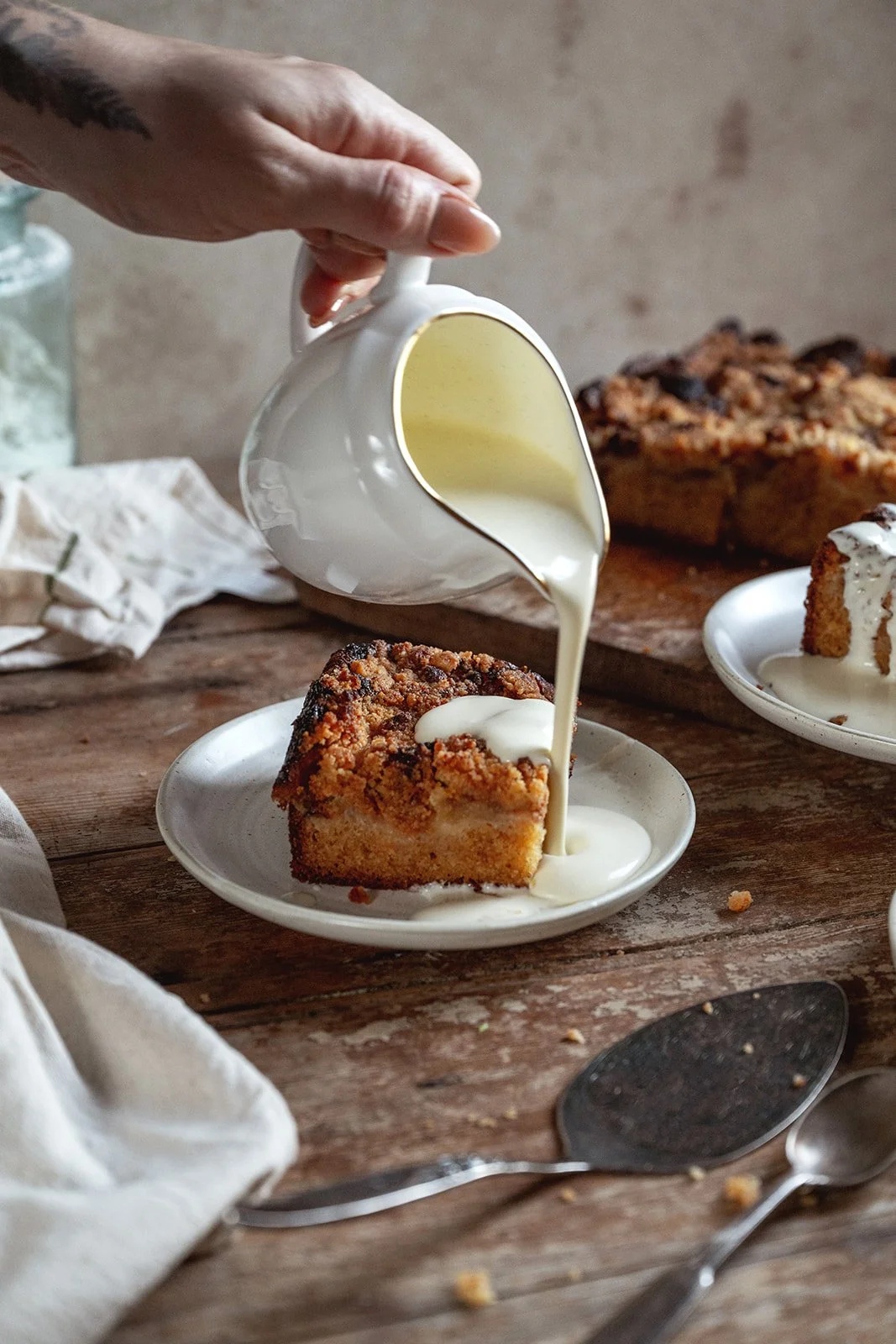
This apple crumble cake brings together moist vanilla sponge, thick caramelised apples, and a generous crumble topping in one proper wintery bake. The apples get cooked down first with butter, brown sugar, and cinnamon until they’re soft and glossy, which stops the cake going soggy underneath. The crumble gets frozen before baking so it stays chunky and crunchy rather than melting away. The sponge itself is enriched with Greek yoghurt for moisture and a subtle tang. It holds its structure beautifully, slicing clean even when warm, with proper contrast between the soft cake, jammy apples, and crisp topping. Serve it warm with custard or ice cream, or enjoy thick slices with afternoon tea.

Apple Crumble Cake
This apple crumble cake layers caramelised cinnamon apples over moist sponge, topped with crunchy buttery crumble. Perfect autumn baking.
Ingredients
- 750 g apples, peeled and chopped
- 50 g unsalted butter
- 90 g soft light brown sugar
- ¾ tsp cinnamon
- ½ tsp vanilla extract
- Pinch of salt
- 150 g plain flour
- 100 g cold unsalted butter, cubed
- 75 g demerara sugar
- 40 g caster sugar
- Tiny pinch of salt
- 225 g soft butter
- 225 g caster sugar
- 4 eggs
- 2 tsp vanilla extract
- 265 g plain flour
- 2 tsp baking powder
- 1 tsp bicarbonate of soda
- 150 g Greek yoghurt
- Pinch of salt
Instructions
- Melt the butter in a wide pan. Add the apples, sugar, cinnamon, vanilla and salt. Cook over medium heat until the apples slump, soften and start releasing syrup. Keep going until the juices thicken to a light caramel and coat the slices. You don’t want them collapsing completely, but they should be very soft. Cool completely before layering into the cake.
- Rub the flour and butter together until you have large rubble, not sand. Mix in the demerara, caster sugar and salt. Freeze for ten minutes so the crumble bakes crisp and stays crisp.
- Heat the oven to 170°C fan. Butter and line your tin.
- Beat the butter and sugar until pale. Add the eggs one at a time, mixing well, then the vanilla.
- Whisk the flour, baking powder, bicarbonate and salt together. Fold half into the batter. Add the yoghurt. Fold in the rest of the flour. It should be a thick, smooth batter. If it feels loose, add 1 tbsp extra flour. If it feels stiff, loosen with 1 tsp milk.
- Spread all the sponge batter into the lined tin and level it. Spoon the cooled caramel apples evenly over the top. They should sit on the sponge, not get pushed into it.
- Scatter over the frozen crumble in generous clumps. It should cover the apples in an even, thick layer.
- Bake on the top shelf for 55 to 65 minutes until the crumble is deeply golden and a skewer pushed into the sponge layer comes out clean. Cover the pan with foil if the crumble looks like it’s catching. Baking times vary between ovens, so keep an eye on it.
- Cool in the tin for at least 20 minutes so the apple layer sets slightly, then lift out to finish cooling. The apple layer firms enough to give you clean slices but stays soft and almost jammy.
Nutrition Facts
Calories
485Fat
23 gCarbs
64 gSugar
42 gProtein
6 gApproximate values per serving


Ingredients and Sourcing Tips
Apples
Use firm cooking apples that hold their shape when cooked. Bramley, Granny Smith, Cox, or Braeburn all work well. You need about 5-6 medium apples to get 750g once peeled and chopped. Avoid varieties that turn to complete mush like Golden Delicious - you want the apples to soften and caramelize but still hold some structure. The tartness of cooking apples balances the sweetness of the sugar and crumble.
Butter
Use proper unsalted butter, not margarine or spreads. You need it cold and cubed for the crumble, soft for the cake batter, and regular for cooking the apples. Real butter gives the crumble its flavor and the cake its richness.
Greek yoghurt
Full-fat Greek yoghurt adds moisture and a subtle tang to the sponge that balances the sweet apples. Don’t use low-fat versions - they have more water and less fat, which affects the cake’s texture. Sour cream works as a direct substitute if that’s what you have.
Demerara sugar
This gives the crumble its crunchy texture and caramel flavor. The large crystals don’t dissolve completely during baking, creating that proper crunch. You can find it in the baking aisle of supermarkets. Don’t substitute with regular caster sugar or the crumble won’t have the same texture.
Light brown sugar
Soft light brown sugar has molasses content that creates the caramel coating on the apples. It’s got more moisture than white sugar, which helps the apples soften. Dark brown sugar works too but gives a deeper, more treacly flavor.
Plain flour
Standard plain flour for everything - the sponge, the crumble, all of it. Don’t use self-raising flour in the cake as it already has baking powder and bicarbonate added separately. Weigh your flour rather than using cups for accuracy.
Baking powder and bicarbonate
These two working together give the cake its rise. Make sure they’re fresh - old leavening agents lose their power.
Variations and Dietary Swaps
Pear crumble cake
Replace the apples with 750g firm pears. Williams or Conference pears work well. Cook them the same way but add a pinch of ground ginger or cardamom along with the cinnamon. Pears break down faster than apples so watch them carefully.
Mixed berry version
Use 500g apples and 250g mixed berries (blackberries, raspberries, blueberries). Add the berries to the cooked apples in the last 2 minutes just to warm them through. The berries add tartness and beautiful colour. Don’t use frozen as the mix will be too wet,
Spiced apple
Add ½ tsp mixed spice, pumpkin or apple pie spice to both the apple layer and the crumble topping. Or go for warming spices individually - a pinch of nutmeg, clove, or allspice.
Nutty crumble
Mix 50g chopped pecans or walnuts into the crumble before freezing. Toast them first in a dry pan for better flavor. Hazelnuts work nicely too if you chop them roughly.
Oat topping
Replace 50g of the plain flour in the crumble with rolled oats for a more rustic texture. This makes it more like an apple crisp topping rather than traditional crumble.
Individual portions
Divide the batter between a 12-hole muffin tin, top each with a spoonful of apples and crumble, and bake for 25-30 minutes. You get portable apple crumble cakes.
Gluten-free
Use a gluten-free flour blend in both components. The texture will be slightly different but it works. Make sure your baking powder is gluten-free too.
Dairy-free
Use dairy-free butter and swap the Greek yoghurt for coconut yoghurt or a dairy-free alternative. The flavor changes slightly but the structure holds.
Kitchen Notes
Cooling the apples completely
This is essential. If you add warm or hot apples to the cake batter, they’ll sink right through and you’ll end up with a soggy bottom. Let them cool to room temperature, or speed this up by spreading them on a plate and putting them in the fridge for 15 minutes while you make the batter.
Freezing the crumble
The 10-minute freeze makes a real difference. It firms up the butter so the crumble holds its chunky shape rather than melting into a flat layer. If you forget this step, the crumble won’t be as pronounced. You can make the crumble days ahead and keep it in the freezer until you’re ready to use it, just don’t form into a ball before freezing otherwise it will be impossible to break apart.
Don’t overmix the batter
Once you add the flour, mix just until you can’t see dry flour anymore. Overmixing develops gluten which makes the cake tough and dense. The batter should be thick and smooth - if you can easily pour it, it’s too thin.
Top shelf baking
Baking on the top shelf means the crumble gets direct heat from the top element, helping it crisp up and turn golden. If your oven runs hot, you might need to move it down one shelf halfway through to prevent burning.
Checking doneness
The crumble should be deeply golden, almost brown in places. A skewer pushed through the crumble into the sponge layer should come out clean or with a few crumbs. The middle should feel set when you gently press it. If the crumble is browning too quickly but the middle isn’t done, cover loosely with foil.
Adjusting batter consistency
The batter should hold its shape when spooned but still be spreadable. If it’s too thick add 1 tbsp milk. If it’s too thin and runny, add 1 tbsp flour. This can happen depending on egg size and flour absorption.
Tin preparation
Butter the tin well and line the bottom with baking parchment. For a round tin, line the sides too if you can. This makes lifting out much easier. If using a square tin, cut a square out of parchment at least 10cm wider than the tin and then either cut the corners diagonally or cut squares out of the corners so that you fold the parchment up the sides and don’t have to awkwardly fold them in the corners.
Storage
Store in an airtight container at room temperature for 2 days. The crumble softens over time due to moisture from the apples, but it’s still delicious. Refrigerate for up to 5 days - bring slices to room temperature or warm gently in a 150C oven before serving. Slice and freeze individual slices in Tupperware for up to 3 months.
Serving Suggestions
How to serve
Cut the completely cooled cake into 9 generous slices or 12 smaller portions. Serve on plates with a dusting of icing sugar if you want to make it look pretty. The cake is rich enough to stand alone but benefits from something creamy on the side.
What to serve alongside
Vanilla ice cream is classic - the cold creaminess against warm cake is perfect. Pour over custard or crème anglaise for a proper British pudding. A dollop of lightly whipped double cream works beautifully. Greek yoghurt adds a tangy contrast if you want something less sweet.
When to serve
This works as dessert, afternoon tea, or even breakfast if you’re feeling indulgent. It’s perfect for autumn when apples are at their best, but honestly works year-round. Make it when you want something comforting and substantial.
Temperature
Serve warm from the oven (after the cooling period) or at room temperature. If serving from the fridge, warm slices in the microwave for 15-20 seconds to soften the crumble and apples slightly.
Portion sizes
The servings are generous - this is a rich, substantial cake. Ten portions is realistic for dessert servings. If you’re serving it with afternoon tea alongside other things, you could stretch it to 12 portions.
Extra touches
Drizzle with salted caramel sauce for something properly indulgent. A dusting of icing sugar looks elegant. Scatter a few fresh apple slices or berries on the serving plate. Serve with a pot of tea or strong coffee to cut through the richness.