Baked Mashed Potato
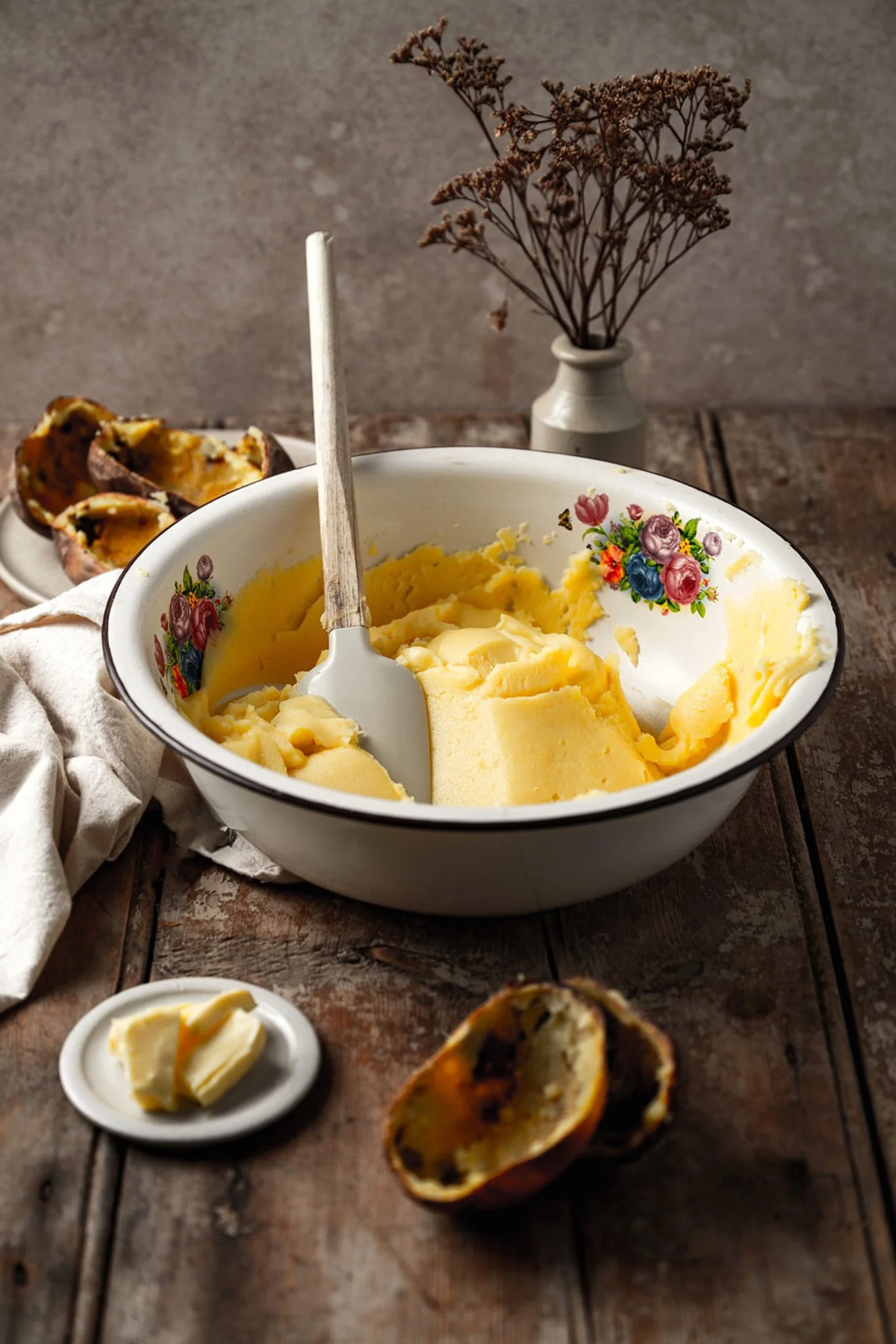
Making mashed potato by baking the potatoes rather than boiling them is something I picked up in professional kitchens where the priority was maximum flavour for the least possible interference. Baking the potatoes makes an enormous difference because it concentrates their natural flavour and prevents them becoming waterlogged and insipid. Potatoes have a surprising amount of character when treated this way. You end up with mash that is lighter, silkier and far more aromatic even before the butter goes anywhere near it. It is also one of the most reliable methods for batch cooking because you can bake a tray of potatoes without watching them and the final texture stays consistent.
This recipe also ties back to the first thing I ever taught myself to cook as a child. I have always been a bit of a mashed potato purist. My mum did not usually peel them which meant the texture was closer to Scottish clapshot or Irish colcannon. Floury potatoes are essential for this because they create a light, fluffy mash and waxy varieties will always turn gluey. If you want this to lean more towards pomme purée you can beat in extra butter or a splash of single cream. It is also easy to prepare ahead of time. Reheat it in a saucepan over the lowest heat, breaking it up gently and beating it as the butter softens back into the potatoes.

Baked Mashed Potato
A rich and velvety mash made by baking the potatoes first which gives deeper flavour, lighter texture and an airy finish when whipped with softened butter.
Ingredients
- 2 kg large baking potatoes such as Maris Piper or King Edward
- 200 g unsalted butter softened
- Sea salt and white pepper
- 2-4 tbsp hot horseradish or Dijon mustard optional to taste
Instructions
- Heat the oven to 200°C fan 180°C. Scrub the potatoes and run a sharp knife around the longest edge to make a shallow incision all the way round. Arrange them on a baking tray and bake for about 1 hour 30 minutes until the skins are crisp and the centres are completely tender.
- Place the softened butter in a large heatproof bowl. Halve the baked potatoes and scoop the hot flesh straight through a potato ricer over the butter.
- Beat the potatoes and butter together with a wooden spoon or whisk until the butter melts fully and the mash becomes smooth, fluffy and emulsified.
- Season generously with sea salt and white pepper. Stir in horseradish or mustard, if using, and adjust to taste.
Nutrition Facts
Calories
455Fat
27 gSugar
3 gProtein
5 gCarbs
43 gApproximate values per serving


Ingredients and sourcing tips
Potatoes
Use a floury variety such as Maris Piper or King Edward because they create a lighter and fluffier mash after baking. Boiled potatoes often end up waterlogged which dilutes their flavour. Baking avoids this completely and intensifies their natural character.
Butter
Softened or room temperature butter blends more evenly and creates a smoother mash. Good quality butter makes a noticeable difference in flavour because there is nothing else competing with it apart from the potatoes.
Horseradish or mustard
These add heat and brightness. Use sparingly at first and taste as you go because both can dominate quickly. This goes for seasoning too. You want it well seasoned but adding some, tasting and then adding more is always wise.
Variations and dietary swaps
Brown butter mash
Let the butter sizzle until golden and nutty then whip it through the potatoes for a deeper, toasted flavour.
Creamier mash
Add a splash of warm milk or single cream if you prefer a looser mash, keeping additions warm so the potatoes stay light. Adding more butter shifts the texture towards French pomme purée. It is simply a matter of preference.
Vegan version
Use a high quality vegan butter and season slightly more generously to balance the flavour.
Kitchen notes
Tips and pitfalls to avoid
Scoop the potato flesh while it is still piping hot. As soon as baked potatoes cool the starches tighten and the flesh becomes tacky which means it will not push cleanly through a ricer and it will not melt the butter properly. Use a tea towel to hold the potatoes so you can work quickly. A potato ricer is ideal because it creates a fine, even texture without overworking the potato. It is one of those pieces of equipment that usually only comes out for mash but it is worth owning because nothing else gives the same lightness.
Timing and texture cues
Potatoes are ready when the skins feel crisp and a knife meets no resistance. Once riced into the butter the mash should look glossy and whipped. If it looks stiff it has cooled too much so warm it gently in a pan and beat again.
Storage and make ahead
The mash keeps in the fridge for up to three days. Reheat slowly in a saucepan on the lowest heat, breaking it up and beating it as the butter softens back in. It freezes well and lasts for up to two months. Defrost in the fridge overnight then reheat using the same gentle method.
Leftovers
Potato skins
The baked skins are too good to waste. Simmer them with onions, garlic or bay leaves to make a deeply savoury potato stock that enriches soups and risottos. You can also turn them into stuffed skins. Add a spoonful of mash to each skin, mix with sour cream and chopped ham or herbs, top with mature cheddar and bake until crisp and bubbling.
Mash
Leftover mash with a high butter content reheats well and is also excellent repurposed. It makes very good potato waffles. Mix the cold mash with a beaten egg and a spoon of flour if it needs tightening then cook in a waffle iron until crisp and golden. They work well topped with smoked salmon, wilted greens or a poached egg.
Leftover mash also makes excellent potato croquettes. Shape the chilled mash into small logs or balls, coat in flour, beaten egg and breadcrumbs then fry or air fry until the outside is crisp and the centre is soft and buttery.
Serving suggestions
Serve this mash as a base rather than a side. Spread it onto a warm plate and sit roasted chicken thighs or slow cooked pork shoulder on top so the juices run into the mash. The baked potato flavour stands up well to rich meat.
It is also excellent with anything buttery and pan fried. Spoon the mash into a shallow bowl and top with seared mushrooms browned in plenty of butter with garlic and parsley. The contrast between the crisp edges of the mushrooms and the airy mash works beautifully.