Parsnip, Feta and Buckwheat Salad with Warm Pomegranate Dressing
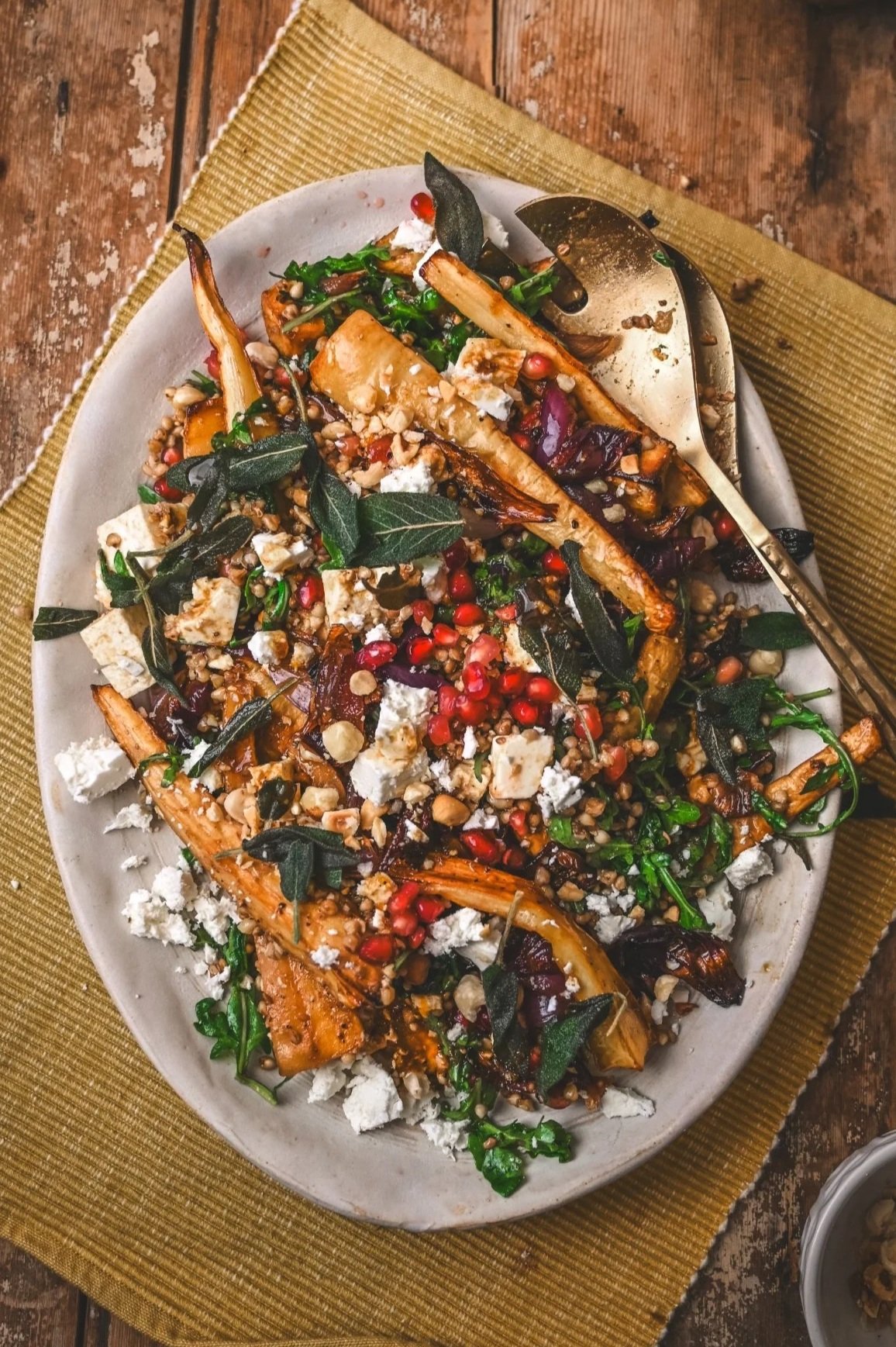
This parsnip, feta and buckwheat salad is exactly the kind of substantial winter salad that doesn't feel like you're missing out. Roasted parsnips and red onions get sweet and caramelised with maple syrup and citrus, while nutty buckwheat adds heft and texture. The warm pomegranate molasses dressing brings everything together with its sweet-tart intensity, and crumbled feta adds creamy saltiness. Toasted hazelnuts and pomegranate seeds give you crunch and freshness, while crispy sage leaves make it feel special. Perfect for a winter lunch or as part of a bigger spread.

Parsnip, Feta and Buckwheat Salad with Warm Pomegranate Dressing
Roasted parsnips and red onions with toasted buckwheat, feta and pomegranate seeds, finished with a warm pomegranate molasses dressing. A hearty winter salad that's substantial enough for a main course.
Ingredients
- 4 medium parsnips, sliced lengthways
- 3 red onions, cut into thick wedges
- 2 tbsp olive oil
- 50ml maple syrup
- 2 to 3 tbsp red wine vinegar
- Juice of 1 clementine or half an orange
- Olive oil
- Salt and black pepper
- 150g buckwheat groats
- 500ml vegetable stock (or 1 stock cube plus water)
- 70g rocket
- 200g reduced-fat feta
- 50g toasted hazelnuts, roughly chopped
- Seeds from half a pomegranate
- Crispy sage leaves (fried in oil for a few minutes and drained on kitchen paper)
- 3 tbsp pomegranate molasses
- 3 tbsp clementine or orange juice
- 1 tsp Dijon mustard
- 3 tsp maple syrup
- 4 tbsp olive oil
Instructions
- Heat the oven to 200°C (180°C fan). In a large roasting tin, toss the parsnips and red onion wedges with olive oil, maple syrup, red wine vinegar, clementine juice, salt and black pepper. Make sure everything is well coated. Roast for about 30 minutes, turning once halfway through, until golden and tender with caramelised edges.
- While the vegetables roast, toast the buckwheat groats in a dry pan over medium heat for 3 to 4 minutes until fragrant. Transfer to a saucepan and add the vegetable stock. Bring to a simmer and cook until tender with a slight bite, 8 to 10 minutes for pre-toasted groats (check packet instructions as cooking time varies), stirring occasionally to prevent sticking at the bottom. Add more stock or water if it looks like it might boil dry. Drain well and rinse quickly under cold water to stop the cooking. Spread out on a tray or large plate to steam dry.
- Make the dressing by whisking together the pomegranate molasses, clementine juice, Dijon mustard, maple syrup, olive oil, salt and pepper in a small pan. Warm gently over low heat until glossy and just heated through. Don't let it boil.
- In a large serving bowl, toss the buckwheat and roasted vegetables with half the warm dressing. Fold through the rocket, toasted hazelnuts and pomegranate seeds.
- Drizzle over the remaining dressing and top with crumbled feta and crispy sage leaves. Serve immediately while the dressing is still warm.
Nutrition Facts
Calories
595Fat
26 gSugar
32 gProtein
18 gCarbs
72 gApproximate values per serving


Variations and Dietary Swaps
Different root vegetables
Swap some or all of the parsnips for carrots, beetroot or sweet potato. They all roast beautifully with the same maple and citrus treatment. Beetroot will stain everything pink, so keep that in mind.
Vegan version
Skip the feta and add more nuts or seeds for protein and substance. Or use a good quality vegan feta alternative.
Different grains
Swap the buckwheat for freekeh, farro, pearl barley or quinoa. Cooking times will vary - check packet instructions. Each brings a slightly different texture and flavour but all work well.
Nuts
Use toasted walnuts, almonds or pecans instead of hazelnuts. Pine nuts work too but are more delicate and don't add as much crunch.
Greens
Replace the rocket with baby spinach, watercress or mixed salad leaves. Peppery leaves like rocket or watercress work particularly well against the sweet roasted vegetables.
Extra protein
Add chickpeas, lentils or white beans to make it even more substantial. Toss them with the warm dressing so they absorb the flavours.
Cheese alternatives
Try crumbled goat's cheese, ricotta salata or shaved parmesan instead of feta. Each brings a different character but all work with the sweet and tangy flavours.
.
Kitchen Notes
Roasting the vegetables
Don't overcrowd the roasting tin or the vegetables will steam rather than caramelise. The maple syrup and vinegar create a lovely sticky glaze, but watch them in the last 10 minutes to make sure they don't burn.
Buckwheat texture
Buckwheat can go from perfectly tender to mushy very quickly, so keep an eye on it. You want it to have a slight bite, almost like al dente pasta. Rinsing it briefly after cooking stops the cooking process and prevents it becoming too soft. Spreading it out to steam dry stops it clumping together.
Warm dressing timing
Make the dressing just before you're ready to serve so it's still warm when it hits the salad. A warm dressing will wilt the rocket slightly but it absorbs better into the vegetables and grains and brings all the flavours together. Don't overheat it or boil it - you just want it gently warmed through.
Assembly order
Toss the buckwheat and roasted veg with half the dressing first, then fold through the delicate ingredients like rocket and pomegranate seeds. This prevents them getting battered or crushed. Add the feta and sage at the very end so they sit on top rather than getting lost in the salad.
Make ahead
The roasted vegetables can be made a few hours ahead and kept at room temperature. The buckwheat can be cooked ahead and refrigerated, then brought to room temperature before serving. Make the dressing and assemble everything just before serving for the best results.
Leftovers
This salad keeps well in the fridge for up to 2 days, though the rocket will wilt and the crispy sage will soften. Add fresh rocket and make new crispy sage if you want to refresh it.
Serving Suggestions
How to serve
Serve on a large platter or in a wide shallow bowl so you can see all the components. The contrast of colours - golden parsnips, dark red onions, jewel-like pomegranate seeds, white feta - makes this a beautiful dish to present. Make sure each serving gets some of everything, especially the crispy sage and feta.
What to serve alongside
This is substantial enough to be a main course on its own. It also works beautifully as part of a bigger spread alongside other salads, roasted meats or grilled fish. Warm flatbreads or crusty sourdough are perfect for mopping up the dressing.
When to serve
This is ideal for autumn and winter when parsnips are at their sweetest. It works for lunch, dinner, or as part of a festive spread. The warm dressing makes it feel particularly comforting on cold days, while the fresh pomegranate seeds and herbs keep it feeling light.
Presentation
Scatter the pomegranate seeds and crispy sage over the top just before serving for maximum visual impact. The jewel-bright seeds against the earthy vegetables look stunning. Crumble the feta over in generous chunks rather than tiny bits - it looks more rustic and appealing.
Portion sizes
This serves 2 to 3 people as a main course, or 4 to 6 as a side dish or starter. The portions are quite generous and filling thanks to the buckwheat.
Temperature
This is best served warm or at room temperature rather than chilled. Cold buckwheat can be a bit dense and heavy, while warm or room temperature brings out all the flavours and keeps the texture light.