Normandy Chicken & Apple Stew
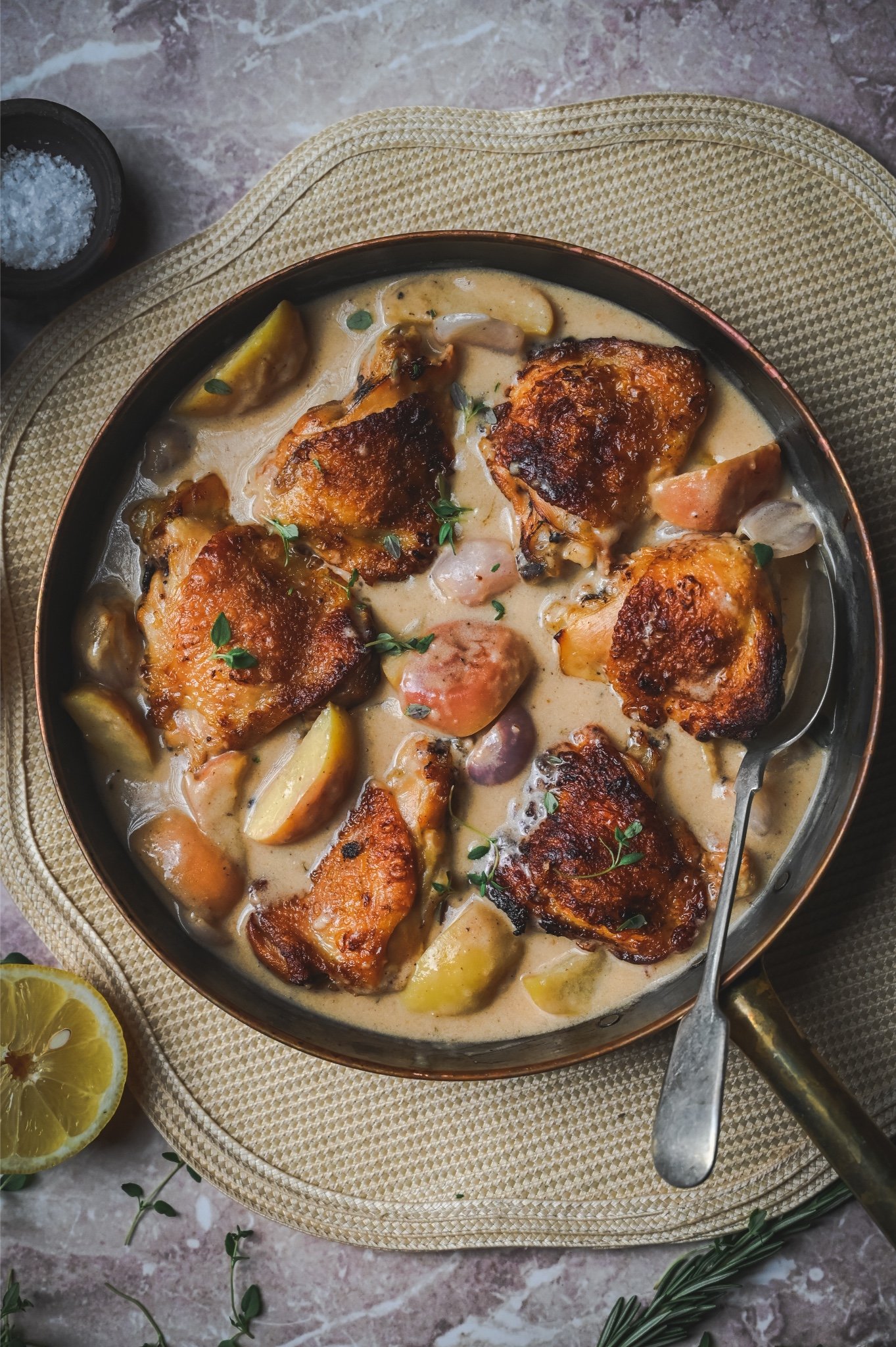
This Normandy chicken dish is a lighter style of stew, perfect for spring or autumn when the weather is chilly but you're not craving something too heavy. Chicken thighs get browned until golden and crisp, then braised in dry cider with aromatics until tender. The sauce is enriched with crème fraîche and thickened just enough to coat the back of a spoon - loose and creamy like single cream, not thick and gloopy. Shallots and firm apples go in at the end, softening in the sauce while the chicken skin crisps back up. It's delicate and elegant, with the sweetness of apples balanced by the dry cider and lemon juice. Serve it with buttery mash and dressed greens like green beans or purple sprouting broccoli for a proper French-inspired meal that feels special but isn't complicated.

Normandy Chicken Stew
Light French chicken stew with cider, apples and crème fraîche. Tender chicken thighs in a delicate sauce with shallots and herbs.
Ingredients
- 1 tbsp butter
- 1 tbsp rapeseed oil
- 6-8 chicken thighs, bone-in and skin-on
- 1 white onion, finely chopped
- 4 garlic cloves, finely sliced
- 1 stick celery, finely chopped
- 5-10 sprigs fresh thyme
- 3 sprigs fresh rosemary
- 3 bay leaves
- 350 ml dry French cider (cidre) or good quality dry English cider
- 350 ml chicken stock
- 3 tbsp apple sauce
- 1 tbsp plain flour
- 150 ml crème fraîche
- Juice of ½ lemon
- 6-8 shallots, peeled and halved, if large
- 4 firm eating apples (Braeburn, Cox, or Granny Smith)
- Salt and black pepper
- Mashed potatoes and steamed greens, to serve
Instructions
- Preheat the oven to 200°C (180°C fan). Melt the butter with the oil in a large wide sauté pan or casserole dish with a tight-fitting lid over medium heat. Season all sides of the chicken generously with salt.
- Once the pan is hot, add the chicken skin-side down, working in batches if necessary to avoid crowding the pan. Cook for 6-8 minutes, turning once, until the skin is crisp and golden and the meat is sealed on all sides. Remove from the pan and set aside on a plate.
- Add the onion, garlic and celery to the pan. The remaining chicken fat should be enough but if the pan looks dry, add a small knob of butterCook for 5-10 minutes, stirring regularly, until the onion is translucent. Add the herbs and cook for a further 2 minutes until fragrant.
- Turn the heat up slightly and add the cider to deglaze the pan briefly, followed by the stock and apple sauce. Stir everything together and simmer for a couple of minutes.
- Return the chicken to the pan, skin-side up. The liquid should come roughly halfway up the chicken thighs. Cover with a lid and transfer to the oven for 30 minutes.
- Remove the pan from the oven carefully. Using tongs, remove the chicken to a clean plate. Fish out and discard the herb sprigs and bay leaves.
- Reduce the oven to 180°C (160°C fan).
- For a smooth sauce, ladle or carefully pour the liquid through a fine mesh sieve into a jug, discarding the vegetables. Pour most of the sauce back into the pan, reserving 3 tablespoons in the jug. Mix the flour with the 3 tablespoons of sauce to form a smooth slurry.
- Alternatively, if you want to leave it rustic and don't want to strain out the vegetables, just spoon off around 3 tablespoons of the sauce and mix with the flour as above.
- Add the crème fraîche to the sauce in the pan and warm for around 5 minutes over low heat, stirring regularly. Add the flour slurry to the pan and simmer for another 5 minutes to thicken, stirring regularly. The sauce should coat the back of a spoon but still be pourable, like single cream. Add the lemon juice and season with salt and black pepper to taste.
- Core and quarter or eighth the apples depending on size. Add them to the sauce along with the shallots and the chicken, skin-side up. Cover and return to the oven for 15 minutes until the shallots are tender and the apples have softened. Remove the lid and cook for a further 10 minutes until the chicken skin crisps up.
Nutrition Facts
Calories
620Fat
40 gCarbs
28 gSugar
18 gProtein
35 gApproximate values per serving


Ingredients and Sourcing Tips
Chicken thighs
Use bone-in, skin-on chicken thighs. The bones add flavour and body to the sauce, while the skin crisps beautifully. Don't use boneless skinless thighs - you lose too much flavour and texture. Don't use chicken breasts - they'll dry out during the long braise.
Dry cider
Traditional Normandy cuisine uses French cider (cidre), which is drier, more delicate, and less fizzy than UK cider. Look for it in larger supermarkets or specialist shops - brands like Loïc Raison or Kerisac. If you can't find French cider, use a good quality dry English cider. Avoid sweet or medium cider - the dish will be cloying. Don't use rough scrumpy - it's too harsh.
Chicken stock
Use good quality chicken stock, preferably fresh from the chilled section. The stock forms half the braising liquid so quality matters. Homemade is excellent if you have it. Avoid stock cubes if possible - they're too salty and artificial tasting.
Apple sauce
Good quality apple sauce adds sweetness and body to the sauce. Use unsweetened or lightly sweetened versions. Bramley apple sauce works particularly well. This is different from the fresh apples added later - it melts into the sauce and provides background sweetness.
Fresh herbs
Thyme and rosemary are traditional in Norman cooking. Use fresh sprigs - dried herbs don't have the same fragrance or flavour. The herbs get strained out so you can be generous. Bay leaves add aromatic depth.
Crème fraîche
Use full-fat crème fraîche. The slight tang balances the sweetness of the apples and cider. Don't use sour cream (too sharp) or double cream (too rich and sweet). Low-fat crème fraîche can split when heated.
Shallots
Small shallots, peeled and halved, add sweetness and texture to the finished dish. Échalion (banana) shallots work well too - 3-4 small ones, quartered. Don't use onions - they're too strong and won't soften the same way in the cooking time.
Apples
Use firm eating apples that hold their shape when cooked. Braeburn, Cox's Orange Pippin, or Granny Smith all work well. Avoid soft varieties like Golden Delicious or Gala which turn to mush. You want the apples to soften but still have structure and bite. Core them but leave the skin on for colour and texture.
Plain flour
Just 1 tablespoon is enough to thicken the sauce to a single cream consistency. Too much and it becomes gloopy. The sauce will reduce and thicken further as it cooks.
Variations and Dietary Swaps
Mushroom addition
Sauté 200g halved button mushrooms or quartered chestnut mushrooms in a little butter until golden and their liquid has evaporated, about 5-7 minutes. Add them with the shallots and apples in the final cooking stage. Very traditional in Norman cooking.
Calvados cream
After browning the chicken and removing it from the pan, add 2-3 tablespoons of Calvados (apple brandy) and let it bubble for 30 seconds to cook off the alcohol, scraping up any browned bits. Then add the vegetables and continue with the recipe. This adds authentic Norman depth and richness.
Bacon lardons
Fry 100g smoked bacon lardons until crisp before browning the chicken. Remove and set aside, then scatter over the finished dish. Adds smoky saltiness.
Leeks and tarragon
Replace the celery with finely sliced leeks. Add a handful of fresh chopped tarragon leaves to the sauce at the end instead of thyme and rosemary for a more delicate anise flavour.
White wine alternative
Prefer white wine? Use dry white wine (Muscadet or Sauvignon Blanc) instead of cider. The flavour profile is slightly different but still delicious. Reduce the apple sauce to 2 tablespoons as the wine is less sweet than cider.
Dairy-free version
Use dairy-free butter for browning, and replace crème fraîche with oat cream or cashew cream. The sauce won't be quite as rich but still works.
Kitchen Notes
Browning the chicken properly
Take your time with this step. The chicken needs to be golden and crisp all over - this adds flavour to the sauce and ensures crispy skin at the end. Don't crowd the pan, the heat will be reduced and the chicken will steam rather than brown. Turn regularly to avoid burning.
Deglazing the pan
When you add the cider, scrape up all the browned vegetable bits stuck to the bottom of the pan with a wooden spoon. This fond adds massive flavour to the sauce.
Straining the sauce
This is optional. Straining gives you a smooth, elegant sauce and removes the cooked-out vegetables and herb stems. If you prefer rustic, leave them in. Either way, you need to strain off a few tablespoons of sauce to mix with the flour - if you add flour directly to hot sauce, it will clump.
Sauce consistency
The sauce should be loose - like single cream, not thick gravy. It coats the back of a spoon but flows easily. It will thicken slightly as it reduces in the final cooking stage. If it's too thick, add a splash of stock. If too thin, simmer for a few more minutes.
Shallot and apple timing
The final 20-25 minutes is important for the shallots to soften properly. Small shallots halved will just be tender and sweet. If using larger shallots, half or quarter them. The apples should soften but still hold their shape and have a slight bite.
Crispy skin
Cooking uncovered for the final stage allows the chicken skin to crisp back up after braising. If your oven runs cool and the skin isn't crisping, increase the temperature to 220°C (200°C fan) for the last 10 minutes, watching carefully to avoid burning.
Storage
Store leftovers in the fridge for up to 3 days. The chicken skin will soften in storage. Reheat gently in a covered pan or in the oven at 160°C (140°C fan) for 20 minutes. The apples will break down more on reheating but it still tastes good. Freezes reasonably well for up to 2 months - the texture of the crème fraîche changes slightly but the flavour holds.
Serving Suggestions
How to serve
Serve the chicken thighs in shallow bowls with the apples and shallots arranged around them. Spoon plenty of sauce over everything. Make sure each serving gets a good amount of the soft apples and sweet shallots.
What to serve alongside
Buttery mashed potato is traditional and perfect for soaking up the sauce. Creamy polenta or soft bread also work well. For vegetables, serve with dressed green beans or steamed tender-stem broccoli with a knob of butter.
When to serve
Make this in spring or autumn when you want something warming but not heavy. It's elegant enough for a dinner party but comforting enough for a weekend family meal. The light, creamy sauce suits the seasons when you're transitioning between summer and winter cooking.
Portion sizes
Serves 4 as a main course with sides. Each person gets 1-2 chicken thighs depending on appetite, plus apples and shallots. The sauce is rich so portions don't need to be huge..
Wine pairing
A crisp white wine from Normandy would be traditional - something like a Muscadet or a dry Vouvray. A good quality dry cider also works beautifully with this dish. Avoid anything too oaky or sweet - you want something clean and refreshing to cut through the richness.