Roasted Wild Mallard with Port, Grapes and Red Onions
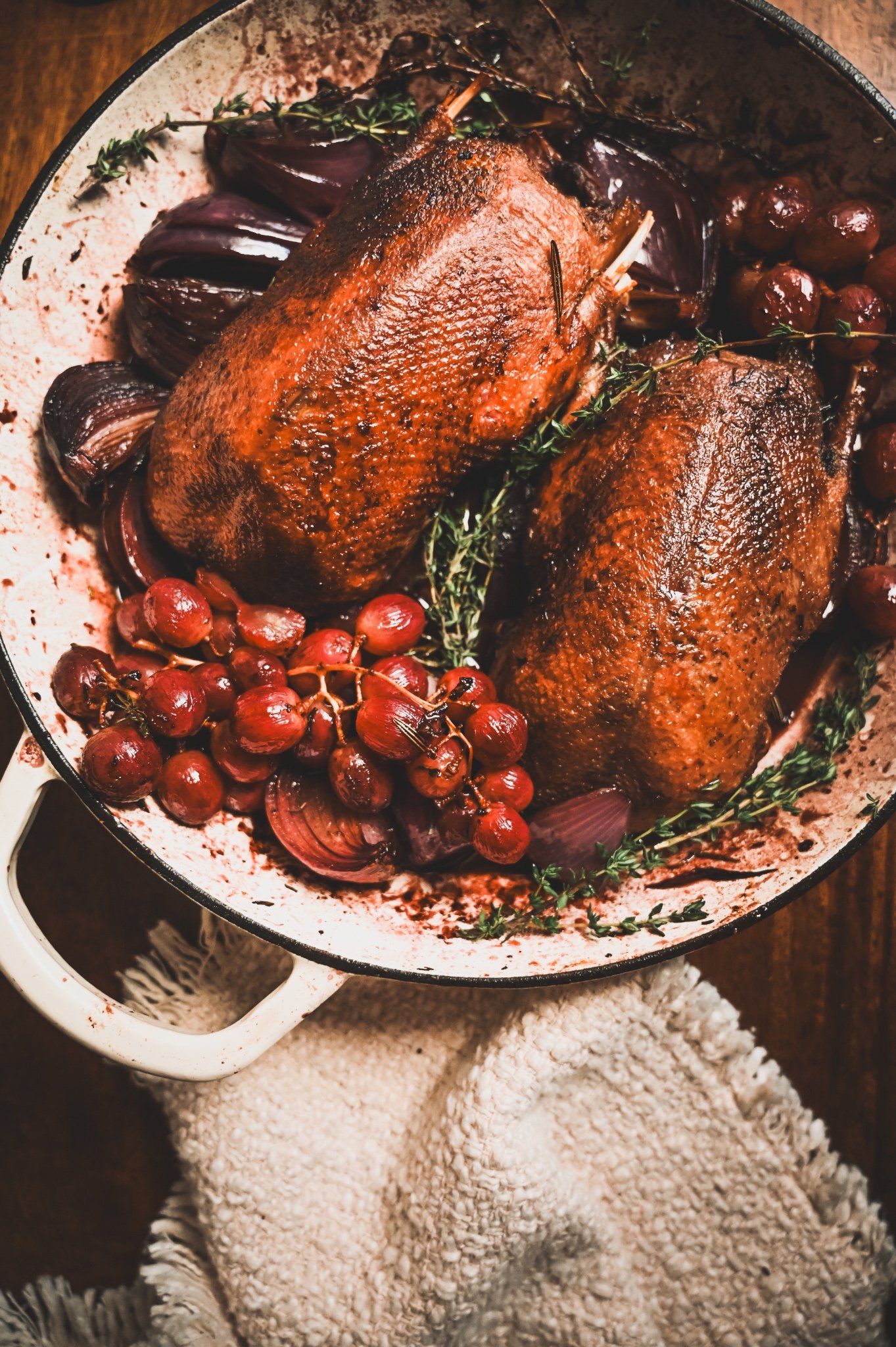
Roasted wild mallard with port, grapes and red onions is a stunning way to celebrate wild game season. Wild mallard is leaner and more intensely flavoured than farmed duck, with rich, almost gamey meat that pairs beautifully with sweet fruit and fortified wine. The ducks are seared until golden, then roasted on a bed of red onions and grapes that collapse into jammy sweetness. A glossy port sauce finished with Dijon mustard ties everything together. It's elegant enough for a special dinner but straightforward enough for a weeknight if you're comfortable with game. Wild duck season runs from September through to the end of January, so make the most of it while you can.

Roasted Wild Mallard with Port, Grapes and Red Onions
Roasted wild mallard with port-braised red onions, roasted grapes and rich port sauce. A stunning wild game recipe that celebrates the lean, intense flavour of wild duck.
Ingredients
- 2 wild mallard ducks (500 to 800g each)
- 2 tbsp duck fat
- 3 red onions, quartered through the root
- 500g red grapes, left on stems
- 300ml port (150ml for roasting, 150ml for sauce)
- 350ml chicken stock or duck stock
- 4 to 5 sprigs fresh thyme
- 2 to 3 sprigs fresh rosemary
- 1 tbsp plain flour
- 1 tsp Dijon mustard
- Sea salt and black pepper
- Small knob of cold butter (optional, for finishing)
- Mashed or roast potatoes and steamed buttered greens, to serve
Instructions
- Remove the ducks from the fridge 30 minutes before cooking. Pat them completely dry inside and out with kitchen paper - this is crucial for crispy skin. Season generously all over with salt and pepper, including the cavities.
- Preheat the oven to 200°C (180°C fan).
- Heat a 30cm Dutch oven over medium-high heat. Add the duck fat. Place the ducks breast-side down in the pot and sear for around 3 minutes without moving them until the skin is deeply golden brown. Flip and sear the other side for another 3 minutes. Continue to sear on all sides as much as possible to get even browning. Remove the ducks and set aside. Leave all the rendered duck fat in the pot.
- Reduce the heat to medium. Pour in 50ml of the port - it will bubble vigorously. Use a wooden spoon to scrape up all the caramelised bits from the bottom of the pot. Let it bubble for about 1 minute until slightly reduced.
- Add the onion quarters to the pot along with the thyme and rosemary sprigs. Cook for 5 minutes on each cut side to soften and caramelise. Add the grapes and pour in the remaining 100ml port. Stir everything together so the vegetables are coated in the port and duck fat.
- Put the lid on the pot and transfer to the oven for 10 minutes.
- Remove the lid and nestle the ducks breast-side up on top of the vegetables and herbs. Return to the oven uncovered and roast for 25 to 30 minutes. The ducks are done when the breast meat reaches 58 to 60°C when probed with a thermometer (for medium doneness), the skin is crisp and golden, and the juices run slightly pink when you pierce the thigh. Start checking at 20 minutes if your ducks are on the smaller side.
- Remove the ducks from the pot and place on a board or plate. Lift out the onion quarters and most of the grapes with a slotted spoon or tongs and arrange on a serving platter, leaving about 10 to 15 grapes behind in the pot. If possible, place the ducks and vegetables in a warm oven (around 80°C) or warming drawer to rest and keep warm while you make the sauce. Otherwise, tent loosely with foil.
- Place the Dutch oven back on the stovetop over medium heat. Add the 150ml port and let it bubble and reduce by half, about 2 minutes.
- Add the chicken stock and bring to a simmer. Use a wooden spoon or potato masher to crush the grapes left in the pot, releasing their sweetness into the sauce.
- Whisk the flour with 2 tbsp cold water (or extra port) to make a smooth paste. Whisk this into the simmering sauce and cook for 2 to 3 minutes until slightly thickened.
- Simmer for another 5 to 7 minutes until reduced to about 300 to 350ml. The sauce should coat the back of a spoon lightly but still be pourable, not thick.
- Strain the sauce through a fine sieve into a clean pan or jug, pressing on the grape skins to extract all the flavour. Stir in the Dijon mustard and taste for seasoning. If you want a glossy finish, whisk in a small knob of cold butter. Keep warm.
- Carve the ducks or serve them whole. Arrange on the platter or back in the Dutch oven with the roasted onions and grapes. Pour some of the sauce over and serve the rest in a jug alongside.
Nutrition Facts
Calories
520Fat
22 gSugar
22 gProtein
42 gCarbs
28 gApproximate values per serving


Ingredients and Sourcing Tips
Wild mallard
Wild mallard is in season from September 1st through to the end of January in the UK. You can buy them from game dealers, butchers specialising in game, or online suppliers. They're significantly smaller than farmed duck - usually 500 to 800g each compared to 2 to 2.5kg for a farmed duck. They're also much leaner with less fat under the skin, so they cook faster and need careful timing to avoid drying out. The flavour is more intense and slightly gamey compared to the mild, fatty farmed duck.
Duck fat
Use rendered duck fat if you have it, or buy it in jars from supermarkets. If you don't have duck fat, use rapeseed oil instead.
Port
Use a ruby or tawny port rather than vintage. You want something with good fruit and sweetness but not too precious - it's going to reduce significantly. Don't use cooking port, use something you'd actually drink.
Stock
If you have duck carcasses, necks, wing tips or giblets, make a rich stock. Simmer them with an onion, carrot and herbs in 500ml water for 3 to 4 hours, (or overnight) then strain. This gives you a richer, more concentrated sauce than chicken stock. However, good quality chicken stock works perfectly well.
Red grapes
Red grapes hold their shape better than green grapes and their sweetness balances the rich duck and port. Leaving them on the stems makes them easier to arrange and prevents them all bursting during cooking. Seedless are easier to eat.
Red onions
Peel and quarter them through the root so the layers stay together during roasting. If they fall apart, they'll still taste good but won't look as elegant on the platter.
Variations and Dietary Swaps
Farmed duck
If you can't get wild mallard, use 1 large farmed duck (about 2kg). The cooking time will be longer - about 45 to 50 minutes at the same temperature. The breast should reach 60 to 62°C for medium. The flavour will be milder and fattier but still delicious.
Pheasant
This recipe works brilliantly with pheasant. Use 2 pheasants and cook for the same time, checking at 22 minutes.
Red wine instead of port
Use a full-bodied red wine like Merlot or Cabernet Sauvignon instead of port. Add 1 tbsp honey or redcurrant jelly to compensate for the missing sweetness.
Orange twist
Add the zest of 1 orange to the sauce along with the stock for a classic duck à l'orange influence.
Kitchen Notes
Wild duck vs farmed duck
Wild mallard is completely different from farmed duck. It's much smaller (500 to 800g vs 2 to 2.5kg), leaner, and has a more intense, gamey flavour. There's very little fat under the skin compared to farmed duck, so it cooks much faster and needs to be served medium (pink breast) to stay juicy. The legs are tougher and benefit from the resting time to finish cooking through.
Game season
Wild duck season in the UK runs from September 1st through to January 31st. This is when you'll find fresh wild mallard at game dealers and specialist butchers. Make the most of it during these months.
Doneness
A meat thermometer is essential for wild game. Insert it into the thickest part of the breast, angling toward the centre of the bird. Wild duck varies in size, so timing is a guide but temperature is definitive. The breast should be 58 to 60°C for medium (pink and juicy). Going beyond 65°C will make it dry and tough.
Crispy skin
Patting the duck completely dry is crucial for crispy skin. Any moisture will steam the skin rather than crisping it. Don't skip this step.
Resting
The 10-minute rest is important. The breast meat will continue cooking slightly, and the juices will redistribute through the meat. The legs also use this time to finish cooking through from residual heat.
Sauce consistency
The sauce should be light and pourable like a jus, not thick like gravy. The flour adds just enough body to coat the meat without being heavy. If it's too thick, thin it with a splash of stock. If it's too thin, simmer it for a few more minutes.
Leftovers
Leftover duck is excellent shredded through salads, in fried rice, or used in a rich ragu for pasta. The meat keeps for 3 days in the fridge.
Serving Suggestions
How to serve
Carve each duck in half through the breastbone for four portions, or carve the breasts off and slice them, serving the legs whole. Arrange on a platter with the caramelised onions and grapes scattered around. Pour some of the glossy port sauce over the top and serve the rest in a jug alongside.
What to serve alongside
Wild mallard is lean and the portions are modest, so you need substantial sides. Creamy mashed potatoes or roasted potatoes are essential for soaking up the sauce. Wilted greens like spinach, chard or cavolo nero cut through the richness. Roasted root vegetables add bulk and sweetness. Crusty bread is perfect for mopping up every last bit of sauce.
When to serve
This is perfect for special dinners during game season, particularly in autumn and winter when wild duck is at its peak. It's elegant enough for entertaining but straightforward enough for a weekend dinner if you're comfortable cooking game.
Presentation
Serve the whole ducks on the platter if you want drama, or carve them in the kitchen for easier serving. The deep ruby sauce, jewel-like grapes and caramelised onions make this a beautiful dish. Garnish with fresh thyme sprigs if you like.
Portion sizes
Two small wild mallards serve 4 people as the main protein. The portions are smaller than you'd get with farmed duck, but the meat is so rich and intensely flavoured that it's satisfying.
Temperature
Serve the duck hot, straight from resting. The sauce should be warm and glossy.