Asian Chicken Noodle Soup
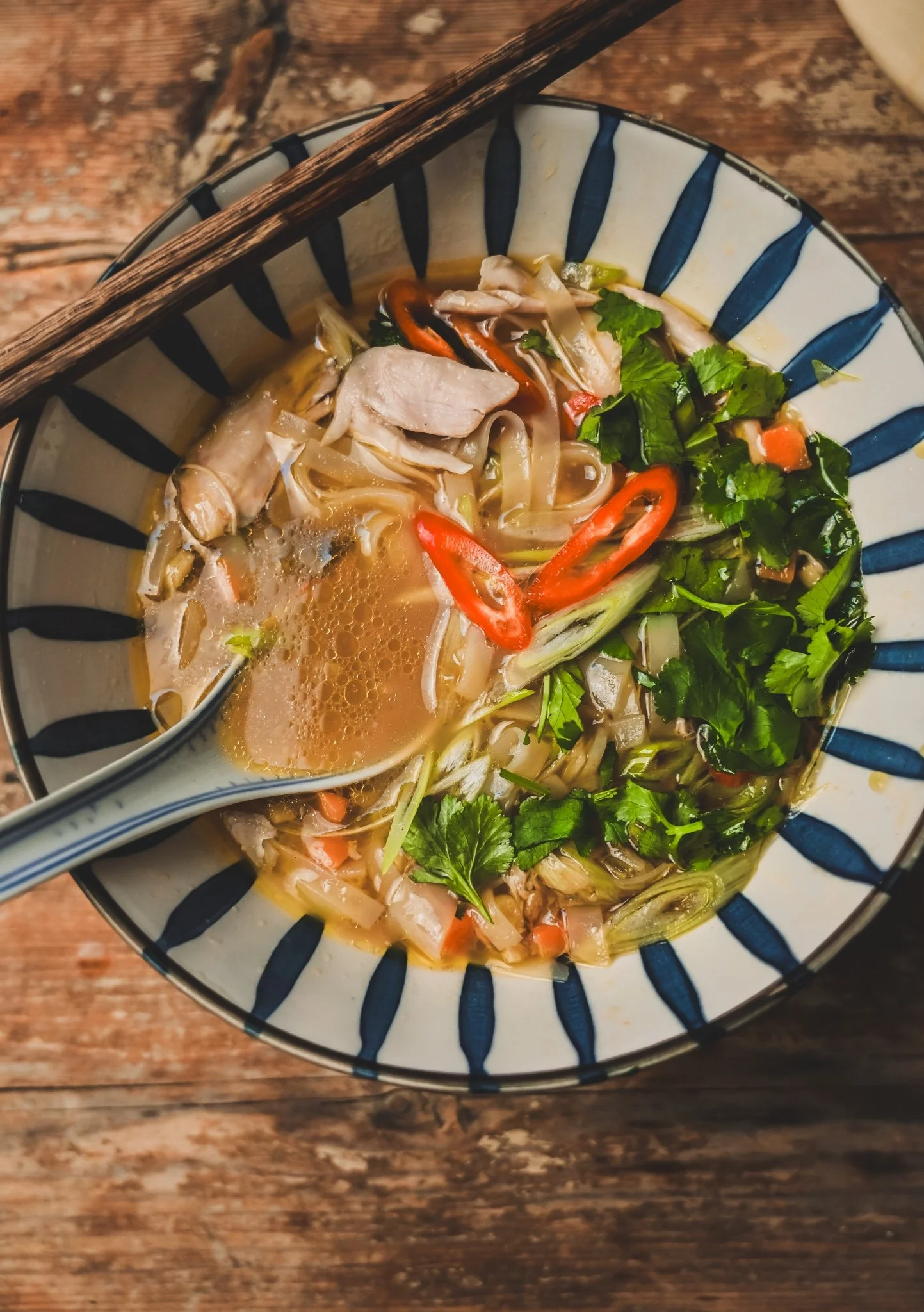
This Asian chicken noodle soup is the kind of bowl you need when you’re under the weather. Built on good chicken bone broth and enriched with skin-on chicken legs that simmer until they fall apart, it’s genuinely restorative. Lots of garlic and ginger provide the healing backbone, while aromatics add body and depth. The thick rice noodles soak up all that flavourful broth, and fresh herbs and lime finish each bowl with brightness. It’s warming, soothing, and substantial enough to actually make you feel better. Make it when you’re ill, when you need something warming or when someone you care about needs looking after.

Asian Chicken Noodle Soup
Restorative Asian chicken noodle soup built on rich bone broth with garlic, ginger and tender chicken. Genuinely soothing when you’re under the weather.
Ingredients
- 2 tbsp sesame oil
- 1 onion or shallot, finely chopped
- 2 celery sticks, finely chopped
- 2 small carrots, finely chopped
- 10-15 garlic cloves, gently crushed under the flat of a knife
- 50g fresh peeled ginger, finely chopped, plus a 10cm root sliced in half lengthways
- 1-2 star anise
- 1 tsp white pepper
- 2 tbsp light soy sauce
- 1-2 red chillies, halved (optional)
- 2 chicken legs with skin
- 1.5 litres good quality chicken bone broth or stock
- 200g thick rice noodles (2 nests)
- 4 spring onions, finely sliced
- Large handful fresh coriander, picked
- 1 lime, cut into wedges
- Sliced red chillies
- Sesame oil, for drizzling
Instructions
- Heat the 2 tablespoons of sesame oil in a large pan over a low heat, add the onion, celery, and carrots. Cook gently for 8-10 minutes until softened but not coloured.
- Add the garlic cloves and chopped ginger, cook for another 1-2 minutes until fragrant.
- Add the star anise, white pepper, soy sauce, cut ginger and chilli if using, followed by the chicken legs and broth. Bring to a boil, then reduce to a gentle simmer.
- Simmer for 45 minutes to 1 hour until the chicken is completely tender and falling off the bone. Skim any scum from the surface during the first 10-15 minutes.
- Using tongs, carefully remove the chicken legs to a plate and let them cool slightly. Remove the aromatics- the star anise, the chillies and cut ginger.
- Shred the chicken meat from the legs, discarding the skin and bones
- Bring the broth back to a simmer and add the rice noodles. Cook according to packet instructions until tender.
- Add the shredded chicken back to the pot with the noodles and broth. Taste and adjust seasoning with more soy sauce if needed.
- Ladle into bowls and finish each serving with spring onions, coriander, a squeeze of lime, and a drizzle of sesame oil. Serve with extra lime wedges on the side.
Nutrition Facts
Calories
685Fat
32 gCarbs
52 gSugar
8 gProtein
42 gApproximate values per serving


Ingredients and Sourcing Tips
Chicken bone broth
Use good quality chicken bone broth from the supermarket, or make your own if you have time. The broth is the foundation of this soup, so quality matters. Look for bone broth rather than standard stock - it has more body and gelatin from the long cooking process. Brands like Freja, Kallo or Borough Broth work well, or check the fresh section of supermarkets.
Chicken legs
Use skin-on chicken legs (thighs and drumsticks attached). The skin adds richness and the bones contribute gelatin to the broth as they simmer which is anti-inflammatory and is good for soothing the gut. Don’t use chicken breasts - they’ll dry out during the long simmer and don’t add the same benefits or depth.
Ginger
Two lots of ginger here is ideal: finely chopped for aromatics that infuse throughout, and a large root sliced in half that simmers whole and then gets removed. Buy fresh ginger with smooth, tight skin rather than wrinkled or dried-out pieces.
Garlic
10-15 cloves sounds like a lot, but they mellow completely during the long simmer. Smash them with the flat of a knife to release the oils but keep them in large pieces so they don’t disintegrate. Don’t use pre-peeled garlic if you can avoid it - fresh cloves have better flavour.
Star anise
This adds that distinctive Asian aromatic quality. One or two whole star anise is enough - more can be overpowering.
Rice noodles
Use thick rice noodles (sometimes called rice stick noodles or pad thai noodles on the wider end of the spectrum). The flat, wide kind work brilliantly here because they soak up the broth. Dried noodles are fine - follow packet instructions for cooking time.
Fresh herbs
Coriander is essential for the finishing touch. Use the leaves and tender stems, roughly chopped. If you really can’t stand coriander, Thai basil or mint work as alternatives, though the flavour profile changes.
Sesame oil
Use toasted sesame oil. It’s much more aromatic and flavourful. A little drizzle at the end adds nutty richness.
Variations and Dietary Swaps
More vegetables
Add pak choi, Chinese cabbage, or spinach in the last few minutes of cooking for extra greens. Bean sprouts added raw to each bowl add crunch.
Protein variations
Use chicken thighs only if you prefer all dark meat. Bone-in, skin-on is still important. You could also add raw king prawns in the last 3-4 minutes of cooking for surf and turf vibes.
Spice level
Leave out the chillies entirely if you’re suffering with a sore throat, stomach upset, or digestive issues or want something gentle. Add sliced fresh chillies to individual bowls alongside so people can control their own heat level.
Noodle alternatives
Use udon noodles, ramen noodles, or even vermicelli rice noodles if that’s what you have. Cooking times will vary - follow packet instructions.
Extra aromatics
Add lemongrass stalks (bruised and halved) with the ginger for citrus notes. Kaffir lime leaves add fragrance. Remove before serving.
Coconut milk
Stir through 200ml coconut milk at the end for a richer, creamier soup. This changes the character but makes it feel a bit more substantial.
Egg addition
A soft-boiled egg with a jammy yolk makes a luxurious addition to this broth. Cook for 6-7 minutes depending on size, then plunge into ice water. Peel carefully, halve, and nestle into the noodles just before serving.
Make it pho-style
Add a cinnamon stick, extra star anise, and a piece of charred ginger (blackened under the grill first) to the broth for pho flavours.
Kitchen Notes
Skimming the broth
During the first 10-15 minutes of simmering, scum and foam may rise to the surface. Skim this off with a spoon or ladle - it makes the final broth clearer and cleaner tasting. Don’t worry about getting every bit, just the majority.
Slow simmer is key
Keep the broth at a gentle simmer, not a rolling boil. You want small bubbles breaking the surface. Too vigorous and the broth becomes cloudy and the chicken can dry out on the outside before the inside is tender.
Chicken doneness
The chicken is ready when it’s completely tender and the meat pulls away from the bone easily with a fork. The skin should be soft and almost dissolving. This releases maximum gelatine into the broth.
Keeping some fat
Don’t skim off all the chicken fat that rises to the surface. A little fat adds flavour and richness. If you want a lighter soup, remove most of it, but a thin layer on top is traditional and tasty.
Cooking noodles separately option
If you’re making this ahead or want cleaner presentation, cook the noodles in a separate pot of boiling water, drain, and divide between bowls before ladling the soup over. This prevents them absorbing all the broth in storage.
Adjusting seasoning
Taste the broth before serving. Different bone broths have varying salt levels. You might need more soy sauce, or even a splash of fish sauce (though that’s not in this version) to boost umami.
Shredding chicken
Use two forks to pull the meat apart into bite-sized shreds. Don’t make them too small - you want substantial pieces. The skin can be discarded or chopped finely and stirred back in for richness.
Storage
Store leftover soup in the fridge for 2-3 days. Store the noodles separately if possible - they’ll continue to absorb liquid and can become mushy. Reheat gently and add fresh herbs and lime when serving.
Serving Suggestions
How to serve
Ladle the hot soup into deep bowls, making sure each serving gets a good amount of noodles and chicken. Finish with the fresh garnishes - spring onions, coriander, lime wedge, and a drizzle of sesame oil. Put extra lime wedges, sliced chillies, and sesame oil on the table so people can adjust their own bowls.
What to serve alongside
This is a complete meal in a bowl, but if you want something extra, serve with prawn crackers, spring rolls, or simple steamed dumplings on the side. Crispy chilli oil or sambal oelek in small dishes lets people add heat.
When to serve
Make this when you’re ill, when someone you’re looking after is under the weather, or any time you want something genuinely comforting and restorative. It’s also excellent on cold days when you need warming up.
Portion sizes
This makes generous portions for 2 people. Each bowl should be filling enough for a main course. If you’re serving it as a starter, it stretches to 4 portions.
Temperature
Serve piping hot. The soup should be steaming when it reaches the table. The lime and fresh herbs add brightness to the hot broth when squeezed or stirred in.