Haggis Toastie with Whisky Shallots and Scottish Cheeses
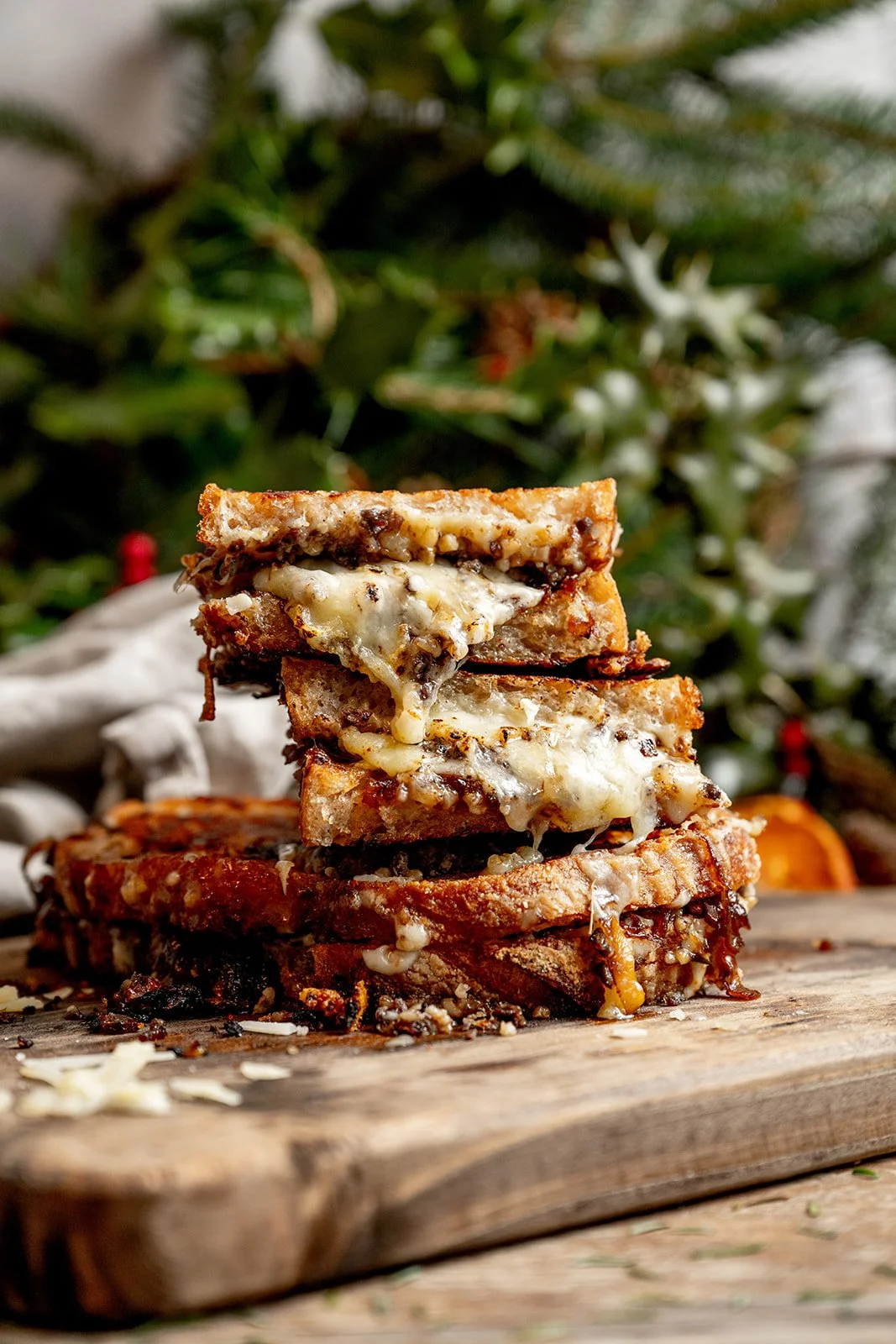
This haggis toastie is messy, indulgent, and absolutely brilliant for using up leftover haggis after Burns Night. Slow-cooked whisky shallots turn sticky and jammy, melted Scottish cheddar and tangy Bonnet goat's cheese flow out with every bite, and crumbled haggis adds savoury richness. It's the kind of sandwich you need to eat over a plate, with the cheese pull guaranteed and the whisky-sweet shallots cutting through all that richness. Make it the day after Burns Night when you're wondering what to do with the leftover haggis, or any time you want something properly satisfying and unapologetically Scottish.

Haggis Toastie with Deep Whisky Shallots and Scottish Cheeses
Indulgent haggis toastie with slow-cooked whisky shallots and melted Scottish cheddar and Mull cheese. Perfect for using up leftover Burns Night haggis.
Ingredients
- 4 large banana shallots, thinly sliced
- 1.5 tbsp butter
- 3 to 4 thyme sprigs
- 5 tbsp whisky
- 1 tbsp soft brown sugar
- 1 tsp wholegrain mustard (optional)
- 250g haggis, cooked
- 250g Scottish cheddar (such as Isle of Mull), grated
- 200g Bonnet Scottish goat's cheese or similar, grated or crumbled
- 4 slices thick sourdough or country style loaf
- 50g very soft butter for spreading on the outside (or 25g soft butter + 2 tbsp mayonnaise mixed together)
- 2 tbsp wholegrain, Dijon or English mustard for spreading inside (optional)
Instructions
- Melt the butter in a pan over low heat and add the thyme sprigs.
- Add the sliced shallots and cook very slowly over low heat for at least 15 minutes, stirring occasionally, until completely soft, golden and starting to caramelise. Don't rush this step - you want them really deep, sweet and jammy. The slower you cook them, the better they'll taste.
- The thyme leaves will detach from the stems as the shallots cook. Remove and discard the woody stems.
- Add the whisky, brown sugar, and wholegrain mustard if using. Season with salt and black pepper.
- Let the mixture bubble and reduce until sticky and almost jammy in consistency, not wet. This takes about 5 minutes. You want the shallots deep and glossy. Set aside.
- Crumble the cooked haggis with a fork into small pieces. This is easier at room temperature when the fat isn't fridge-cold and firm.
- Mix the cheddar and goat's cheese together in a bowl. .
- If using butter and mayo together, mix to create a spreadable mixture. Otherwise, use just soft butter. Spread this on the outside of each slice of bread.
- If using mustard inside the sandwich, spread a thin layer on the inside of each slice.
- Place two slices of bread butter-side down. Build each toastie with a thick layer of the mixed cheese, a generous mound of crumbled haggis (use all of it between the two sandwiches), plenty of whisky shallots, and more cheese on top.
- Close with the second slice of bread, buttered side facing out.
- Heat a large, heavy-based stainless steel frying pan (big enough for both toasties with room to flip, or cook in batches) over medium heat.
- Place the toasties in the pan and cook low and slow so the cheese fully melts before the bread gets too dark. Press down lightly with a spatula to help the filling compact and the cheese melt.
- Cook for 5 to 6 minutes on the first side until deep golden and crisp.
- Carefully flip with a wide spatula and cook for another 5 to 6 minutes on the second side. The cheese should be completely molten and the bread deep golden brown and crisp.
- Rest for 1 minute before cutting so the filling settles slightly but still flows when you cut into it. Perfect cheese pull guaranteed.
- Serve immediately while hot and molten.
Nutrition Facts
Calories
835Fat
28 gSugar
12 gProtein
40 gCarbs
58 gApproximate values per serving


Ingredients and Sourcing Tips
Haggis
Use leftover cooked haggis from Burns Night, or buy ready-cooked haggis from the supermarket. Macsween is a widely available brand. The haggis needs to be already cooked - you're just crumbling it and warming it through in the toastie. Traditional haggis contains offal, oats and spices, but vegetarian haggis works well too if you prefer.
Scottish cheddar
Use a proper Scottish cheddar like Isle of Mull, Mull of Kintyre, or Seriously Strong Scottish Cheddar. Isle of Mull is a clothbound Scottish cheddar with a rich, nutty flavour that melts beautifully. You want something with good flavour and melting properties. Mature or extra mature cheddar works best - mild cheddar doesn't have enough flavour to stand up to the haggis.
Bonnet goat's cheese
Bonnet is a Scottish goat's cheese with a creamy, tangy flavour that melts well and adds complexity against the rich haggis and cheddar. It comes in different styles - the semi-soft version is easy to grate or crumble. If you can't find Bonnet specifically, use another good Scottish goat's cheese like Caboc (though this is much softer and creamier) or Golden Cross. In a pinch, French chèvre works but won't have the same Scottish authenticity.
Shallots
Banana shallots are larger and milder than regular shallots, making them perfect for slow cooking. If you can't find them, use 6 to 8 regular shallots instead, or 2 large red onions thinly sliced.
Whisky
Use a decent Scotch whisky - it doesn't need to be expensive single malt, but don't use the absolute bottom shelf either. A blended Scotch like Famous Grouse or Teacher's works perfectly. The alcohol cooks off, leaving just the flavour.
Bread
Thick-cut sourdough or a good country style loaf or bloomer works best. You want substantial bread that won't get soggy from all the filling. Each slice should be about 1.5cm thick.
Butter and mayonnaise
The butter adds flavour, the mayo (if using) adds extra crispiness to the outside. You can mix soft butter with a couple of tablespoon of mayo for the best of both, or just use butter on its own. Don't use margarine or spread - proper butter is essential.
Variations and Dietary Swaps
Vegetarian version
Use vegetarian haggis instead of traditional haggis. The texture and spicing are very similar. Everything else stays the same.
Different meats
Black pudding works brilliantly in place of haggis - crumble it the same way and it brings a rich, earthy flavour. Slow-cooked pulled pork or leftover roast beef also work well with the whisky shallots and Scottish cheese. For something lighter, use shredded roast chicken, though you'll want to add extra seasoning as it's much milder than haggis.
Different cheeses
If you can't find Bonnet goat's cheese, use all Scottish cheddar (450g total), or try another Scottish goat's cheese. Smoked cheddar adds extra depth. A little crumbled blue cheese (Lanark Blue or Strathdon Blue) is delicious but can be overpowering - use sparingly.
Extra heat
Add a teaspoon of wholegrain mustard or a pinch of cayenne pepper to the haggis before assembling for extra warmth.
Apple addition
Thinly sliced sharp apple (Granny Smith) adds a tart crunch that cuts through the richness. Layer it with the haggis.
Pickle on the side
Serve with pickled onions, cornichons or branston pickle on the side to cut through all that cheese and richness.
No whisky
If you don't want to use whisky, replace it with 3 tbsp balsamic vinegar and 2 tbsp water. It won't be the same but will still give you sticky, sweet-tart shallots.
Kitchen Notes
Slow-cooking the shallots
Don't rush the shallots. The 15+ minutes of slow cooking is what transforms them from raw and sharp to sweet, sticky and jammy. Keep the heat low and be patient.
Haggis temperature
If your haggis is straight from the fridge, let it come to room temperature before crumbling. The fat in cold haggis is firm and harder to break up. Room temperature haggis crumbles easily with a fork and also warms more easily when in the pan.
Cheese distribution
Put cheese on both the top and bottom of the filling so it melts around everything and glues the sandwich together. Don't skimp - you want generous cheese for proper flow.
Low and slow cooking
Medium-low heat is crucial. Too high and the bread burns before the cheese melts. Too low and it takes forever and the bread steams rather than crisps. You want a gentle sizzle.
Pressing
Press down lightly with a spatula while cooking to help compact the filling and encourage the cheese to melt, but don't squash it flat or you'll squeeze out all the filling.
Flipping
Use a wide spatula and be confident when flipping. Support the toastie from underneath with the spatular and fingers on top and flip quickly. If you're nervous, cook them one at a time so you have more space and control.
Resting
The 1-minute rest is important. It lets the filling set just slightly so it doesn't all pour out the second you cut into it, but it stays molten enough for a good cheese pull.
Serving immediately
These are best eaten straight away while the cheese is molten and the bread is crisp. They don't keep or reheat well.
Serving Suggestions
How to serve
Cut each toastie in half diagonally and serve on a plate with plenty of napkins. These are messy - embrace it. The cheese will flow, the haggis will crumble out, and the shallots will ooze. That's part of the appeal.
What to serve alongside
A simple green salad dressed with sharp vinaigrette cuts through the richness. Pickles or cornichons add acidity. Chips or crisps on the side make it feel more substantial. A cold beer or a dram of whisky alongside is very Scottish and very appropriate.
When to serve
This is perfect for the day after Burns Night when you're wondering what to do with leftover haggis. It's also brilliant for a weekend lunch or casual dinner any time of year. Make it when you want something indulgent and comforting.
Presentation
The presentation is meant to be rustic and messy. The cheese pull when you pull the halves apart is the main visual appeal. Serve on a wooden board or simple plates and let the toastie speak for itself.
Portion sizes
One toastie per person is generous. These are substantial sandwiches packed with cheese, haggis and shallots. Serve with a light salad or pickles.
Temperature
Serve hot and molten, straight from the pan. The cheese should still be flowing when you cut into it.