Dutch Baby Eggs Royale
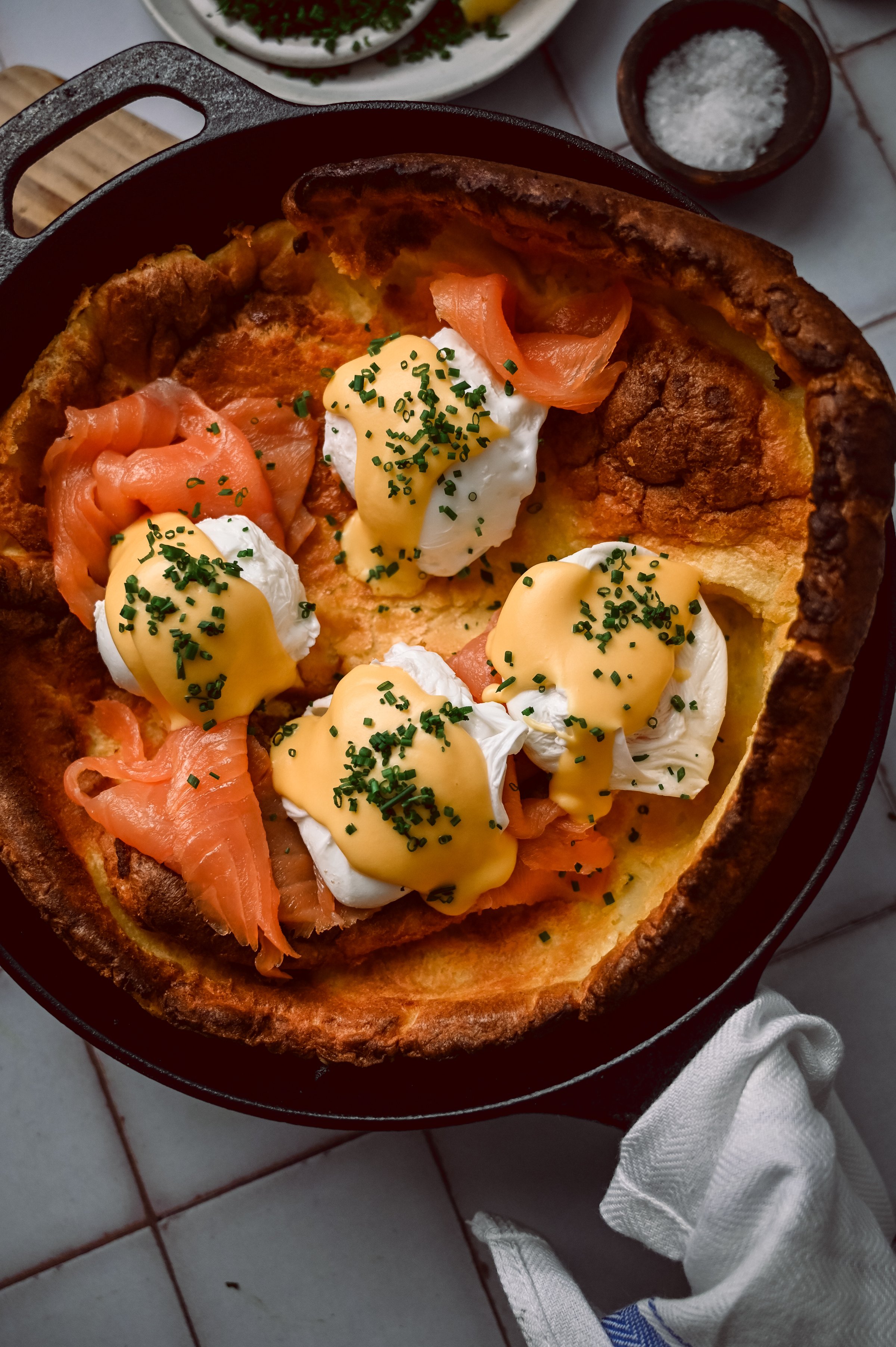
This Dutch baby eggs royale is what happens when you cross a dramatic puffed pancake with classic eggs benedict. The Dutch baby bakes into a towering, crisp-edged spectacle that collapses slightly when you take it out of the oven, creating the perfect vessel for buttery hollandaise, silky poached eggs, and ribbons of smoked salmon. It's a proper showstopper for Pancake Day brunch but also surprisingly manageable if you get your timing right. The pancake batter comes together in minutes, the hollandaise is rich and thick, and the eggs poach while everything bakes. You need to work quickly once the Dutch baby comes out because it deflates as it cools - the dramatic puff is temporary but the base stays crisp and golden. Serve it immediately while the edges are still puffed and crisp and the eggs are warm, and you've got something that looks restaurant-level but is completely doable at home

Dutch Baby Eggs Royale
A towering puffed Dutch baby pancake topped with poached eggs, smoked salmon, and rich hollandaise. Timing is everything but the result is spectacular.
Ingredients
- 3 large eggs
- 150 ml whole milk, room temp or slightly warmed
- 100 g plain flour
- ½ tsp salt
- 30 g butter (for the pan)
- 6 egg yolks
- 230 g unsalted butter, melted and warm
- 1 tbsp lemon juice
- Pinch of salt
- 200 to 250 g smoked salmon, torn into ribbons
- 4 eggs for poaching
- 2 tbsp white wine vinegar (for poaching water)
- Chives, finely snipped
- Black pepper
- Lemon zest, optional
Instructions
- Heat the oven to 220°C. Place the 30 cm cast iron skillet or ovenproof frying pan inside to heat fully.
- Blend the eggs, milk, flour and salt until smooth. Rest for 5 minutes.
- When the pan is ripping hot, add the butter. As soon as it melts and foams, pour in the batter. Immediately return to the oven and bake for 15 minutes until towering, puffed and deep golden. Do not open the door.
- Make the hollandaise: using a handheld electric whisk, whisk the egg yolks with the lemon juice and a pinch of salt in a heatproof bowl set over a pan of barely simmering water (bain marie) until slightly thickened. With the whisk running, slowly stream in the warm melted butter, whisking constantly until glossy and thick. If easier, you can remove the bowl and rest it on a folded tea towel on the counter while you pour, but return it to the heat briefly to fully emulsify. Adjust seasoning with lemon and salt. Keep warm over the pan (off the heat).
- Bring a deep pan of water with a couple of tablespoons of white wine vinegar to the boil, then reduce to a bare simmer on low heat. Carefully crack each egg into the water, put the lid on and poach for 3-4 minutes until the whites are set and the yolks soft. Drain on kitchen paper.
- When the Dutch baby is done, let it settle for 1 minute so the centre softens slightly. Layer in the smoked salmon. Arrange the 4 poached eggs on top. Spoon over hollandaise. Finish with chives, black pepper and lemon zest if you like it bright.
- Serve immediately while the pancake is crisp and the eggs are still warm.
Nutrition Facts
Calories
890Fat
58 gSugar
4 gProtein
42 gCarbs
52 gApproximate values per serving


Ingredients and Sourcing Tips
Eggs
Very fresh eggs are essential for poaching - the whites hold together much better than older eggs. Check the date on the box and use the freshest you can find. For the Dutch baby batter, room temperature eggs blend more smoothly. You need 3 for the pancake batter and 4 for poaching, plus 6 yolks for hollandaise, so buy at least a dozen. Large eggs are the standard here - if you only have medium eggs, you might need to use 4 eggs instead of 3 to get the right batter consistency.
Smoked salmon
You need cold-smoked salmon slices, the kind you'd put on a bagel - not hot-smoked flakes. Scottish or Norwegian are both good, or decent supermarket own-brand works fine. You want about 200-250g, which is quite a lot and won't be cheap, but this is a special occasion dish. Tear it into ribbons rather than leaving it in whole slices so it goes further and distributes better. The cheapest packets can be quite wet and over salted, so go mid-range if you can.
Butter
Unsalted butter for the hollandaise is essential so you can control the salt level. For the Dutch baby, regular butter works fine since it's just greasing the pan. You need 30g for the pan and 230g for the hollandaise, so grab 300g total. The hollandaise butter needs to be melted and warm but not scorching hot when you add it - about the temperature of a hot bath.
Plain flour
Standard plain flour for the Dutch baby. Don't use self-raising as you want complete control over the rise. Weigh it properly rather than using cups - 100g is not much flour so it needs to be accurate. The batter should be thin and pourable, almost like crepe batter.
Whole milk
Full-fat whole milk gives the Dutch baby its richness. Don't use semi-skimmed or skimmed - the fat content matters for texture and flavour. Room temperature or slightly warmed milk blends better with the eggs and creates a smoother batter. If it's straight from the fridge, warm it gently in the microwave for 20 seconds.
White wine vinegar
This goes in the poaching water to help the egg whites set and hold their shape. A couple of tablespoons in a deep pan of water is enough. White wine vinegar is milder than malt vinegar so it doesn't flavour the eggs.
Lemon juice
Fresh lemon juice for the hollandaise - bottled lemon juice tastes flat and artificial. One tablespoon is about half a lemon. You might want extra for adjusting the sauce at the end, so have the other half ready. The acidity cuts through the richness of the butter and helps the emulsion.
Variations and Dietary Swaps
Classic eggs benedict version
Replace the smoked salmon with thick slices of ham or back bacon. Fry or grill the bacon until crisp before layering it on the Dutch baby. You get the same luxurious effect but with a more traditional eggs benedict flavour.
Eggs florentine style
Wilt a big handful of spinach in butter with garlic, squeeze out excess water, and layer it under the poached eggs instead of salmon. This makes it vegetarian and adds iron-rich greens. You could add some sautéed mushrooms too for extra depth.
Crab or prawn version
Use fresh white crab meat or cooked prawns instead of salmon. Dress them lightly with lemon juice and black pepper before layering. This is more delicate and sweet, brilliant for a special occasion.
Smoked trout
Swap smoked salmon for hot-smoked trout. It flakes beautifully and has a more robust, slightly less salty flavour. You can find it in most supermarkets near the smoked mackerel.
Smaller portion of hollandaise
This makes about 300ml of hollandaise which is very generous. If you want less sauce, use 4 egg yolks with 170g butter - this gives you about 200ml, which is still plenty for two people.
Herb hollandaise
Mix in a handful of finely chopped soft herbs - tarragon, chervil, or parsley - at the end for a green, aromatic sauce. This is particularly good with the salmon version.
Individual Dutch babies
Divide the batter between two smaller cast iron skillets (about 15-20cm each) and bake for 12-14 minutes. This gives each person their own dramatic puffed pancake and makes serving easier.
Gluten-free
Use a 1:1 gluten-free flour blend for the Dutch baby. The texture will be slightly different - possibly less dramatic rise - but it still works. Everything else in the recipe is gluten-free.
Kitchen Notes
Timing is everything
The Dutch baby bakes for 15 minutes, eggs poach for 3-4 minutes, and hollandaise takes about 5-8 minutes. The key is having the hollandaise made and kept warm before the Dutch baby comes out. Make the hollandaise first, keep it over the warm (not hot) water, then poach the eggs in the last 4 minutes of the Dutch baby baking. This way everything comes together hot and you can assemble immediately.
Pan must be screaming hot
The pan needs to preheat in the oven until it's genuinely too hot to touch. This is what creates the dramatic rise, just like Yorkshire puddings. When you add the butter it should sizzle and foam immediately. Pour the batter in and get it straight back in the oven - don't leave it sitting on the counter or you lose heat.
Don't open the oven door
Opening the door during baking releases heat and steam, which deflates the Dutch baby. Resist the urge to check on it until the full 15 minutes are up. You'll know it's done when it's towering and deep golden brown at the edges.
The pancake structure
Dutch babies puff up dramatically in the oven with high crisp edges and a risen centre. When you take it out, the centre may stay puffed or sink slightly - either way is fine. You'll likely need to gently press the centre down to create space for the eggs and toppings. The edges should stay crisp and golden.
Hollandaise can split
If your hollandaise looks grainy or separated, the emulsion has broken. This usually happens if the butter was too hot or you added it too quickly. To fix it, start with a fresh egg yolk in a clean bowl, whisk it, then very slowly whisk in the broken sauce. It should come back together. Prevention is easier - keep the heat gentle and add butter slowly.
Keeping hollandaise warm
Once made, keep the hollandaise over the pan of hot (not simmering) water off the stove. This holds it at the right temperature without cooking the eggs further. If it gets too thick while sitting, whisk in a teaspoon of warm water to loosen it.
Poaching eggs successfully
Fresh eggs are the single biggest factor in neat poached eggs. The water should be barely simmering - vigorous bubbling breaks up the whites. Crack each egg into a small cup first, then slide it gently into the water if thats easier. The lid traps steam which helps cook the tops.
Pan size matters
A 30cm pan is important for this quantity of batter. If your pan is too small, the Dutch baby will be too thick and won't get the dramatic rise. Too large and it'll be thin and crispy all over rather than custardy in the middle. Cast iron holds heat beautifully but any ovenproof skillet works as long as the handle is metal.
Resting the batter
The 5-minute rest lets the flour hydrate fully and the air bubbles settle. This creates a smoother batter and better rise. Don't skip this step even though it's brief.
Leftover hollandaise
This makes about 300ml of hollandaise which is generous. Leftovers keep in the fridge for 1 day and can be gently rewarmed in a bain marie, whisking constantly. It won't be quite as silky as fresh but it's still usable. You can also use it on steamed vegetables or grilled fish. Ideally press some cling film to the surface of the leftover sauce before putting in the fridge to prevent a skin forming.
Serving Suggestions
How to serve
Bring the whole skillet to the table if it looks presentable, or carefully slide the Dutch baby onto a large serving platter. Cut it into two generous portions and plate immediately. The drama is in the presentation - towering edges, glossy hollandaise, vibrant salmon, and green herbs. Each person should get 2 poached eggs.
What to serve alongside
This is substantial enough to be the main event for brunch. Serve with a simple rocket or watercress salad dressed with lemon and olive oil to cut through the richness. Roasted cherry tomatoes on the vine add acidity and colour. A glass of chilled Champagne or Buck's Fizz is traditional. Strong coffee or fresh orange juice for a non-alcoholic option.
When to serve
Perfect for Pancake Day, obviously, but also brilliant for Easter brunch, Mother's Day, birthdays, or any special occasion breakfast. It's impressive enough for guests but manageable enough for a weekend treat. Make it when you want to show off a bit without spending hours in the kitchen.
Temperature
Serve immediately while the Dutch baby edges are still crisp and the pancake is warm. The poached eggs should have runny yolks that break and mingle with the hollandaise. This isn't a dish you can make ahead and reheat - it's all about the moment it comes together.
Portion sizes
This genuinely serves 2 as a substantial brunch. Each person gets half the Dutch baby, 2 poached eggs, generous salmon, and plenty of hollandaise. It's rich and filling. If you're serving it as part of a bigger spread with other dishes, you could stretch it to 3-4 people.
Extra touches
Finish with a squeeze of fresh lemon juice over the salmon. Add capers if you like their briny punch. A few fresh dill fronds instead of chives work beautifully with salmon. Keep it simple - the dish is already doing a lot.