A classic panna cotta designed for unmoulding requires a firm structure to hold its shape on a plate. This version takes a different approach: a gentle, soft-set cream crafted to be spooned directly from a dish. By keeping the gelatine balance light and whisking warm honeyed cream into cold buttermilk, the result is a velvety, delicate dessert with a refreshing, tangy edge. Served alongside crisp pistachio biscuits and fresh diced peaches, it makes an effortless, make-ahead center-piece for summer dining.

Honey & Buttermilk Panna Cotta with Pistachio Biscuit & Peach
A soft, spoon-from-the-dish set buttermilk panna cotta sweetened with honey, served alongside a crisp, oil-based pistachio mandelbrot biscuit and fresh diced peaches.
Ingredients
- 900g double cream
- 600g cold buttermilk
- 350g honey
- 2g fine salt
- 12 sheets platinum leaf gelatine (Dr. Oetker standard)
- 280g plain flour
- 130g caster sugar
- 100ml neutral oil (sunflower or light olive oil)
- 2 large eggs
- 1/2 tsp bicarbonate of soda
- 1.25 tsp cream of tartar
- Pinch of fine salt
- 130g shelled pistachios
- Zest of 1 orange (optional)
- 3–4 ripe peaches (about 450–500g), stoned and finely diced
- Small handful of fresh Greek basil leaves (optional)
Instructions
- Add the double cream, honey, and salt to a saucepan. Warm over medium heat to roughly 60°C, whisking gently to dissolve the honey completely. Do not allow the mixture to boil.
- Submerge the gelatine sheets in a bowl of cold water for 4–5 minutes until soft and pliable.
- Squeeze excess water from the gelatine and whisk it into the warm cream mixture until fully dissolved.
- Put the cold buttermilk into a very large bowl and pour the cream into it through a sieve to catch any undissolved gelatine strands.
- Carefully pour into a deep 20cm x 30cm ceramic baking dish.
- Press cling film onto the surface and chill in the fridge for at least 6 hours (ideally overnight) until set.
- For the biscuits, whisk the eggs, caster sugar, and oil together in a bowl until pale and slightly thickened.
- Sift and fold in the plain flour, bicarbonate of soda, cream of tartar, salt, pistachios, and orange zest to form a soft, sticky dough.
- Shape into a flat log roughly 25cm x 15cm x 3cm on a parchment-lined baking sheet and chill for 20 minutes. Preheat the oven to 170°C fan and bake for 15–20 minutes until firm and set through.
- Cool the log at room temperature until firm, at least 2 hours.
- Slice crosswise into 0.5cm thin biscuits using a sharp serrated knife with a slow sawing motion.
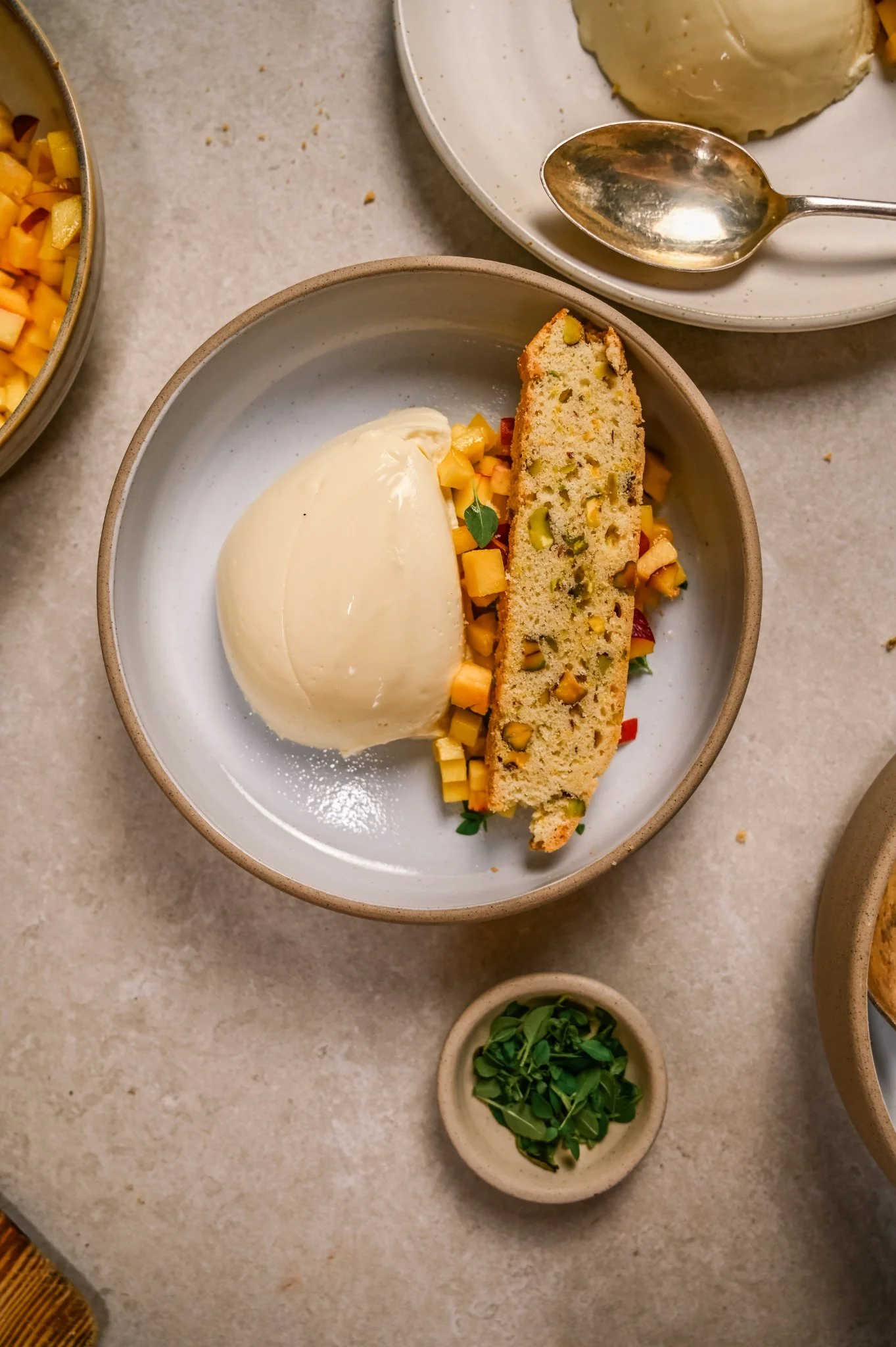
- Stone and finely dice the peaches to around half centimetre cubes. Spoon the panna cotta directly from the dish into shallow bowls alongside a couple of tablespoons of diced peaches, fresh Greek basil leaves, and a biscuit.
Nutrition Facts
Calories
590Protein
8 gSugar
28 gCarbs
42 gFat
44 gHealthy fats and proteins come from the double cream, buttermilk, pistachios, and eggs. Carbs and sugars derive from the honey, fruit, and flour.


Ingredient Notes
Buttermilk and Double Cream Double cream provides the fat structure required for a rich, mouth-coating body, while buttermilk adds a refreshing tartness that cuts through the heavy dairy. Keeping the buttermilk cold and whisking the warm cream into it off the heat preserves its smooth texture without splitting, allowing the gelatine to set the mix evenly.
Honey Variety Cold temperatures dull our perception of sweetness, meaning delicate, pale floral honeys can taste muted once chilled alongside heavy cream. Choosing a medium-to-dark honey—such as wildflower, heather, or chestnut—ensures a distinct, robust aroma and assertive sweetness that easily cuts through the rich dairy once set.
Neutral Oil for the Biscuits Using a neutral oil (such as sunflower or light olive oil) instead of butter removes water from the dough, allowing the fat to coat the flour proteins entirely. This prevents gluten development and yields a lighter, cleaner crunch with a firm snap. The resulting dry structure holds its crispness far better during service alongside the cold cream.
Fresh Peaches and Greek Basil Dicing the peaches ensures an even distribution of fresh fruit across every spoonful of cream. Chopping them just before serving preserves a clean, bright texture. If you dice them an hour or two ahead, the peaches will soften slightly, giving a gentler, more yielding texture on the plate. A few tiny Greek basil leaves add a subtle herbal note that pairs naturally with stone fruit and honey.
Kitchen Notes
The Warm-to-Cold Temperature Rule Never heat buttermilk directly on the stove. High heat causes its acidified proteins to denature and clump, turning the dairy grainy and split. Warming your cream, honey, and salt to 60°C is enough to dissolve the bloomed gelatine, and whisking that warm mixture into the cold buttermilk off the heat regulates the overall temperature instantly for a smooth, velvety finish.
Dish Selection and Fill Depth This recipe relies on a spoonable dish-set rather than an unmoulded presentation. Pouring the mixture into a roughly 20cm x 30cm dish yields a fill depth of roughly 5cm. This depth allows the cream to set evenly while making it easy to scoop clean portions onto plates. Use whatever size dish you have, deeper is better to end up with a nice domed scoop. The total volume of the mix is 1.8L
Cooling the Biscuit Log Allow the baked biscuit log to cool completely at room temperature for at least two hours before slicing. Slicing the log while still warm causes the pistachios to catch and tear through the crumb, crumbling the dough. Once fully cooled and firm, a sharp serrated knife cuts clean 0.5cm slices without shattering the edges.
Bloom Gelatine in Cold Water Always bloom gelatine sheets in plenty of cold water. Warm or lukewarm water causes the gelatine to dissolve directly into the bowl, meaning valuable gelling power gets lost down the sink when you squeeze out the sheets. Cold water hydrates and softens the leaf structure while keeping the gelatine intact for the pan.
Variations
Gluten-Free Version Swap the 280g of plain flour in the biscuit dough for a commercial 1-to-1 gluten-free baking flour blend (ensure it contains xanthan gum to bind the dough). Because oil is a liquid fat that coats the alternative starches thoroughly, it yields a crisp, light biscuit.
Fruit Swaps If ripe peaches are out of season, swap them for fresh raspberries, poached quince, or roasted figs. The sharp, vibrant acidity of fresh berries cuts cleanly through the rich dairy, while poached or roasted autumn fruits draw out the deeper, aromatic notes of the honey.
Nut Alternatives Whole blanched almonds or toasted hazelnuts work as direct replacements for pistachios in the biscuit dough. If using hazelnuts, remove the skins after roasting so the papery husks do not burn during the initial log bake or alter the clean crunch of the biscuit.
Serving Suggestions
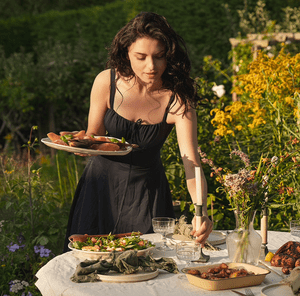
Dinner Party Platter Bring the ceramic dish straight to the table alongside a small bowl of diced peaches and a plate of sliced pistachio biscuits, allowing guests to scoop their own portions.
Individual Plated Dessert Spoon a generous portion of panna cotta into a shallow bowl alongside two tablespoons of diced peaches, scatter a few Greek basil leaves over the fruit, and lean a pistachio biscuit against the cream.
With Dessert Wine Pair this dish with a glass of chilled Sauternes or a Greek Vinsanto; their rich, concentrated sweetness and dried-fruit depth echo the floral honey and ripe peaches. For a lighter contrast, a gently sparkling Moscato d'Asti offers a delicate, floral lift that cleanses the palate between bites of rich cream.
Zero Waste
Peach Syrup If you have leftover peach trim or bruised fruit, toss the flesh with an equal weight of granulated sugar in a clean jar and leave it at room temperature for a few hours. The sugar draws out the natural juices through osmosis, creating a vibrant, uncooked peach syrup perfect for stirring into iced tea, drizzling over yogurt, or mixing into cocktails.
Biscuit Offcuts and Crumbles Any end-pieces, leftovers, or biscuits that crumble while slicing can be crushed into small clusters. Store them in a jar to sprinkle over yoghurt, ice cream, or stewed fruit for an easy crisp topping.
FAQ
Why did my buttermilk panna cotta curdle?
Curdling occurs when buttermilk is heated directly on the stove or mixed with boiling cream. Always remove the warm cream base from the heat and pour it through a sieve directly into the bowl of cold buttermilk. This instantly regulates the temperature of the dairy while catching any undissolved gelatine strands, ensuring a smooth, velvety finish.
Can I turn this panna cotta out of individual moulds?
This specific recipe uses a lower gelatine ratio designed for a soft, spoonable dish-set. If you want to turn panna cottas out of individual moulds, increase the platinum gelatine from 12 sheets to 14 sheets so it holds its shape when unmoulded.
How far in advance can I make this dessert?
You can make both components ahead of time. Keep the panna cotta covered in the fridge for up to 3 days. Store the cooled biscuits in an airtight container at room temperature for up to 5 days.