Rhubarb and Elderflower Cordial
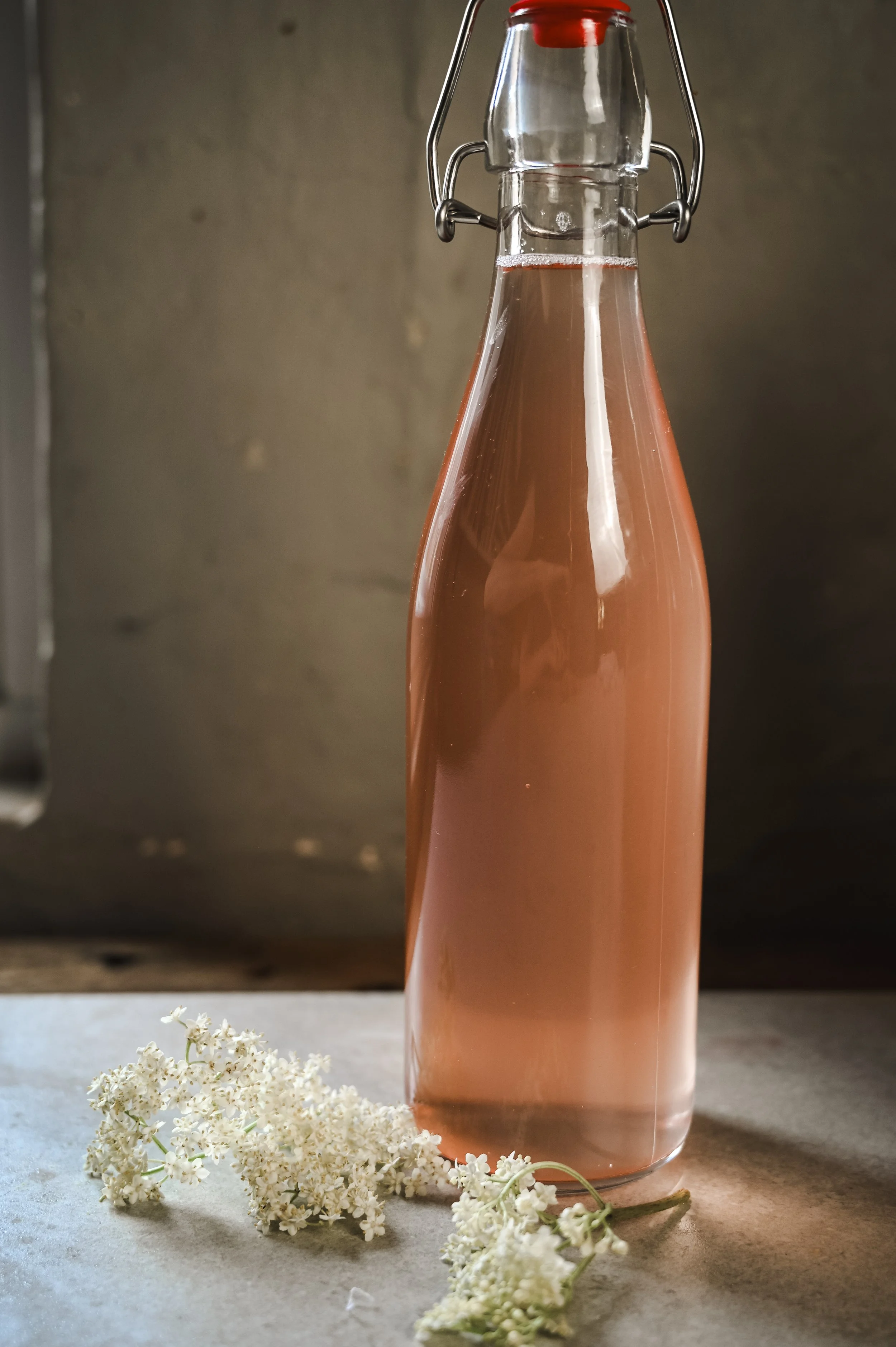
This rhubarb and elderflower cordial catches the short window in late May and early June when both are in season. The rhubarb is simmered into a deep pink syrup, then whole elderflower heads steep in it for 24 hours before being strained out. What you get is a pale, gently floral cordial, low in sugar and a striking colour in the bottle. Whole heads rather than stripped florets, which give the same flavour with far less fiddle and look far better in the jar. Find my elderflower foraging guide here.

Rhubarb and Elderflower Cordial
Whole elderflower heads steeped in a deep pink roasted rhubarb syrup with lemon and citric acid. A light, low-sugar cordial for the short window in late spring when rhubarb and elderflower overlap
Ingredients
- 4 large rhubarb stalks (approximately 600g) cut into 10–15cm lengths
- 3 litres water (divided, half for the syrup and half cold for the jar)
- 1.7kg caster sugar
- 15–20 large elderflower heads, thick main stem removed, shaken to dislodge insects
- Zest and juice of 3 unwaxed lemons
- 65g citric acid
Instructions
- Combine the rhubarb, 1.5 litres of the water and all the sugar in your largest saucepan. Bring to a simmer over medium heat, stirring to dissolve the sugar, then cook for 12 to 15 minutes until the rhubarb is completely soft and the syrup is deep pink. Remove from the heat.
- Pour the remaining 1.5 litres of cold water into the 6.5 litre jar, then add the elderflower heads, lemon zest, lemon juice and citric acid.
- Pour the hot rhubarb syrup, with all the rhubarb, into the jar. The cold water tempers it, bringing it down to hot-to-the-touch but no longer aggressively steaming. That is the point you want: warm enough to draw out the flavour, not so hot it scorches the flowers and turns them bitter. Stir well to dissolve the citric acid.
- Seal the jar and leave to steep at room temperature for 24 hours, moving it to the fridge once fully cool if your kitchen is very warm.
- After 24 hours, strain through a muslin-lined sieve into a large bowl or jug. Let it drip under gravity without pressing, as pressing the rhubarb will cloud the cordial. This can take 20 to 30 minutes.
- Pour into sterilised bottles and seal. Refrigerate.
Nutrition Facts
Calories
55Sugar
13 gCarbs
13 gApproximate values per serving


Ingredient Notes
Rhubarb
Outdoor rhubarb, around from March through mid summer, has the robust, tart flavour that stands up to cooking down into a syrup. Forced rhubarb is more tender and a deeper pink, but it is done by around March and long gone by the time the elderflower is out, so it does not line up for this one.
Elderflower
Pick on a dry, sunny morning when the heads are fully open and smell sweet and heady. Leave behind any that smell of cat or ammonia, that note carries straight through into the cordial. Use whole heads rather than stripped florets: with the thick main stem trimmed off, only the fine flower branches remain, and so little green going into a warm rather than boiling infusion adds no noticeable bitterness.
Lemons
Unwaxed, since you are using the zest as well as the juice. Three give enough acidity and citrus lift to balance the sugar without tipping the cordial into sharp.
Citric acid
This does two jobs: it brightens the flavour and it helps the cordial keep. Look for it in the home-baking or home-brewing aisle. The 65g here is on the lighter side, in keeping with a lower-sugar cordial you drink quickly rather than store for months.
Sugar
Caster sugar dissolves cleanly into the hot syrup. The 1.7kg is deliberately less than a traditional concentrate would use for this volume, for a lighter, cleaner result. The trade-off is shelf life, which is covered below.
Kitchen Notes
Tempering the water
This is the step that makes or breaks the flavour. The flowers go into the cold water first, then the hot rhubarb syrup is poured in on top, which brings everything down to hot-to-the-touch but no longer aggressively steaming. Pour boiling syrup straight onto elderflower and you scorch it: the delicate floral aroma cooks off and bitterness comes through from the flowers and the stems. Warm, not hot, is the target.
To wash or not to wash
Opinion splits here. Washing rinses away pollen, which carries flavour, but over a 24-hour steep I think a brief rinse in cold water does no harm and clears the dust and most of the insects. If you would rather keep more of the pollen, just shake the heads well to dislodge bugs. Either way the muslin catches anything left when you strain.
The 24-hour steep
Long and cool does the work, so there is no need to heat-extract hard. Given a full day the flavour draws out gently and stays fresh. Steep at room temperature, and move the jar to the fridge once it has fully cooled if your kitchen is very warm.
Strain without pressing
Line a sieve with muslin and let the cordial drip through under gravity, which can take 20 to 30 minutes. It is tempting to squeeze the pulp for the last of it, but pressing pushes fine rhubarb solids through and clouds the cordial. A clear cordial is worth the wait.
Sterilise the bottles
Wash bottles in hot soapy water and dry them in a low oven (without the rubber seals), or run them through a hot dishwasher cycle and fill them while still warm. Clean bottles matter more than usual here, because the lower sugar means less natural preservation.
Keeping it
Two to three weeks in the fridge, no longer. The low sugar that keeps the flavour clean is the same thing that shortens its life, so this is not one to make and forget at the back of a cupboard. For longer storage, freeze in 200 to 300ml portions and defrost as you need them.
Variations
Add ginger
A few slices of fresh ginger cooked in with the rhubarb give a gentle warmth that sits well against the floral elderflower.
A deeper pink
If your rhubarb is more green than red and you want a stronger colour, a small handful of raspberries or a few strawberries in the syrup will push it pinker, with only a faint berry note.
Gooseberry and elderflower
Gooseberry is the classic partner for elderflower, and the two seasons meet in June. Swap the rhubarb for the same weight of topped and tailed gooseberries for a sharper, more traditional cordial.
Halve it
The quantities scale down cleanly. Halve everything for a smaller batch if a 6.5 litre jar feels like too much, or if you do not have one.
Serving Suggestions
How to serve
Dilute roughly 1 part cordial to 6 to 8 parts water, more generous than the usual 1:10, because this is a lighter cordial. Still water keeps it delicate; sparkling water over plenty of ice makes it a proper summer drink. A slice of lemon or a sprig of mint is enough, it does not need much. Taste as you go and adjust to suit.
Make it a long drink
The cordial earns its keep behind a bar. A measure over gin, topped with soda or tonic, makes a clean elderflower spritz. A splash in the bottom of a glass topped with chilled prosecco is an easy aperitif. It lifts a plain vodka and soda too.
Beyond the glass
It is a good base for other things. Use it in place of some of the liquid in a jelly, or stir it through an ice cream or sorbet base for an elderflower and rhubarb note.
Zero Waste
Bottle small and share it
Because it does not keep long, the surest way to waste none of it is to bottle it into smaller 500ml bottles and give some away. It makes a generous homemade gift, and it means none of a short-lived batch is lost.
FAQ
When can you make rhubarb and elderflower cordial? Late May into early June, the short window when rhubarb and elderflower are in season together.
How long does it keep? Two to three weeks in the fridge, or freeze it in 200 to 300ml portions for longer.
How much should you dilute it? Roughly 1 part cordial to 6 to 8 parts water, rather than the usual 1:10, because it's a lighter cordial. Taste and adjust.
Why has my cordial gone cloudy? Pressing the pulp while straining clouds it. Let it drip through the muslin under gravity rather than squeezing.
Is rhubarb and elderflower cordial alcoholic? No. It's a non-alcoholic cordial, so it's fine for children and anyone avoiding alcohol. The whisky and spirits only come in if you use it as a cocktail base.
What can I use instead of citric acid? Not much, in truth. It gives a clean sharpness and helps the cordial keep, and the lemon already in the recipe does not do that job on its own. It is cheap and easy to find in the baking or world foods aisle, so the simplest answer is to get some. At a push you can add more lemon juice, but it shifts the flavour and the cordial will not keep as well, so treat that version as one to drink quickly.
Where do you get elderflower? It is not sold in supermarkets, so you forage it from elder trees in late spring, along hedgerows and woodland edges and in parks. My foraging guide on Substack covers how to identify elder and pick it safely.