Satay Roast Savoy Cabbage
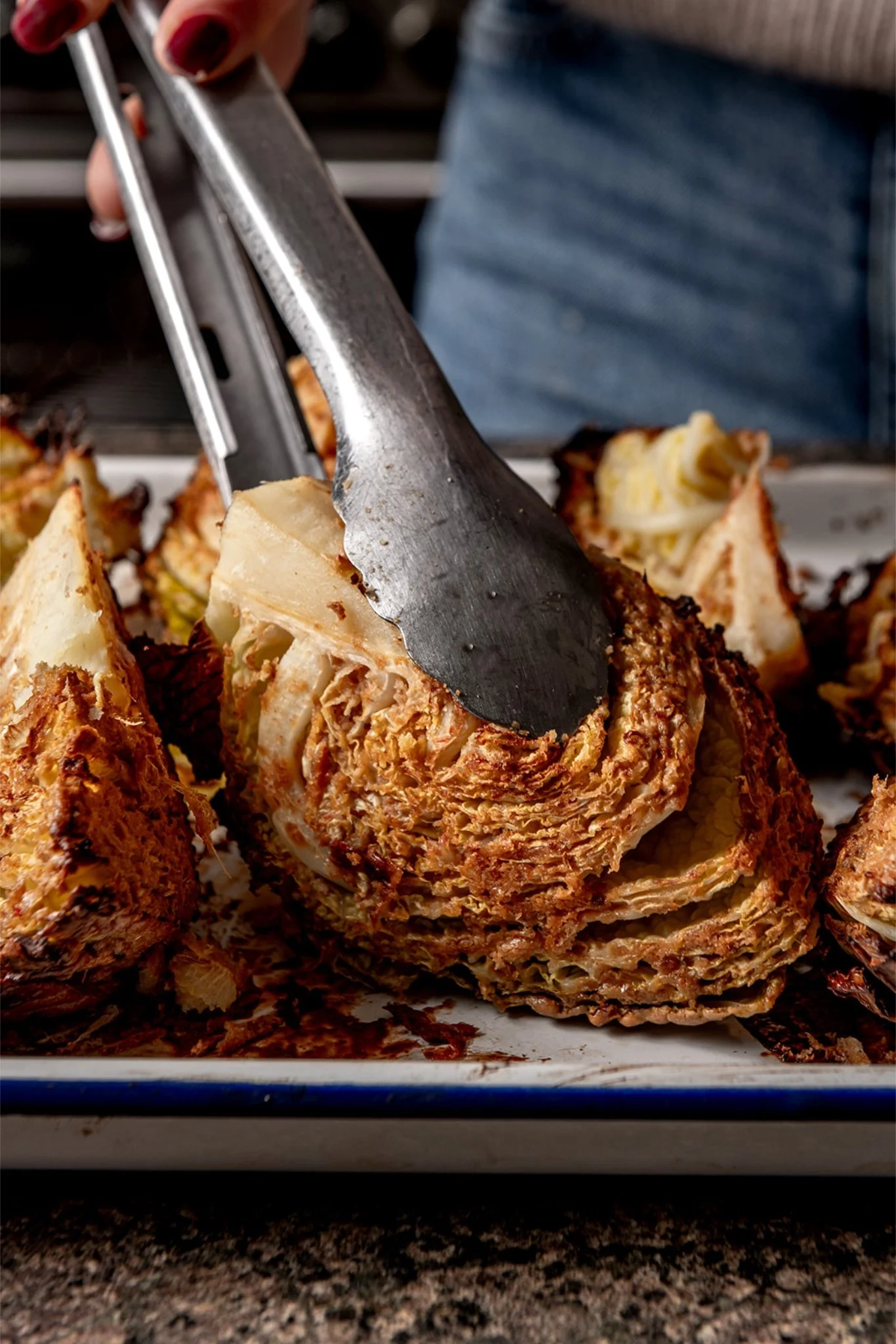
Savoy cabbage does not get nearly enough credit. Most of the time it ends up braised or shredded into something, which is fine, but roasting it changes the picture entirely. The outer leaves turn dark and crisp, the inside stays tender, and the natural sweetness of the cabbage intensifies in a way that makes it a genuinely good vehicle for bold flavours. Here it gets a generous coating of peanut satay sauce before going into the oven, so the sauce caramelises against the leaves and builds up a smoky, nutty crust. Once it comes out, more warm sauce goes over the top, then a scatter of toasted peanuts, sesame seeds, coriander, and fresh chilli. The whole thing is vegan as written, naturally gluten-free with a simple tamari swap, and inexpensive to make. It works as a vegan main with rice or noodles, or alongside grilled skewers as a side that holds its own.

Satay Roast Savoy Cabbage
Savoy cabbage wedges brushed with a rich peanut satay sauce, roasted until the edges caramelise and char, then finished with more sauce and scattered with peanuts, sesame seeds, coriander, and chilli. Vegan, bold, and flavour-packed. Works as a main or a serious side dish.
Ingredients
- 1 Savoy cabbage, cut into 6 to 8 wedges
- 2 tbsp olive oil
- 1 tbsp sesame oil
- Salt and black pepper, to taste
- 5 tbsp smooth peanut butter
- 3 tbsp soy sauce (or tamari for gluten-free)
- Juice and zest of 1 lime
- 1 tbsp maple syrup or brown sugar
- 1 4cm piece of fresh ginger, grated
- 1 garlic clove, minced
- 100ml coconut cream (or water for a lighter sauce)
- Chilli flakes or a drizzle of sriracha (optional)
- Toasted peanuts, roughly chopped
- Sesame seeds
- Fresh coriander leaves
- Chopped red chillies
- Lime wedges
Instructions
- Preheat the oven to 200°C (180°C fan).
- Make the satay sauce by combining the peanut butter, soy sauce, lime juice and zest, maple syrup or sugar, ginger, garlic, and coconut cream in a small saucepan. Stir over medium heat until smooth and slightly thickened. Add a splash more liquid if needed to loosen. Set aside two-thirds of the sauce for serving.
- Arrange the cabbage wedges in a single layer on a lined baking tray. Mix a little olive oil and sesame oil into the remaining satay sauce, then brush it generously over all sides of the cabbage.
- Roast for 25 to 30 minutes, turning the wedges halfway through, until the edges are caramelised and lightly charred.
- Transfer to a serving platter and drizzle with the reserved warm satay sauce. Scatter over the peanuts, sesame seeds, coriander, and red chilli. Serve with lime wedges alongside.
Notes
Brush the satay sauce on generously before roasting so it caramelises properly in the oven. Flip the cabbage halfway through so both sides catch colour. If the sauce begins to dry out on the tray, brush over a little extra when you turn the wedges.
You are looking for cabbage that is tender through the middle but crisp and caramelised at the edges, with the outermost leaves catching slightly for smoky flavour.
The satay sauce can be made 2 to 3 days ahead and stored in the fridge. Warm it gently before using.
Leftovers keep in the fridge for up to 2 days. Reheat in a hot oven to bring the caramelised texture back rather than using the microwave.
Nutrition Facts
Calories
462Fat
35 gSugar
14 gProtein
14 gCarbs
29 gApproximate values per serving


Ingredient Notes
Savoy cabbage
Choose a firm cabbage with crisp, dark green outer leaves. Those outer leaves are the ones that will char and crisp in the oven, so you want them in good condition. The natural sweetness of the cabbage deepens with roasting and works beautifully against the richness of the satay sauce. Pointed cabbage or hispi works as an alternative if that is what you have.
Peanut butter
Smooth peanut butter gives the sauce its creamy, coating texture. Crunchy works if you want more bite in the sauce itself. For the best flavour, look for a roasted peanut butter where the only ingredient is peanuts, without added sugar or palm oil.
Soy sauce
Light soy sauce keeps the flavours clean and lets the peanut and lime come through. Dark soy will make the sauce richer and slightly sweeter. Use tamari to keep the recipe gluten-free.
Coconut cream
This gives the sauce body and richness. Coconut milk works for a slightly looser result, or swap for water if you want a lighter sauce.
Maple syrup or brown sugar
Either works to balance the saltiness of the soy and the sharpness of the lime. Maple syrup gives a slightly deeper, more complex sweetness. If you are not cooking for vegans, a good runny honey is a lovely alternative and works particularly well with the peanut and ginger.
Kitchen Notes
Brush the satay sauce on thickly before roasting rather than thinly, so there is enough to caramelise and build up flavour rather than just dry out. Flipping the wedges halfway through is important for getting colour on both sides. Keep an eye on the sauce during roasting and brush over a little more sesame oil or extra sauce when you turn the wedges if it looks like it is catching too quickly.
The texture cue to look for is cabbage that is tender all the way through but with edges that are properly caramelised and slightly charred, not just golden. The outermost leaves should go quite dark and crisp. That char is flavour.
Variations
Nut-free
Replace the peanut butter with seed butter or tahini and swap the peanut garnish for toasted pumpkin seeds or sunflower seeds. The sauce will be slightly different in flavour but works well with both alternatives.
Extra protein
Serve with grilled tofu, tempeh, chicken thighs, or prawns to make this a more substantial meal. All of them pair well with the satay sauce.
Flavour swaps
Stir a spoonful of red curry paste into the sauce for more heat and depth, or add a little white miso paste for extra umami.
Serving Suggestions
Serve piled on a platter with all the garnishes scattered over generously, with the extra sauce in a small bowl alongside for people to help themselves. Steamed jasmine rice or rice noodles turn this into a full vegan meal. It also works well alongside chicken satay skewers or grilled tofu skewers if you are feeding a crowd.
For drinks, a cold lager or IPA cuts through the richness well. A crisp dry cider is a good alternative. For non-alcoholic options, iced green tea, sparkling water with lime, or a cold ginger beer all work well with the flavours.