Lamb and Apricot Stuffed Savoy Cabbage Rolls with Harissa Tomato Sauce
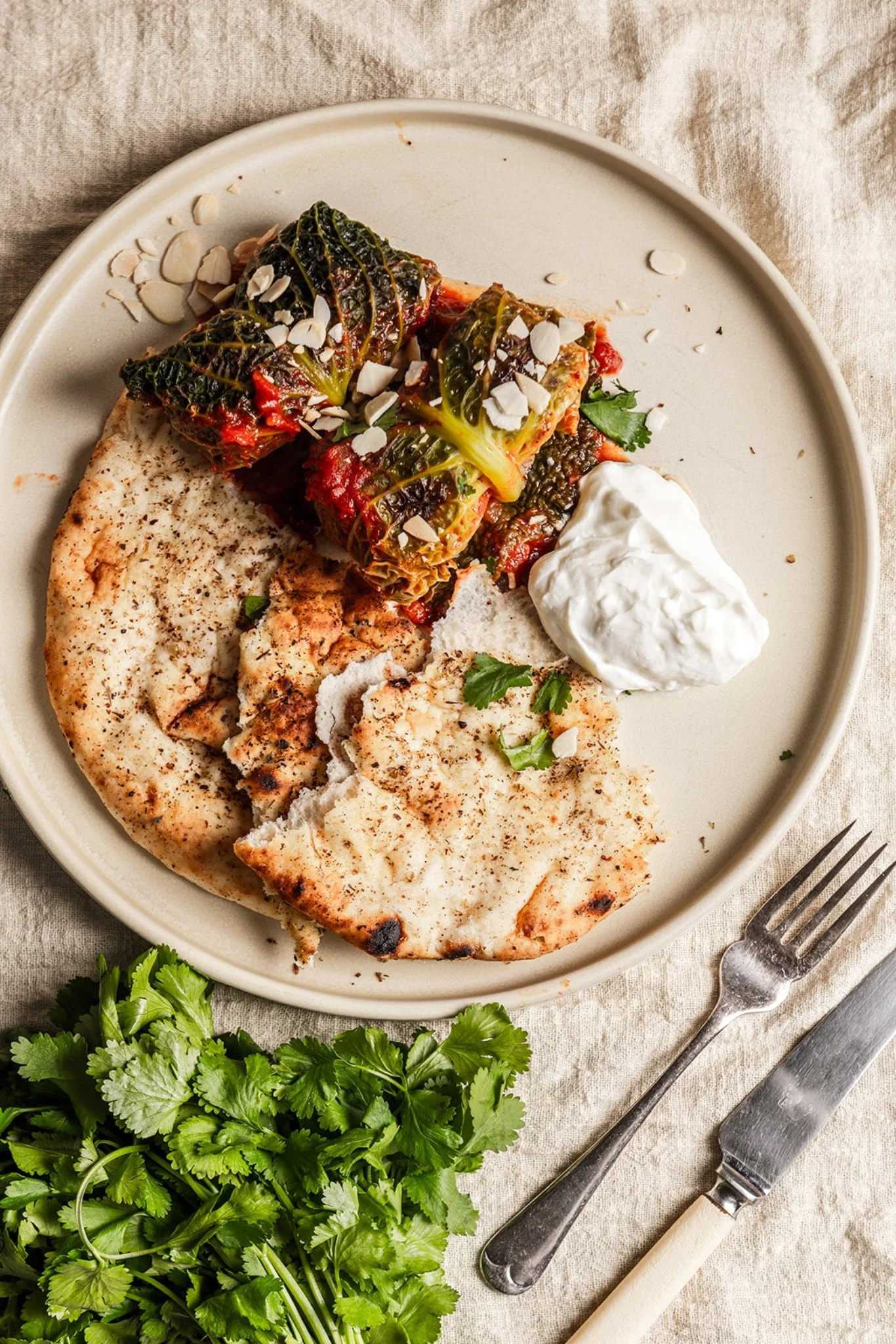
Stuffed cabbage rolls have a long history across Central Europe, the Middle East, and North Africa, each version shaped by the spices and ingredients of its region. These ones lean firmly toward North Africa, with a filling of lamb mince, dried apricots, quinoa, and a warm, complex blend of ras el hanout, cinnamon, coriander, and paprika. The rolls are packed tightly into a deep harissa tomato sauce and baked until the lamb is cooked through and the tops of the leaves catch and darken in the oven. It is the kind of dish that looks impressive on the table but comes together with straightforward technique. The sauce is bold and slightly spicy, the apricots bring sweetness that cuts through the richness of the lamb, and the quinoa adds texture throughout the filling without making it heavy.

Lamb and Apricot Stuffed Savoy Cabbage Rolls with Harissa Tomato Sauce
Savoy cabbage leaves filled with spiced lamb mince, quinoa, and dried apricots, rolled and baked in a deep harissa tomato sauce until the tops char and the filling is rich and fragrant. North African inspired, bold, and built for the table.
Ingredients
- 2 Savoy cabbages (you need about 16 large outer leaves)
- 2 tbsp olive oil
- 1 small onion, finely chopped
- 4 garlic cloves, minced
- 750g lamb mince, 20% fat
- 100g dried quinoa, cooked
- 150g dried apricots, roughly chopped
- 1½ tsp ground cinnamon
- 2 tsp ground coriander
- 2 tsp ras el hanout
- 1 tsp smoked paprika
- ½ tsp turmeric
- 2 tbsp fresh coriander, finely chopped
- Salt and black pepper, to taste
- 2 tbsp olive oil
- 1 small onion, finely chopped
- 3 garlic cloves, minced
- 1 tsp ground cumin
- 100g harissa paste, adjust to taste
- 400g tin chopped tomatoes
- 500ml passata
- 2 tsp sun-dried tomato paste
- 1 vegetable or chicken stock cube
- 1 tsp honey, optional, to balance heat
- Salt and black pepper, to taste
- 50g flaked almonds or pine nuts, toasted
- Fresh coriander leaves
- Flatbreads, couscous, or rice
- Plain yoghurt
- Lemon wedges
Instructions
- Bring a large pot of salted water to the boil. Remove the outer leaves from both cabbages carefully, peeling off around 16 large, intact leaves. Reserve the cabbage hearts for another use.
- Blanch the cabbage leaves in the boiling water for 2 to 3 minutes until pliable. Drain and lay flat on a clean tea towel to cool.
- Heat 2 tbsp olive oil in a frying pan over medium heat. Sauté the onion and garlic, stirring regularly, until softened and translucent. Remove from the heat and leave to cool slightly.
- In a large bowl, combine the lamb mince, cooked quinoa, chopped apricots, ground coriander, cinnamon, ras el hanout, smoked paprika, turmeric, fresh coriander, and the sautéed onion mixture. Season generously with salt and black pepper and mix well with your hands until everything is evenly combined.
- To make the sauce, heat 2 tbsp olive oil in a large, wide, ovenproof pan or Dutch oven over medium heat. Sauté the onion and garlic until softened. Stir in the cumin and harissa paste and cook for 1 minute to release the flavours. Add the chopped tomatoes, passata, sun-dried tomato paste, stock cube, and honey if using. Season with salt and black pepper and simmer for 10 minutes.
- Preheat the oven to 180°C (160°C fan).
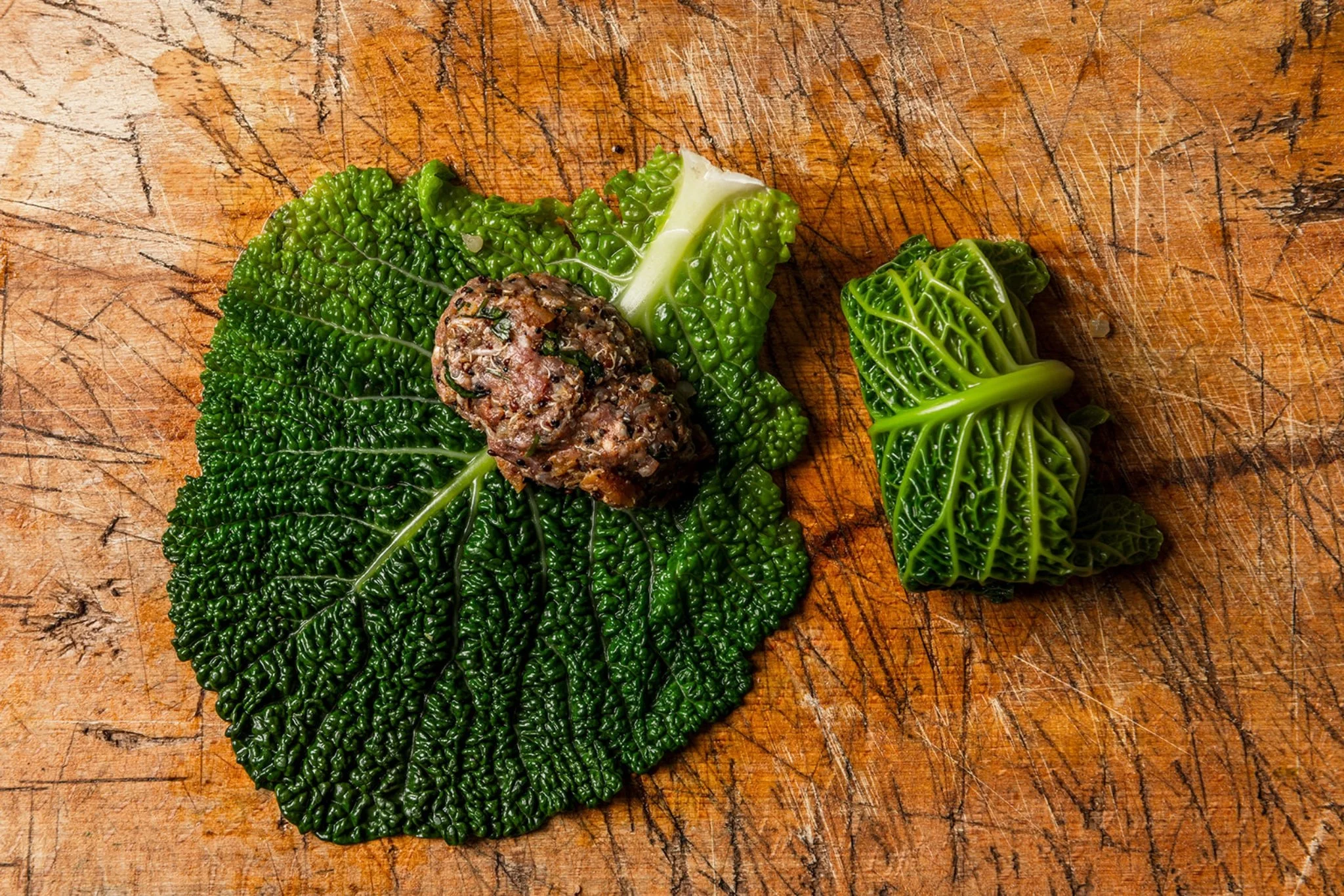
- Lay a cabbage leaf flat on a clean surface. Place about 2 tablespoons of filling at the base of the leaf. Fold the sides inward over the filling, then roll tightly from the base up toward the tip. Repeat with the remaining leaves and filling.
- Nestle the cabbage rolls seam side down into the harissa tomato sauce, packing them in snugly so they hold their shape during cooking.
- Cover with a lid and bake for 30 minutes until the lamb is cooked through. Remove the lid for the final 5 minutes to allow the tops to catch and colour slightly.
- Scatter with toasted flaked almonds or pine nuts and fresh coriander. Serve hot with flatbreads, couscous, or rice, with yoghurt and lemon wedges alongside.
Notes
Adjust the amount of harissa to your heat tolerance. Some brands are significantly hotter than others, so taste the sauce before adding the full quantity and build up from there.
The rolls can be assembled a day ahead and kept in the fridge unbaked. Add an extra 5 minutes to the covered baking time if going straight from cold.
You will be left with the hearts of both cabbages after removing the outer leaves. These are too good to waste. Shred and stir them into a stew or soup in the final few minutes of cooking, steam and toss in butter with a little salt and nutmeg, or shred finely and use raw in a slaw. They will keep in the fridge for up to 3 days wrapped tightly.
Nutrition Facts
Calories
520Fat
31 gSugar
12 gProtein
34 gCarbs
28 gApproximate values per serving


Ingredient Notes
Savoy cabbage
You only need the large outer leaves for rolling, which is why the recipe calls for two whole cabbages. Once you have peeled back enough leaves for the rolls, you will be left with two firm hearts. Do not throw these away. See the Kitchen Notes section for ideas on how to use them.
Lamb mince
Use lamb mince with around 20% fat. Leaner mince can make the filling dry and tight once baked. The fat keeps the filling juicy and carries the spices well.
Dried apricots
These add a gentle sweetness that balances the heat of the harissa and the earthiness of the spices. Chop them fairly small so they distribute evenly through the filling rather than clumping. Soft, ready-to-eat dried apricots work best here.
Ras el hanout
A North African spice blend that typically includes warm spices like cardamom, cumin, coriander, cinnamon, and rose petals. Quality varies considerably between brands, so use one you trust. A good ras el hanout should smell floral and complex, not just generically spiced.
Harissa
Heat levels vary a great deal between brands and styles. Rose harissa is milder and slightly floral. Standard harissa can be very hot. Taste before adding the full quantity and adjust from there. The sauce should be well-seasoned and have a background heat rather than an aggressive one.
Quinoa
Cook the quinoa before mixing it into the filling. It adds body and texture without making the rolls dense. Mixed quinoa works well here, or use whichever variety you have.
Kitchen Notes
Blanch until just pliable
Blanching the cabbage leaves until just pliable rather than fully soft is important. If they are too soft they will tear when you try to roll them. Two to three minutes in boiling water is usually enough. Lay them flat to cool rather than bunching them together, which can cause them to stick.
Rolling technique
Place the filling at the base of the leaf rather than the centre, fold the sides in first, then roll upward from the base. Rolling from the base gives you a tighter parcel that holds together during baking.
Packing the pan
Pack the rolls snugly in the sauce so they are held in place and do not unravel. Seam side down is essential. If your pan is not quite wide enough to fit them all in one layer, a second snug layer on top works well.
Remove the lid
Taking the lid off for the final 5 minutes gives the tops of the rolls colour and a little char, which adds flavour and looks good on the table. Do not skip this step.
Using the cabbage hearts
You will be left with the hearts of both cabbages after removing the outer leaves. These are well worth using. Shred finely and stir into a soup or stew in the final minutes of cooking, steam and toss in butter with a little nutmeg and salt, or slice raw and use in a slaw. They will keep in the fridge for up to 3 days wrapped tightly.
Variations
Vegetarian option
Replace the lamb mince with finely chopped mushrooms, crumbled cooked lentils, or a combination of both. The spices and sauce work just as well with a plant-based filling. Add a little extra olive oil to compensate for the fat in the lamb.
Adjust the heat
For a milder dish, reduce the harissa to 50g and add a little more passata to balance. For more heat, increase the harissa or add a pinch of chilli flakes to the sauce.
Swap the fruit
Dried sour cherries or raisins work in place of apricots if you want a slightly different flavour profile. Both have the same sweetness-and-acid function in the filling.
Serving Suggestions
Serve straight from the pan at the table with warm flatbreads to tear and use for scooping up the sauce, or with fluffy couscous or plain rice alongside. A generous spoonful of plain yoghurt on the side cuts through the richness and cools the heat from the harissa. Lemon wedges for squeezing over finish the dish well.
For drinks, a medium-bodied red such as a Grenache or a Syrah works well with the lamb and spice. For a white, an off-dry Riesling or Viognier has the body and slight sweetness to stand up to the harissa. For non-alcoholic, pomegranate juice with sparkling water and a squeeze of lemon is a good pairing with the North African flavours.