Buckwheat Crêpes with Leeks, Tarragon and Stilton
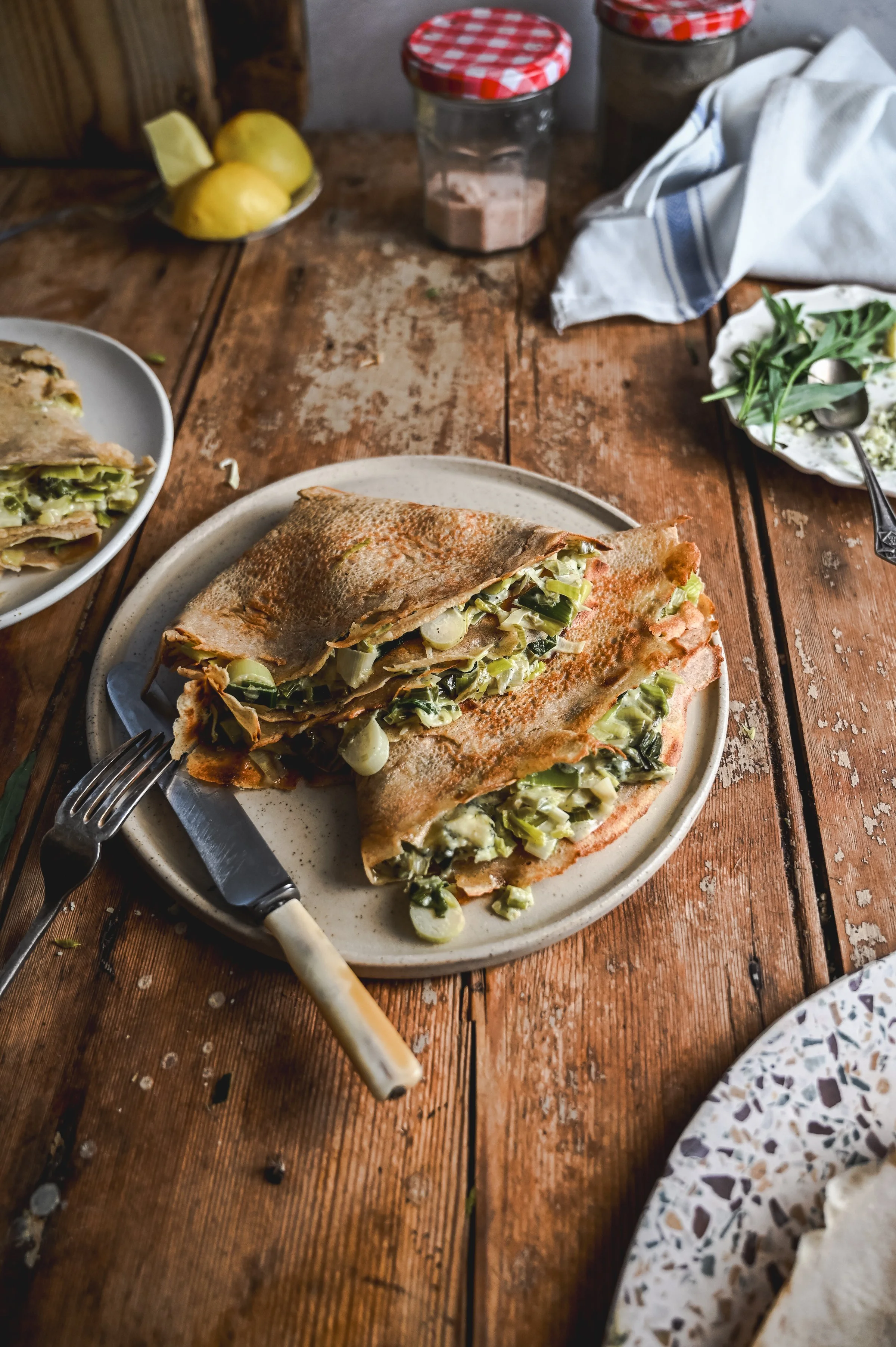
There are very few things a good crêpe cannot carry. This one is filled with leeks that have been cooked low and slow in butter until they are almost unrecognisably sweet and silky, folded through with tarragon and a little cream, and finished with a generous crumble of Stilton. The buckwheat batter has a mild, nutty depth that holds its own against the richness of the filling without overpowering it. It is the kind of savoury crêpe that suits a slow weekend lunch or a relaxed weeknight supper equally well.

Buckwheat Crêpes with Leeks, Tarragon and Stilton
Nutty buckwheat crêpes filled with slow-braised leeks in tarragon cream and crumbled Stilton. A savoury, elegant dish that comes together from a rested batter and a simple filling.
Ingredients
- 140g buckwheat flour
- 60g plain flour
- Pinch of fine salt
- 2 large eggs
- 350ml whole milk
- 50ml water
- 3 large leeks, finely sliced and washed (see notes)
- 40g unsalted butter
- Juice of half a lemon, or 1 tbsp white wine vinegar
- 150ml single cream
- Small handful of tarragon leaves, roughly chopped or torn
- 200g Stilton, crumbled
Instructions
- Make the batter first, as it benefits from resting. Whisk together the buckwheat flour, plain flour and salt in a large bowl. Make a well in the centre and roughly whisk in the eggs, then gradually whisk in the milk and water until you have a smooth, thin batter with no lumps. It should be the consistency of single cream, if it feels thick, add a splash more water. Cover and rest for at least 30 minutes. This rest matters: it allows the flour to fully hydrate and gives you a more pliable, less fragile crêpe.
- While the batter rests, make the filling. Melt the butter in a wide pan over a low to medium heat. Add the leeks and cook gently, stirring occasionally and more frequently towards the end to prevent catching, for around 15 minutes until completely soft, sweet and almost melting. They should not colour. Add the lemon juice and tarragon and stir through, then pour in the cream and cook for another 3 to 4 minutes until the cream has reduced slightly and coats the leeks. Taste and season with a little salt and black pepper, keeping in mind that the Stilton will add significant salt later. Keep warm over a very low heat while you cook the crêpes.
- Heat a 28–30cm ceramic or non-stick crêpe pan over a medium heat. Add a small knob of butter or a spritz of oil. Add a ladleful of batter and immediately tilt and swirl the pan to spread it thinly and evenly across the surface. Cook for about 3 minutes until the edges are lacy and lifting and the surface looks dry. Using a spatula, flip carefully and cook for another 1-2 minutes on the second side, the crêpes should be on the lighter side at this stage, as they go back into the pan later. Slide onto a warm plate and repeat with the remaining batter, stacking the crêpes as you go.
- Once all four crêpes are done, lay one flat in the pan still over a medium heat. Spoon a quarter of the warm leek mixture onto one half of the crêpe, then scatter over some of the crumbled Stilton. Leave for about 2 minutes to warm the filling and allow the Stilton to just begin to soften without fully melting. Fold the crêpe in half, then in half again to form a triangle, with the filling visible in the open centre. Lift onto a warm plate and repeat with the remaining crêpes.
- Serve immediately, with a simple green salad alongside if you like.
Nutrition Facts
Calories
870Fat
48 gCarbs
72 gSugar
7 gProtein
34 gApproximate values per serving


Ingredient Notes
Buckwheat flour
Buckwheat is a seed rather than a grain, with a distinctive earthy, slightly nutty flavour that works particularly well in savoury cooking. Using it alongside plain flour gives you the character of a traditional galette with a little more flexibility and a less fragile result. If you want a more intense buckwheat flavour, you can increase the ratio, but the crêpe becomes more brittle as the buckwheat proportion rises.
Leeks
You want large, mature leeks here rather than the slim baby variety. They take longer to braise down but give a much sweeter, more substantial filling. The easiest way to wash them is to chop first: trim the root end and any dry or damaged deep green tops, slice each leek in half lengthways, and cut into roughly half-centimetre half-moons. Submerge in a large bowl of cold water, swirl and lightly scrunch to loosen the dirt, then lift them gently from the water and drain through a sieve or on a clean tea towel.
Stilton
Use a good-quality Stilton and crumble it coarsely rather than grating. You want distinct pieces that soften gently against the warm filling rather than melting entirely into the cream. It is quite salty, which is why the leek filling should be deliberately underseasoned before you fill the crêpes.
Kitchen Notes
Rest the batter
The resting period is not optional. At least 30 minutes allows the flour to fully hydrate, which produces a smoother, more elastic batter that spreads evenly and holds together when folded. The batter can be made up to 24 hours ahead and kept covered in the fridge. It will thicken as it sits, so give it a good whisk and loosen with a splash of water before using. If it is still lumpy after whisking, blend on high speed for a few seconds to smooth it out.
Water in the batter
The combination of milk and water is deliberate. Milk adds richness and helps the crêpes colour evenly, but too much makes the batter heavy. The water thins it without adding fat, giving you a finer, lacier crêpe with crisper edges.
Cook the crêpes lightly
The crêpes go back into the pan once filled, so they should be relatively pale and just set when they first come out. An overcooked crêpe will catch or scorch when you reheat it with the filling inside. You are looking for set edges and a dry surface, not too much colour.
Make ahead
The leek filling can be made ahead and gently rewarmed before filling the crêpes. Do not stir the Stilton into the filling itself, crumbling it over at the last moment keeps it distinct and visible rather than disappearing into the sauce.
Variations
Without Stilton
Replace with a ripe Gorgonzola for something creamier and slightly less sharp, or with crumbled goat's cheese for a milder, more delicate result.
With mushrooms
Finely sliced chestnut mushrooms cooked alongside the leeks add an earthy depth and make the filling more substantial.
Gluten-free
Replace the plain flour with a gluten-free plain flour blend. Buckwheat flour is naturally gluten-free.
Serving Suggestions
These crêpes are a complete dish on their own. A simple green salad dressed with a light mustard vinaigrette is the most natural accompaniment, cutting through the richness without competing with the filling. Two crêpes each makes a substantial dinner portion. Served as a lunch or a starter, one crêpe per person is plenty and the recipe will comfortably stretch to four.