Korean Yangnyeom Cauliflower
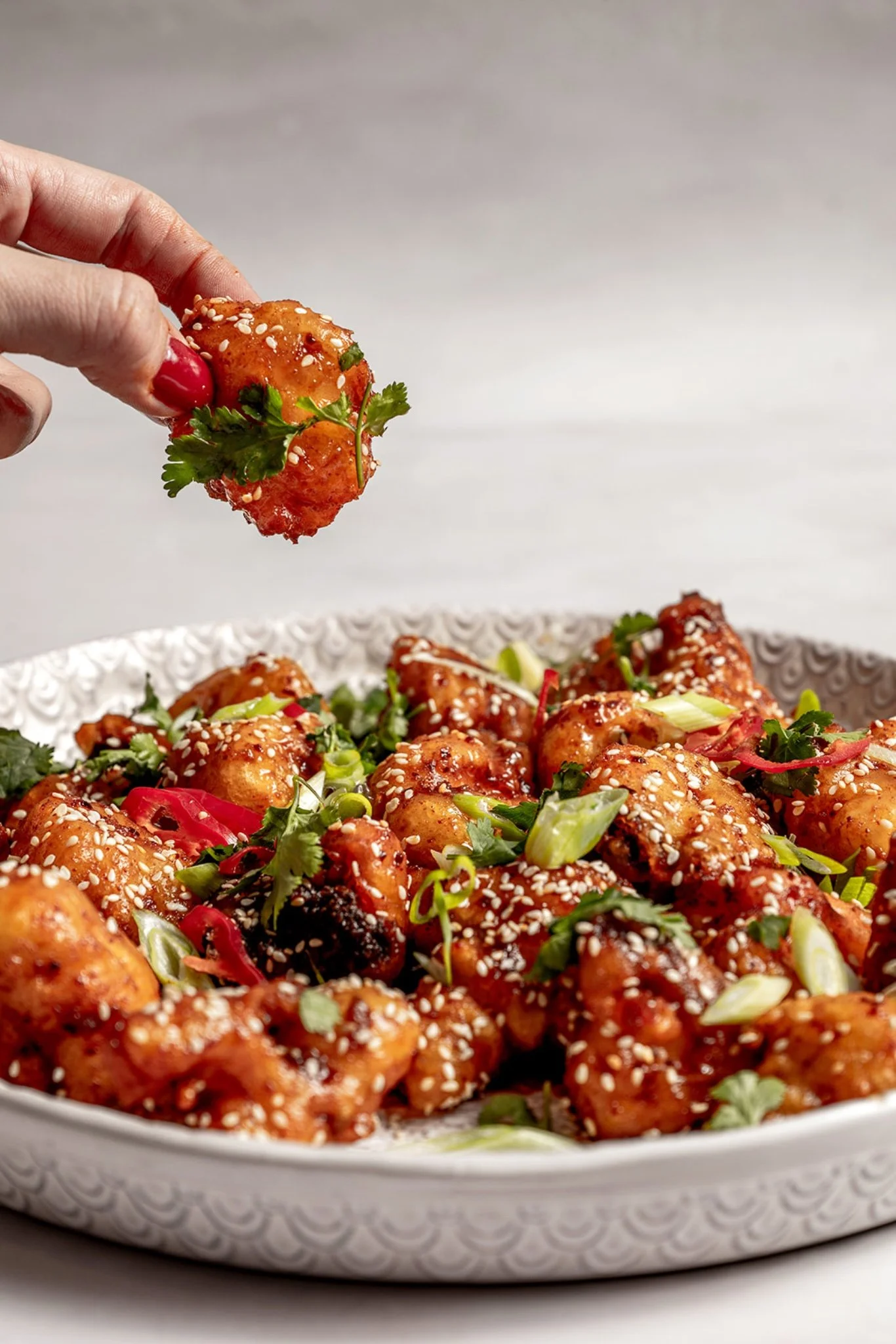
Korean fried chicken has a devoted following for good reason. The double fry technique produces a crust that stays crisp long after it comes out of the oil, and the yangnyeom glaze, sticky, spicy, and deeply savoury from the gochujang, clings to every surface without softening what is underneath. This version uses cauliflower in place of chicken, and it works brilliantly. The florets hold their shape through two rounds of frying, the batter stays crunchy, and the sauce coats them in a glossy, intensely flavoured layer that makes them very hard to stop eating. It works as a sharing starter, a side alongside rice, or quite honestly as something you eat standing at the kitchen counter while it is still hot.

Korean Yangnyeom Cauliflower
Crispy double-fried cauliflower florets coated in a sticky, spicy yangnyeom sauce made with gochujang, garlic, ginger, and rice vinegar.
Ingredients
- 1 large cauliflower (about 500g), cut into bite-sized florets
- 250g plain flour
- 150g potato starch or cornflour
- 1 tsp baking powder
- 1 tsp salt
- 500ml ice-cold soda water
- Neutral oil, for deep frying
- 80g gochujang
- 3 tbsp soy sauce
- 3 tbsp maple syrup or honey
- 3 tbsp rice vinegar
- 6 garlic cloves, minced
- 3 tsp ginger paste or freshly grated ginger
- 2 tsp Korean chilli flakes (gochugaru), optional
- 3 tsp sesame oil
- Toasted sesame seeds
- Sliced spring onions
- Sliced red chillies
- Fresh coriander leaves
- Lime wedges
Instructions
- Make the batter by whisking together the flour, potato starch, baking powder, and salt in a large bowl. Gradually add the ice-cold soda water, stirring until smooth. The batter should be slightly runny but thick enough to coat the florets. Keep it cold.
- Heat the oil in a deep, heavy-based pan to 170 to 180°C. Use a thermometer if you have one. Do not fill the pan more than one third full with oil.
- Working in batches, dip the cauliflower florets into the batter, letting the excess drip off, then lower carefully into the hot oil. Fry for 3 to 4 minutes until pale golden and just crisp. Remove with a slotted spoon and drain on a wire rack. Do not stack them or they will steam and lose their crunch.
- Once all the florets have had their first fry, increase the oil temperature to 190°C. Fry the cauliflower again in batches for 1 to 2 minutes until deep golden and extra crispy. Drain on the wire rack.
- While the cauliflower has its second fry, make the sauce. Combine the gochujang, soy sauce, maple syrup or honey, rice vinegar, garlic, ginger, gochugaru if using, and sesame oil in a small saucepan over low heat. Stir and simmer for 2 minutes until slightly thickened and glossy.
- Toss the hot crispy cauliflower in the warm sauce until every piece is evenly coated.
- Transfer to a serving plate and scatter with sesame seeds, spring onions, sliced chillies, and coriander. Serve immediately with lime wedges alongside.
Notes
Keep the batter cold throughout. If your kitchen is warm, set the bowl over ice while you work. A cold batter hitting hot oil is what creates the light, crispy coating.
Fry in small batches and do not crowd the pan. Adding too many florets at once drops the oil temperature and results in greasy, soggy batter rather than a crisp one.
Drain on a wire rack rather than kitchen paper. Kitchen paper traps steam underneath and softens the crust.
The sauce can be made ahead and kept in the fridge for up to a week. Warm it gently before tossing with the cauliflower.
Use maple syrup to keep the recipe fully vegan. Honey works equally well if you are not cooking for vegans.
Nutrition Facts
Calories
520Fat
18 gCarbs
78 gSugar
16 gProtein
11 gApproximate values per serving


Ingredient Notes
Cauliflower
Cut the florets to a fairly uniform size so they cook evenly. Too large and the inside will not be fully tender by the time the batter is done. Too small and they risk overcooking and falling apart on the second fry. Roughly the size of a large walnut is ideal.
Potato starch or cornflour
Both produce a light, crispy batter but potato starch gives a slightly more glass-like, shatteringly crisp crust that holds up particularly well once the sauce goes on. Cornflour is more widely available and works very well too. Use whichever you have, or whichever suits your dietary needs.
Soda water
The carbonation in the soda water creates a lighter, more aerated batter. Keep it ice cold right up until you use it, and do not overmix once it goes in. A few lumps in the batter are fine and preferable to overworking it.
Gochujang
A Korean fermented chilli paste with a depth of flavour that goes well beyond straightforward heat. It is rich, slightly sweet, and complex in a way that ordinary chilli sauce is not. You will find it in most supermarkets now, usually in a red tub or jar. Different brands vary in heat level so taste before adding the full quantity.
Gochugaru
Korean chilli flakes, coarser and fruitier than standard chilli flakes. They add an extra layer of heat and a slightly smoky quality to the sauce. They are optional but worth using if you can find them. Available in Asian supermarkets and online.
Ginger
Fresh ginger grated to a paste gives the cleanest flavour. Shop-bought ginger paste works well as a convenient alternative and is what the recipe uses if you go that route.
Maple syrup or honey
Both work to balance the heat of the gochujang and add the glossy sweetness that makes yangnyeom sauce so distinctive. Use maple syrup to keep the recipe fully vegan.
Kitchen Notes
Keep everything cold
The batter needs to stay cold from start to finish. Mix it in a bowl set over ice if your kitchen is warm, and keep the battered florets moving quickly into the hot oil. Cold batter hitting hot oil is what produces the light, shatteringly crisp crust.
Do not crowd the pan
Frying too many florets at once drops the oil temperature sharply, which means the batter absorbs oil rather than crisping immediately. Work in small batches and let the oil come back up to temperature between each one.
Use a wire rack
Draining on kitchen paper traps steam underneath and softens the crust. A wire rack lets air circulate all around the florets and keeps the bottom as crisp as the top.
The double fry
The first fry cooks the cauliflower through and sets the batter. The second, hotter fry drives out any remaining moisture and produces the deep golden, extra crispy shell. Do not skip it. The difference between a single fry and a double fry is significant.
Sauce and serve immediately
Once the cauliflower is tossed in the sauce the clock is ticking. Serve straight away for maximum crunch. If you are making this for a group, have the sauce warm and ready so you can toss and serve in one move.
Variations
Make it spicier
Increase the gochugaru or add a teaspoon of gochujang extra to the sauce. A drizzle of chilli oil over the finished dish also works well.
Make it milder
Reduce the gochujang to 50g and add a little extra maple syrup or honey to compensate. The sauce will be sweeter and less fierce but still has good depth from the garlic and ginger.
Swap the vegetable
Broccoli florets, aubergine chunks, or firm tofu cut into cubes all work well with the same batter and sauce. Adjust the frying time slightly depending on what you use.
Nutritional Notes
Cauliflower
Cauliflower is a good source of vitamin C and contains meaningful amounts of vitamin K, folate, and choline. It is naturally low in calories before the batter and frying, and provides a small amount of fibre per serving.
Gochujang
Gochujang is a fermented ingredient, and like other fermented foods it contains beneficial compounds that support gut health. It also contributes a small amount of the dish's natural heat through capsaicin, which has been associated with anti-inflammatory properties.
Serving Suggestions
How to serve
Pile onto a large plate and scatter the garnishes over generously. Serve immediately while the crust is still at its crispiest. Put lime wedges alongside for squeezing over at the table.
What to serve alongside
Steamed jasmine rice or sticky short grain rice turns this into a satisfying main. It also works well as part of a wider spread alongside other Korean inspired dishes. A simple cucumber salad dressed with rice vinegar, sesame oil, and a pinch of sugar is a good fresh contrast to the richness of the sauce.
Drinks
A very cold lager is the natural pairing here, something light and clean that cuts through the richness of the batter and the heat of the sauce. For non-alcoholic, an iced barley tea or sparkling water with lime works well.