Cauliflower Steak with Wild Garlic Chimichurri
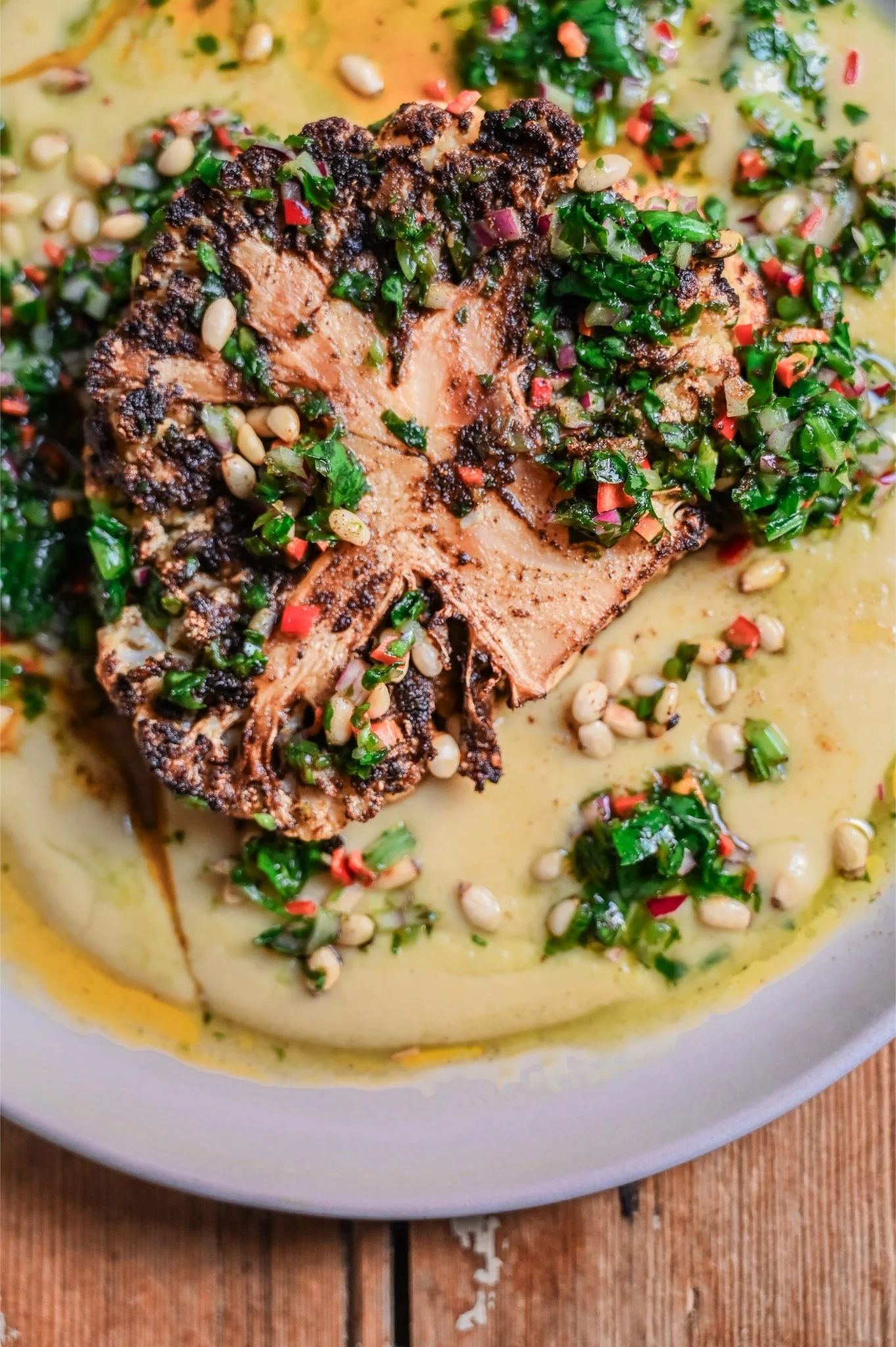
Wild garlic has a short, generous season and this is one of the recipes I look forward to making with it most. The chimichurri is the real reason to cook this dish. Wild garlic leaves, finely chopped and combined with red onion, chilli, olive oil and red wine vinegar, produce something brighter and more complex than a standard parsley chimichurri. The garlicky heat is there but it is softer, more aromatic, and it sits beautifully against the spiced cauliflower and the quiet richness of the bean purée underneath.
The cauliflower steaks are brushed in cumin, paprika and onion powder, fried hard in a hot pan to get proper colour, then finished in the oven. The result is caramelised at the edges with a texture that holds together well on the plate. The white bean purée does the work of something more substantial without the effort - it takes ten minutes and blends down to something genuinely silky. Together, the three elements make a plate that feels like a restaurant main, at home, on a weeknight.

Cauliflower Steak with Wild Garlic Chimichurri
A spice-rubbed cauliflower steak pan-fried until deeply golden then finished in the oven, served on a silky white bean purée with a punchy wild garlic chimichurri and toasted pine nuts. A vegetarian main that feels genuinely special.
Ingredients
- 80g wild garlic leaves, washed thoroughly
- 2 small red onions or 4 shallots, very finely diced
- 2 to 4 fresh red chillies, finely chopped (depending on size and heat preference)
- 150ml good olive oil
- 4 tbsp red wine vinegar
- 2 tsp caster sugar, or a small squeeze of honey
- Salt and black pepper
- 1 cauliflower, outer leaves removed, cut into inch-thick steaks
- 3 tbsp olive oil
- 2 tsp cumin
- 1 tbsp paprika
- 1 tsp onion powder
- Salt and black pepper
- 1 x 400g tin cannellini beans, drained
- 100ml to 150ml vegetable stock, adding more as needed
- Salt and black pepper
- 30g pine nuts, toasted in a dry pan until golden
Instructions
- Preheat the oven to 200°C fan. Mix the olive oil, cumin, paprika, onion powder and a generous pinch of salt together, then brush the mixture over both sides of the cauliflower steaks.
- Place a large frying pan over a high heat. Add a little oil and fry the steaks for 2-3 minutes on each side until deeply golden and charred at the edges.
- Transfer the steaks to a roasting tray and roast for 10 to 15 minutes until caramelised, turning once halfway through.
- While the cauliflower roasts, make the chimichurri. Finely chop the wild garlic leaves - you want them fairly fine but not a paste, with some texture remaining. Combine with the diced red onion, chilli, olive oil, red wine vinegar and sugar or honey. Season generously with salt and pepper. Taste, it should be punchy, acidic and well seasoned. Adjust the vinegar or salt as needed. Leave to sit for a few minutes to let the onion to mellow.
- For the white bean purée, warm the drained cannellini beans in a small pan with the stock over a medium heat for a few minutes. Season well, then blend until completely smooth, adding a little more stock if needed to loosen to a spreadable consistency.
- To serve, spoon the white bean purée onto warm plates. Place a cauliflower steak on top and spoon over a generous amount of chimichurri. Scatter over the toasted pine nuts and serve with extra chimichurri on the side.
Nutrition Facts
Calories
720Fat
56 gSugar
10 gProtein
14 gCarbs
42 gApproximate values per serving


Ingredient Notes
Wild garlic
Wild garlic grows in damp woodland and along shady hedgerows and is identifiable by its broad, bright green leaves and strong garlic scent. Season runs from late March through to May in the UK, peaking in April. Pick leaves before the white flowers fully open, when the flavour is at its most vivid. If you are buying rather than foraging, look for bunches with firm, flat leaves and no yellowing. Use the same day or store loosely wrapped in a damp cloth in the fridge for up to two days. Wash by submerging in plenty of cold water and swirling around and lifting out, leaving dirt and debris behind in the water. Dry thoroughly before chopping.
Cauliflower
One large cauliflower will yield two good steaks plus the outer florets, which can be roasted separately and eaten as a side or saved for soup. Cut straight down through the centre to keep the core intact, the core is what holds the steak together.
Chillies
The recipe calls for 2 to 4 fresh red chillies. The heat level of fresh chillies varies enormously depending on variety, size and season, taste before adding to the sauce to judge for yourself. Deseeding will give you flavour without as much heat.
Cannellini beans
A standard 400g tin works perfectly here, you dont need much puree, just something luxurious and creamy to bring the dish together. Drain and rinse before warming through. The blending is key to getting the purée smooth - a stick blender works, but a smoothie blender gives a silkier result.
Kitchen Notes
Getting colour on the cauliflower
The pan needs to be genuinely hot before the steaks go in. If the oil is not shimmering, the cauliflower will steam rather than fry and you will not get the deep golden crust that makes this dish.
Resting the chimichurri
Raw red onion in olive oil needs time to mellow. The vinegar softens the sharpness and the flavours come together properly. Made the day before, it is even better.
Blending the beans
Warm the beans through in the stock before blending. Cold beans from the tin blend to a grainier texture. Add stock a little at a time - you want the purée to be loose enough to spread on a warm plate but not so thin it runs. Season aggressively; beans absorb salt.
Variations
Without wild garlic
Outside of wild garlic season, flat-leaf parsley with oregano and coriander is traditional for chimichurri. Use the same quantity by weight. Add a small clove of raw garlic, finely grated, to compensate for the loss of the garlic note.
Added heat
A pinch of dried chilli flakes in the spice rub gives the cauliflower itself more fire, which works well if you like the heat to be present throughout rather than just in the sauce.
With yoghurt
A spoonful of thick natural yoghurt added to the bean purée before blending gives a lighter, slightly tangy result that cuts through the oil in the chimichurri very well.
Serving Suggestions
How to serve
Spoon the bean purée generously onto warm plates first, spreading it to the edges so the cauliflower has somewhere to sit. Place the steak on top, then spoon over the chimichurri. Scatter the pine nuts last. Bring extra chimichurri to the table.
What to serve alongside
This is a complete plate as it stands for two. If you are feeding more people or want additional bulk, warm flatbreads alongside work well, as do roasted new potatoes. A simple green salad with a sharp dressing cuts through the oil nicely.
When to serve it
This is a good dinner party main for vegetarian and vegan guests, precisely because it does not feel like an afterthought. It is also solid enough for a weeknight - the chimichurri takes no heat, the purée is ten minutes, and the oven does most of the work on the cauliflower.
Other uses for the chimichurri
This chimichurri makes more than you need for two portions of cauliflower, (around 500ml) which is very much intentional. The jar in the fridge is the point. It will keep for up to a week and here is what to do with the rest of it.
Spoon it over fried or soft-boiled eggs in the morning. The acidity cuts through the yolk in exactly the right way, and it turns a two-minute breakfast into something worth sitting down for.
It is very good alongside a bavette steak or lamb chops - anywhere you would normally reach for a salsa verde or a herb butter. The wild garlic note works particularly well with lamb.
Stir it through warm roasted new potatoes straight from the oven while they are still steaming. The oil soaks in and the vinegar lifts the whole thing. Add a spoonful of yoghurt on the side if you want.
Spoon it over a bowl of lentils with a fried egg on top. This is a good lunch that takes almost no effort and feels considerably more put-together than it has any right to.
It works on grilled or pan-fried white fish, sea bass, bream, cod, where something bright and punchy is exactly what the plate needs. The garlic note is more aromatic than raw, which means it doesn't overpower delicate fish the way a standard garlic sauce might.
Spread it on grilled sourdough with a generous crumbling of ricotta or fresh goat's cheese on top. The combination of creamy cheese, acidic chimichurri and charred bread is one of those things that sounds simple and tastes disproportionately good.
Toss it through warm chickpeas with some wilted greens and eat it as it is, or pile it into a wrap with roasted vegetables and something cooling alongside. It also works stirred through warm grains - farro, spelt, pearl barley, as the base of a more substantial salad.
The acidity and the garlic note make this a sauce that cuts through richness well. Think of it wherever you would reach for something bright, and it will probably work.