Fennel and Chickpea Stew with Crispy Ham Hock
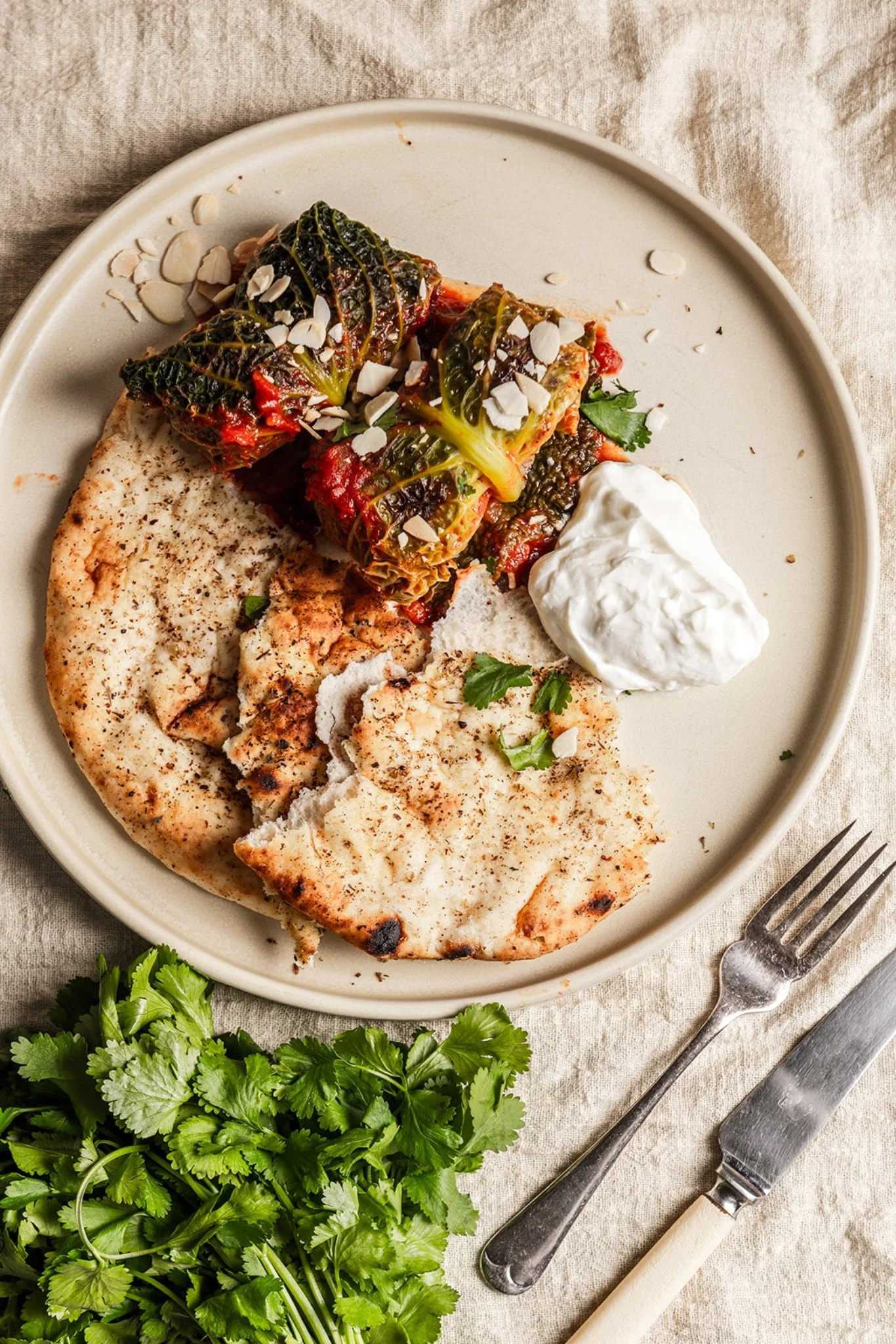
Stuffed cabbage rolls have a long history across Central Europe, the Middle East, and North Africa, each version shaped by the spices and ingredients of its region. These ones lean firmly toward North Africa, with a filling of lamb mince, dried apricots, quinoa, and a warm, complex blend of ras el hanout, cinnamon, coriander, and paprika. The rolls are packed tightly into a deep harissa tomato sauce and baked until the lamb is cooked through and the tops of the leaves catch and darken in the oven. It is the kind of dish that looks impressive on the table but comes together with straightforward technique. The sauce is bold and slightly spicy, the apricots bring sweetness that cuts through the richness of the lamb, and the quinoa adds texture throughout the filling without making it heavy.

Fennel and Chickpea Stew with Crispy Ham Hock
A deeply comforting fennel and chickpea stew built on butter-softened vegetables, white wine, and chicken stock, finished with crispy pulled ham hock, fennel fronds, and chilli flakes. Simple to make and the kind of bowl you want on a cold evening.
Ingredients
- 75g butter
- 1 tbsp fennel seeds
- 2 celery stalks, finely chopped
- 1 white onion, finely chopped
- 200ml dry white wine
- 1 to 2 fennel bulbs, finely chopped, fronds reserved
- 400g tin chickpeas, drained and rinsed
- 3 bay leaves
- 2 sprigs of rosemary
- 700ml chicken stock
- 150g pulled ham hock
- Reserved fennel fronds
- Finely chopped chives
- Chilli flakes, optional
Instructions
- Melt the butter in a large pot over medium heat. Add the fennel seeds and cook for 1 to 2 minutes until fragrant.
- Add the celery and onion and sauté, stirring regularly, for 5 to 6 minutes until softened.
- Pour in the white wine and simmer for 3 to 4 minutes until reduced by about half.
- Add the chopped fennel and cook over a low heat for 15 minutes, stirring occasionally, until softened and beginning to turn translucent.
- Add the chickpeas, bay leaves, rosemary, and chicken stock. Bring to a simmer and cook for 25 to 30 minutes until the flavours have melded and the broth is fragrant. Remove the bay leaves and rosemary sprigs.
- Taste and season generously with salt and black pepper.
- While the stew finishes, heat a dry frying pan over high heat. Add the pulled ham hock and fry, stirring occasionally, for 4 to 5 minutes until the edges are crisp and slightly caramelised.
- Ladle the stew into bowls and top with the crispy ham hock, reserved fennel fronds, chives, and chilli flakes if using. Serve immediately.
Notes
Use a good quality shop-bought pulled ham hock for ease. It will have enough residual moisture to crisp well in a hot dry pan without any added oil. Make sure the pan is properly hot before adding the ham or it will steam rather than crisp.
The stew improves with time and tastes even better the next day once the flavours have deepened. Reheat gently on the hob with a splash of stock or water to loosen if needed.
Leftovers keep in the fridge for up to 3 days. The ham hock is best crisped fresh each time rather than stored in the stew.
Nutrition Facts
Calories
380Fat
22 gSugar
5 gProtein
18 gCarbs
24 gApproximate values per serving


Ingredient Notes
Fennel
Use one large or two smaller fennel bulbs depending on what you can find. Chop it fairly finely so it softens fully into the broth rather than staying in large pieces. Keep the fronds, the feathery green tops, for garnishing at the end. They add freshness and a gentle anise flavour that lifts the finished bowl.
Fennel seeds
These go in at the start, cooked in the butter until fragrant before anything else is added. This draws out their flavour and distributes it through the whole broth. Do not skip this step.
Butter
The butter is the base of the stew and gives the broth its richness. A good quality unsalted butter lets you control the seasoning yourself.
White wine
Use a dry white wine you would be happy to drink. It does not need to be expensive, but avoid anything labelled cooking wine as these tend to be salty and thin. The wine reduces into the base and adds acidity that balances the richness of the butter and the depth of the stock.
Chickpeas
A 400g tin drained and rinsed works perfectly here. The chickpeas soften slightly during the long simmer and absorb the flavour of the broth. If you prefer a heartier texture, swap for cubed waxy potatoes which will absorb the broth and make the stew more substantial.
Ham hock
Use shop-bought pulled ham hock, which you will find in most supermarkets either vacuum-packed or from the deli counter. It is already cooked and just needs a few minutes in a hot dry pan to crisp up at the edges. The saltiness of the ham seasons the bowl as you eat, so hold back on seasoning the stew itself until you have tasted it with the ham on top.
Kitchen Notes
Get the pan properly hot
The ham hock needs a very hot dry pan to crisp rather than steam. If the pan is not hot enough when you add it, the moisture in the meat will release before it has a chance to caramelise. Leave the pan on high heat for at least a minute before adding the ham.
Low and slow on the fennel
The 15 minutes of low heat cooking for the fennel before the stock goes in is important. You want it fully softened and beginning to turn slightly translucent rather than just cooked through. This stage builds the sweetness and depth of the broth.
Seasoning
Ham hock is salty, so season the stew cautiously before you add it and taste again once it is in the bowl with the ham on top. You may find you need very little additional salt.
The broth
This is a brothy stew rather than a thick one. If you prefer more body, use the back of a spoon to crush some of the chickpeas against the side of the pot during the final 10 minutes of cooking. This releases their starch and thickens the broth naturally without adding anything extra.
Variations
Swap the chickpeas
Cubed waxy potatoes work well in place of chickpeas for a more traditional, hearty feel. Add them at the same point as the chickpeas and simmer until completely tender.
Add more vegetables
If you want to bulk the stew out further, add sliced leeks or diced carrots at the same time as the fennel and give them the same low and slow cooking time. A handful of spinach stirred in right at the end just before serving also works well and wilts quickly into the broth.
Vegetarian version
Leave out the ham hock and swap the chicken stock for a good quality vegetable stock. Increase the chickpeas or add a tin of white beans for extra protein. A drizzle of good olive oil and some extra chilli flakes at the end replace some of the savouriness the ham hock provides.
Nutritional Notes
Chickpeas
Chickpeas are one of the better plant-based sources of protein and are also high in dietary fibre, which supports digestive health and helps you feel full for longer. A 400g tin provides roughly 19g of protein across the whole dish. If you swap the chickpeas for potatoes, you will lose most of that protein and a significant amount of the fibre, so it is worth being aware of that trade-off before making the change.
Fennel
Fennel is naturally low in calories and a useful source of vitamin C and potassium. It also contains compounds that have traditionally been associated with digestive comfort, which makes it a particularly good choice in a broth-based dish like this one.
Ham hock
Ham hock is a relatively lean cut of pork and contributes a meaningful amount of protein per serving. It is higher in sodium than other cuts due to the curing process, which is worth noting if you are watching salt intake. Season the stew cautiously and let the ham do the work.
Serving Suggestions
How to serve
Ladle into deep bowls and pile the crispy ham hock on top generously, then scatter over the fennel fronds, chives, and chilli flakes. Serve immediately while the ham is still crisp.
What to serve alongside
Good crusty bread is the natural companion here, something with a proper crust that can stand up to the broth. A simple green salad on the side works well if you want to make it a more complete meal.
Drinks
A crisp, dry white wine works well alongside the fennel and white wine in the stew. Vermentino, Picpoul de Pinet, or a straightforward Sauvignon Blanc all complement the flavours cleanly. For non-alcoholic, a sparkling water with a squeeze of lemon or a light elderflower cordial both work with the delicate anise notes in the broth.