Persian Love Cookies
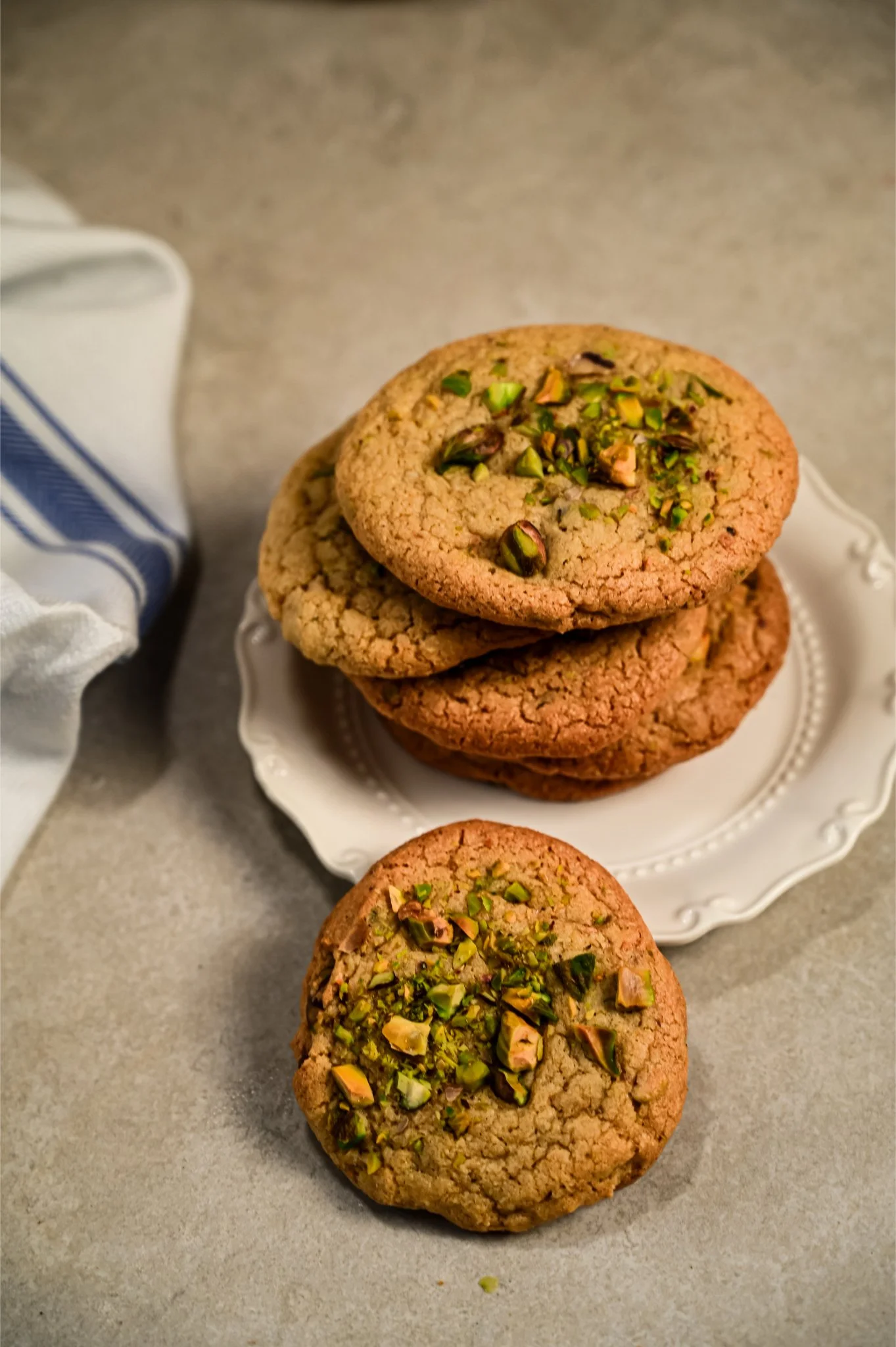
Persian love cookies bring all the romantic, aromatic charm of the classic cake into a dense, chewy bake packed with cardamom, fresh orange zest, rosewater, ground almonds, and pistachios. Persian love cake has long been one of my absolute favourite bakes, built on a flavour profile that hits every single one of my soft spots. Taking those same cherished ingredients and adapting them into cookie form turned out to be an effortless shift. Replacing a portion of standard flour with ground almonds gives the dough a tender, nutty crumb that directly nods to its cake origins, while melted butter and a high proportion of brown sugar keep the centre delightfully dense and fudgy. The floral hum of rosewater and bright citrus oil lift the warm spice of cardamom, with folded pistachios bringing a necessary crunch to every bite.

Persian Love Cookies
A chewy cookie infused with cardamom, rosewater, orange zest, ground almonds, and pistachios, taking the flavour profile of a classic Persian love cake into a quick one-bowl bake.
Ingredients
- 170g unsalted butter, melted and cooled slightly
- 200g light brown sugar
- 65g caster sugar
- 1 large egg
- 1 large egg yolk
- 220g plain flour
- 80g ground almonds
- 3/4 tsp bicarbonate of soda
- 1 tsp ground cardamom
- Zest of 1 orange
- 1 1/2 tsp rosewater
- 1/4 tsp fine salt
- 150g pistachios, roughly chopped
Instructions
- In a large bowl, whisk the melted butter, light brown sugar, and caster sugar together for roughly 1 minute until glossy and smooth. Don't keep going beyond that; the aim is to bring everything together, not to whisk in air.
- Whisk in the egg, egg yolk, orange zest, and rosewater until smooth.
- Sift in the plain flour, bicarbonate of soda and ground cardamom, then add the ground almonds and fine salt. Fold with a spatula until just combined, taking care not to overwork the dough. Fold through 100g of the chopped pistachios, keeping the remaining 50g aside for the top.
- Cover the bowl and chill in the fridge for a minimum of 30 minutes. Skipping this step allows the liquid butter to run, resulting in overly thin, crisp cookies.
- Preheat your oven to 160°C fan and line 2 large baking trays with baking parchment.
- Portion the chilled dough into balls roughly the size of a golf ball or walnut in its shell. Set 4 to 5 on each of the prepared trays, well apart so they have room to spread, and return the rest of the dough to the fridge. Press each one gently with the back of a spoon to flatten, then sprinkle over some of the reserved pistachios and press lightly to anchor them.
- Bake for 10 to 12 minutes, until the edges are set and lightly golden, but the centres still look soft. (See notes)
- As soon as the trays comes out of the oven, lift it a few centimetres and drop them flat onto the worktop once or twice, so the soft centres sink and wrinkle.
- Leave the cookies on the tray for 5 to 10 minutes until firm enough to lift, then transfer them to a wire rack to cool completely.
- Set the empty trays aside to lose the remainder of its heat while you roll the next batch of balls; it does not need to be cold, just no longer hot. Arrange the balls on the cooled tray, then press, top and bake as before. Repeat until the dough is used up, keeping it in the fridge between batches.
Nutrition Facts
Calories
210Protein
4 gSugar
15 gCarbs
23 gFat
12 gValues estimated per cookie.
Healthy fats and protein come from the ground almonds, pistachios, egg yolk, and butter. Carbohydrates and natural sugars are provided by the light brown sugar, caster sugar, and plain flour.


Ingredient Notes
Melted Butter and Sugar Balance
Using melted butter rather than creamed butter skips the air incorporation step, leading to a denser, chewier cookie. Pairing this with a 3:1 ratio of light brown sugar to caster sugar maximises moisture, as the molasses content in the brown sugar holds onto hydration throughout the bake.
Ground Almonds
Replacing roughly a quarter of the plain flour with ground almonds adds a distinct nuttiness and a tender crumb. Because ground almonds do not contain gluten, they help prevent the cookie from turning tough, though keeping plain flour as the majority structural base ensures the dough still holds together firmly.
Rosewater and Orange Zest
Rosewater requires a delicate touch, as adding too much quickly turns a bake soapy, and brands vary a good deal in strength. Keeping it to a maximum of 1.5 teaspoons allows the floral note to hum gently in the background, balanced by the bright citrus oils of the fresh orange zest and the warm, eucalyptus notes of ground cardamom. If you do not know your bottle, start with 1 teaspoon and work up next time.
Kitchen Notes
The Essential Chill
Chilling the dough for at least 30 minutes is critical when using melted butter. If the dough goes straight into a hot oven while the butter is soft, the cookies will overspread into thin, crispy disks rather than holding a thick, soft centre.
Managing the Bake Time
Pull the trays from the oven when the outer edges are set and golden, even if the middle still appears slightly underdone. The cookies continue cooking on the hot baking tray for 5 to 10 minutes after leaving the oven, which is precisely how you achieve a fudgy, chewy center.
Batch Baking and Warm Trays
Because these cookies spread as the butter melts, space the dough balls out with only four or five per tray. Baking them sequentially gives each cookie enough room to spread evenly without joining together into one large sheet. Keep the remaining portion of dough chilled in the fridge until its tray is ready to go in. Reusing the same parchment-lined tray saves on greaseproof paper, but timing is crucial. Leave the first batch on the tray for exactly 5 minutes so the residual heat can finish setting the soft centres before moving them to a wire rack. When loading the next batch of cold dough onto the tray, work quickly. The metal will still be warm from the first bake, so getting the tray straight into the oven prevents the butter from softening and melting too early on the counter.
Flattening and Topping the Dough
Gently pressing the top of each dough ball to flatten it slightly gives the cookie a head start on spreading evenly in the oven. Pressing a small indent into the top creates a natural nest for the chopped pistachios, ensuring the nuts stay anchored to the dough rather than rolling off the sides as the cookies bake.
Tapping the Tray
The centres puff up slightly in the oven, and dropping the tray while they are still hot and soft knocks that air back out, leaving a denser, chewier middle with wrinkled tops. Be firm rather than timid, and do it straight away; once the cookies start to set on the tray, they will not fall.
Know Your Oven
Every oven has its own hot spots; mine runs hot at the top and near the door. On a bake this short it matters, because the cookies can go from pale and soft in the middle to hard and crumbly in a couple of minutes. If your oven has similar variations to mine, halfway through the bake, swap the trays between shelves or turn each one round, and start checking a minute or two before the time given. If one tray is still colouring faster than the other, take that one out and give the other a couple of minutes longer to catch up.
Variations
Nut Swaps
Roughly chopped flaked almonds or toasted pine nuts make great direct substitutes if you are out of pistachios.
Serving Suggestions
Serving Temperature
Enjoy these cookies slightly warm or at room temperature alongside hot drinks, where the carryover heat softens the butter and brings out the aromatic cardamom and rosewater.
Drinks Pairings
Persian tea is traditionally a loose-leaf black tea infused with whole cardamom pods or rosebuds and served without milk. If you cannot source a dedicated Persian tea blend, a strong loose-leaf Assam or Ceylon makes an ideal base to steep with a crushed cardamom pod. Fresh mint tea or a strong double espresso cuts through the rich nuttiness of the almonds and butter. For a cold option, an iced oat milk latte or chilled cardamom iced tea keeps things refreshing.
Zero Waste
Orange Juice Scrap
Since you only need the orange zest for this dough, squeeze the juice into an ice cube tray to freeze for future dressings, marinades, or baking glazes.
Frequently Asked Questions
Why did my cookies spread too thin?
Excessive spreading happens if the dough was not chilled long enough before baking, allowing the melted butter to run before the structure sets. Ensure your dough rests in the fridge for at least 30 minutes, or longer on warm days.
Can I freeze the cookie dough?
Yes, portion the dough into balls and freeze them on a tray until solid, then transfer to a sealed bag. Bake straight from frozen, adding 1 to 2 extra minutes to the total bake time. You can freeze fully baked cookies once cooled too. Store them in an airtight container between sheets of parchment for up to a month. To serve, thaw at room temperature and pop into a warm 150°C oven for 2 minutes to revive the crisp edge and chewy centre.
Can I use almond flour instead of ground almonds?
Yes, almond flour and ground almonds can be used interchangeably here. Ground almonds retain a bit more texture from the skin, whereas almond flour creates a slightly smoother crumb.