Greek Lemon & Garlic Potatoes
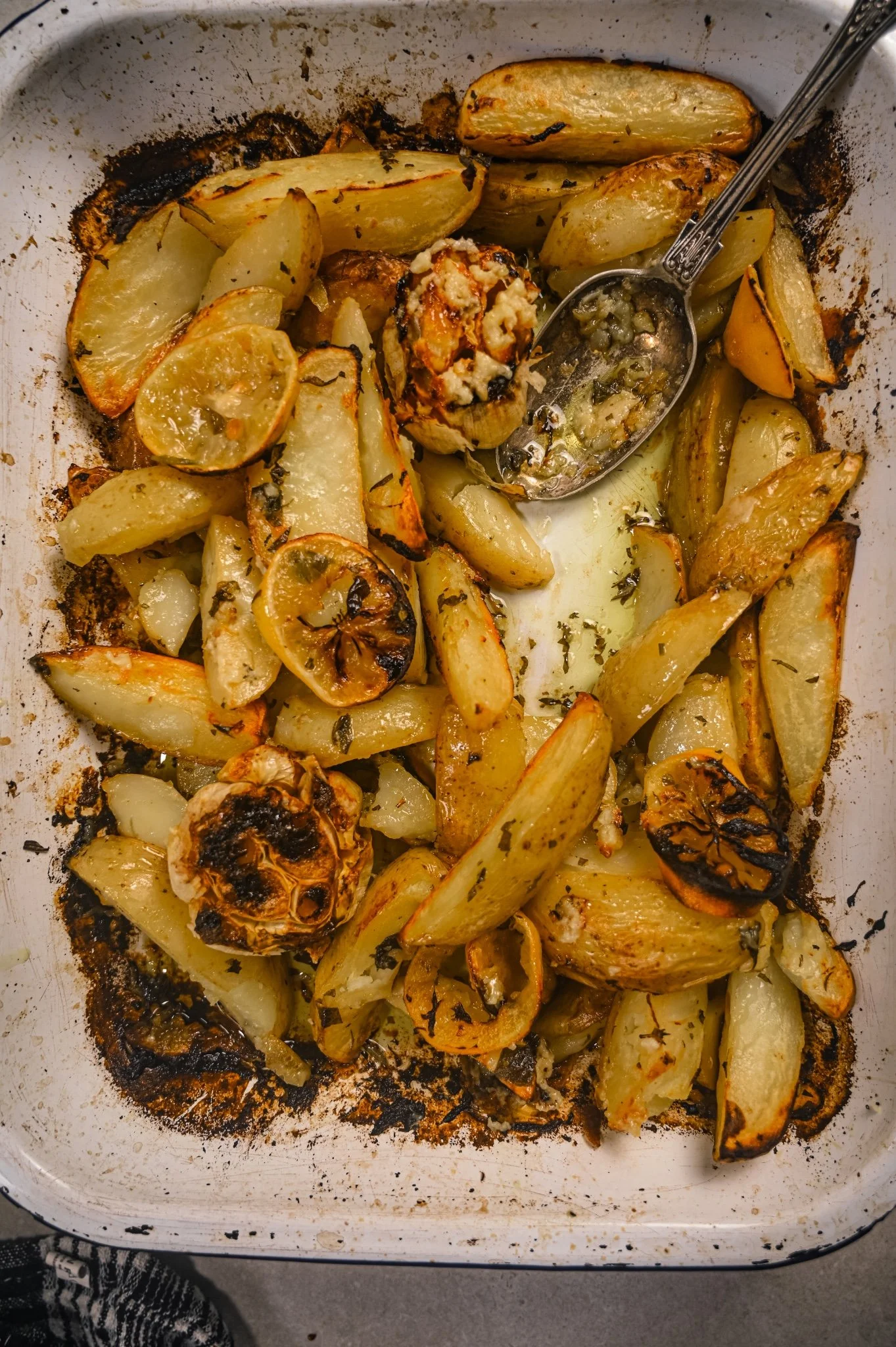
Greek lemon potatoes are the roast potatoes you get with everything in Greece: wedges cooked in olive oil, lemon and stock until the liquid has gone into them and the edges have caught. This version adds whole roasted garlic bulbs and fresh mint, oregano and rosemary.
These are the potatoes that go in the tray around the Sunday lamb, cooking in its juices, and on a weeknight they are made on their own in the same wide tray. There is no parboiling. The wedges go in skin on with the lemon slices and herbs, the oil and stock are poured over, and the tray is sealed with foil for the first part minutes so the potatoes cook through and take on the liquid. Then the foil comes off, the last of the stock cooks down to a glaze on the base of the tray and the tops turn golden. The lemon slices go soft and jammy, and the garlic bulbs, roasted cut side up among the potatoes, end up soft enough to squeeze straight out of their skins and stir through at the end.

Greek Lemon Potatoes with Roasted Garlic and Herbs
Potato wedges roasted in olive oil and stock with lemon slices, whole bulbs of garlic and fresh mint, oregano and rosemary, until the liquid has cooked into them and the tops are golden. The lemon turns jammy, the garlic goes soft and sweet, and there is no parboiling.
Ingredients
- 1.3kg Maris Piper potatoes
- 2 whole bulbs of garlic, tops sliced off
- A small bunch each of fresh mint and oregano, finely chopped
- A couple of sprigs of rosemary, leaves picked and finely chopped
- 2 lemons, sliced
- 150ml extra virgin olive oil, plus a little extra for the garlic
- 150ml vegetable or chicken stock
Instructions
- Preheat the oven to 220°C / 200°C fan.
- Cut the potatoes into wedges, leaving the skin on, and arrange in a single layer in a large metal or enamel roasting tray, so the pieces sit with minimal overlap.
- Add the lemon slices and the chopped herbs.
- Season generously with flaky sea salt and black pepper.
- Pour the olive oil and stock evenly over the tray and mix everything together.
- Nestle the garlic bulbs among the potatoes, cut side up, and drizzle a little extra oil over each one.
- Cover tightly with foil and roast for about 40 minutes, so the potatoes steam through and begin absorbing the liquid.
- Remove the foil and roast uncovered for a further 20 minutes, or until the liquid has mostly reduced and absorbed, the potatoes are tender through the centre and the tops are caramelised and golden.
- Squeeze the softened roasted garlic cloves out of their skins over the potatoes and mix through before serving.
Nutrition Facts
Calories
390Protein
5 gSugar
2 gCarbs
43 gFat
22 g


Ingredient Notes
Potatoes
Skin-on wedges hold their shape through the long cook far better than peeled chunks, and give more surface area for the tops to caramelise. Any floury or all-rounder potato works.
Garlic
Two whole bulbs with the tops sliced off, so the cut cloves are exposed. Roasted this way the cloves become very soft and sweet and lose all their raw heat. Squeeze them out over the potatoes before serving, or spread them on bread alongside.
Herbs
A small bunch each of fresh mint, rosemary and oregano, finely chopped. Oregano is the most traditional Greek herb for this dish; thyme or tarragon also work well, and any woody herb you have will do the job. The mint is the surprise, and worth keeping.
Lemons
Sliced and deseeded rather than juiced. The slices soften in the oil and stock and the flesh melts into the potatoes, so the lemon runs through the whole tray rather than sitting on top as a squeeze of juice. The rinds are left in the tray for the look and the perfume; you push them aside rather than eat them.
Olive oil and stock
150ml of each. The ratio is the recipe: this is enough liquid to cook the potatoes through under the foil and then reduce and caramelise once it is uncovered, without the tray swimming or the potatoes staying undercooked. Vegetable or chicken stock both work.
Kitchen Notes
Use a metal or enamel tray
A metal or enamel roasting tray, roughly 30cm by 40cm, is better than ceramic here. Good heat conductivity helps the base brown and the liquid reduce and caramelise, rather than the potatoes gently steaming throughout. A ceramic dish will give you softer, paler potatoes.
Single layer, no overlapping
The potatoes need room to sit in the liquid and then brown on top. If they are piled up, the covered stage still cooks them but the uncovered stage will not caramelise them. Use two trays rather than crowding one.
The foil stage
Cover tightly. The foil traps steam so the potatoes cook through and start absorbing the oil and stock. If the seal is loose the liquid reduces too early and the centres can be underdone when the tops are already golden.
Judging the end point
Pierce a wedge with a knife when the foil comes off. After the covered stage the potatoes should be almost done, tender most of the way through with a little resistance in the centre. If they are still firm, cover again for another 10 minutes. If they are still firm and the tray has run dry, add a splash of hot stock or water before re-covering, so there is liquid left to steam them. Once the foil is off for good, the tray is ready when the liquid has reduced to a glaze rather than a pool and the tops have colour.
Variations
Herbs
Swap the herbs for thyme or tarragon, or use a mix whichever woody herbs you have. Oregano keeps it closest to the Greek original.
Stock
Vegetable stock keeps the dish vegetarian. Chicken stock gives a slightly richer, more savoury result.
Serving Suggestions
How to serve
Straight from the tray, with the squeezed garlic mixed through and the jammy lemon slices left in among the potatoes. tossed gently any glaze left on the base.
What to serve alongside
Roast lamb or chicken, grilled fish, or a plate of Greek salad and feta for a meatless meal. The soft garlic cloves are also very good spread on warm bread.
Zero Waste
Herb stalks
The mint and oregano stalks can go straight into the tray with everything else rather than in the bin; they flavour the oil and stock as the tray cooks and are easy to pick out before serving. The leaves still need chopping finely, so they coat the potatoes and cook into the glaze rather than sitting on top in whole pieces.
Roasted garlic
If you roast more garlic than the potatoes need, the extra cloves keep for a few days in the fridge under a little oil and can be spread on toast or mashed into butter.
FAQ
Do you need to parboil the potatoes for Greek lemon potatoes?
No. The potatoes cook through in the olive oil and stock under foil, then crisp once uncovered. There is no parboiling, draining or drying.
Why are my Greek lemon potatoes soggy or pale?
Usually a ceramic dish or an overcrowded tray. Use a metal or enamel tray, keep the wedges in a single layer and make sure the foil comes off for the final 20 minutes so the liquid can reduce.
Can I make Greek lemon potatoes ahead?
Yes. Cook them fully, cool and keep covered in the fridge for up to two days, then reheat uncovered in a hot oven for 15 to 20 minutes until piping hot and the edges crisp again.
Can I freeze Greek lemon potatoes?
Not recommended. Roasted potatoes go mealy and watery after freezing, and the lemon slices break down. They are better made fresh or kept in the fridge for a day or two.
Can I use dried oregano instead of fresh?
Yes. Use about a couple of teaspoons of dried oregano in place of the fresh bunch.
Which potatoes are best for Greek lemon potatoes?
Maris Piper or another floury potato, skin on and cut into wedges. They absorb the liquid, hold their shape and caramelise well.