Orange & Damson Clafoutis
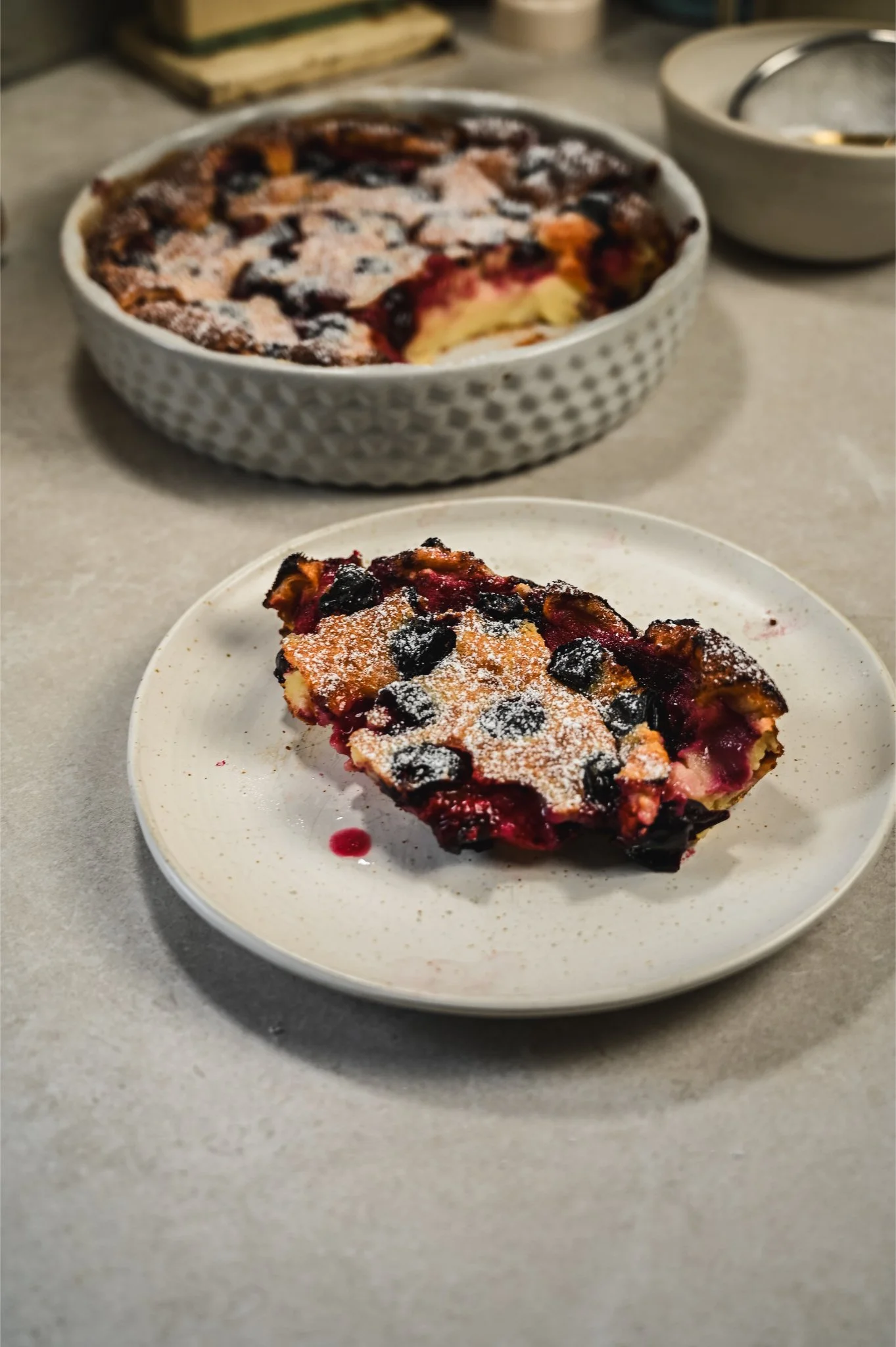
An orange and damson clafoutis is a classic French baked dessert that sits somewhere between a delicate crepe and a rich, golden custard. Foraged damsons are one of the great rewards of late-summer hedgerows, carrying a sharp, tannic astringency that cuts straight through the orange-scented batter. As the clafoutis bakes and puffs up in the oven, the fruit softens and collapses, bleeding deep purple juices. The floral lift of fresh orange zest bridges the gap between the tart wild fruit and the rich cream base, turning a simple haul of foraged plums into a warm, effortless autumn dessert that needs nothing more than a dusting of icing sugar.

Orange & Damson Clafoutis
A classic French baked dessert featuring sharp damsons suspended in a blender-made orange, vanilla, and cream batter, baked until golden with a soft custard wobble.
Ingredients
- 300g damsons, pitted with a cherry pitter
- 4 large eggs
- 160g golden caster sugar
- Grated zest of 1 large orange
- 100g plain flour
- 1/2 tsp fine sea salt
- 200ml whole milk
- 100ml double cream
- 35g unsalted butter, melted and slightly cooled, plus extra for greasing
- 1.5 tsp vanilla bean paste
- Icing sugar, for dusting
Instructions
- Preheat the oven to 180°C fan (200°C conventional). Generously butter a ceramic tart dish or shallow baking dish, then dust the inside with a little extra golden caster sugar if desired.
- Place the eggs, golden caster sugar, orange zest, plain flour, sea salt, whole milk, double cream, melted butter, and vanilla bean paste into a blender. Blitz on high speed for 30 seconds until completely smooth, pale, and frothy.
- Pour the batter directly into the prepared ceramic dish.
- Scatter the halved, pitted damsons evenly across the liquid batter.
- Bake for 30 to 40 minutes until the edges are puffed and golden, and the centre is set with a gentle, soft wobble.
- Remove from the oven and allow to cool for 10 minutes. Dust lightly with icing sugar and serve warm straight from the dish.
Nutrition Facts
Calories
285Protein
6 gSugar
26 gCarbs
36 gFat
13 gValues estimated per portion. High-quality fats and protein come from the whole eggs, double cream, and butter. Natural sugars and carbohydrates are provided by the damsons, flour, and golden caster sugar.


Ingredient Notes
Damsons
Damsons bring a sharp, tannic astringency that balances the rich, sweet egg custard. Using a cherry pitter to remove the hard stones leaves the fruit whole, keeping the damsons plumb and juicy so they burst softly as they bake without releasing too much juice into the batter beforehand. If you cannot source damsons, dark sweet cherries or small cultivated black plums make direct substitutes that match the deep colour and stone-fruit flavour profile.
Orange Zest and Vanilla
Gratings of fresh orange zest cut through the heavy cream and egg profile. Blending the zest directly into the batter disperses the aromatic citrus oils evenly. Vanilla bean paste gives a deep, warm sweetness that rounds out the sharp fruit.
Double Cream and Milk
A combination of whole milk and double cream strikes the ideal balance for a clafoutis. Using all cream makes the baked dish too dense, whereas using only milk leaves it thin and watery. The small addition of melted butter gives the top a glossy finish and a rich, golden edge.
Kitchen Notes
The Blender Shortcut
Using a blender to make clafoutis batter takes seconds and guarantees a smooth, lump-free mixture without overworking the gluten in the flour. A short 1 minute blitz incorporates enough air to help the custard puff up lightly in the oven without turning into a heavy sponge.
Managing the Centre Wobble
Do not overbake clafoutis. It is ready when the outer edges are golden and risen, but the middle still retains a subtle, jelly-like wobble when you gently shake the dish. Residual heat will finish setting the centre as it rests on the counter for 10 minutes.
Greasing and Sugaring the Dish
Butter the baking dish thoroughly up to the rim. Coating the buttered porcelain with a light layer of caster sugar, while not essential, creates a delicate, caramelised crust on the bottom of the clafoutis that prevents the fruit from sticking to the base.
Variations
Fruit Alternatives
When damsons are unavailable, dark sweet cherries are the classic French choice. Plums, greengages, apricots or blackberries all work well in this exact batter volume.
Alcohol Accent
A tablespoon of Kirsch, Grand Marnier, or Amaretto added to the blender along with the vanilla gives the custard an extra depth of flavour that pairs brilliantly with stone fruit.
Serving Suggestions
Serving Temperature
Clafoutis is at its absolute best served warm rather than hot, about 10 to 15 minutes out of the oven once the dramatic oven puff has settled back down. Serving it ice-cold from the fridge dulls the delicate orange and vanilla flavours.
Garnish and Sides
A light dusting of icing sugar is all it needs, as the batter already contains cream. If you want an extra touch, serve with a spoonful of crème fraîche or cold pouring cream to offset the hot fruit.
Drinks Pairings
A chilled glass of Sauternes, Coteaux du Layon, or a sweet Monbazillac matches the rich vanilla custard and sharp plum flavours. For a non-alcoholic pairing, a cup of Earl Grey tea with lemon or a sparkling apple pressé works brilliantly.
Zero Waste
Orange Juice Scrap
You only need the zest of the orange for the clafoutis batter. Juice the remaining orange and freeze it in an ice cube tray for future salad dressings, marinades, or cocktails.
Frequently Asked Questions
Why did my clafoutis turn out rubbery?
A rubbery clafoutis usually comes from over-blending the flour, which develops too much gluten, or from overbaking the dish. Stop blending as soon as the batter is smooth, and pull the dish from the oven while the centre still has a soft wobble.
Can I make the batter in advance?
Yes, you can blitz the batter up to 24 hours in advance and keep it covered in the fridge. Give it a quick whisk to re-emulsify before pouring over the fruit, as the flour will naturally settle to the bottom over time.