Fermented Rhubarb
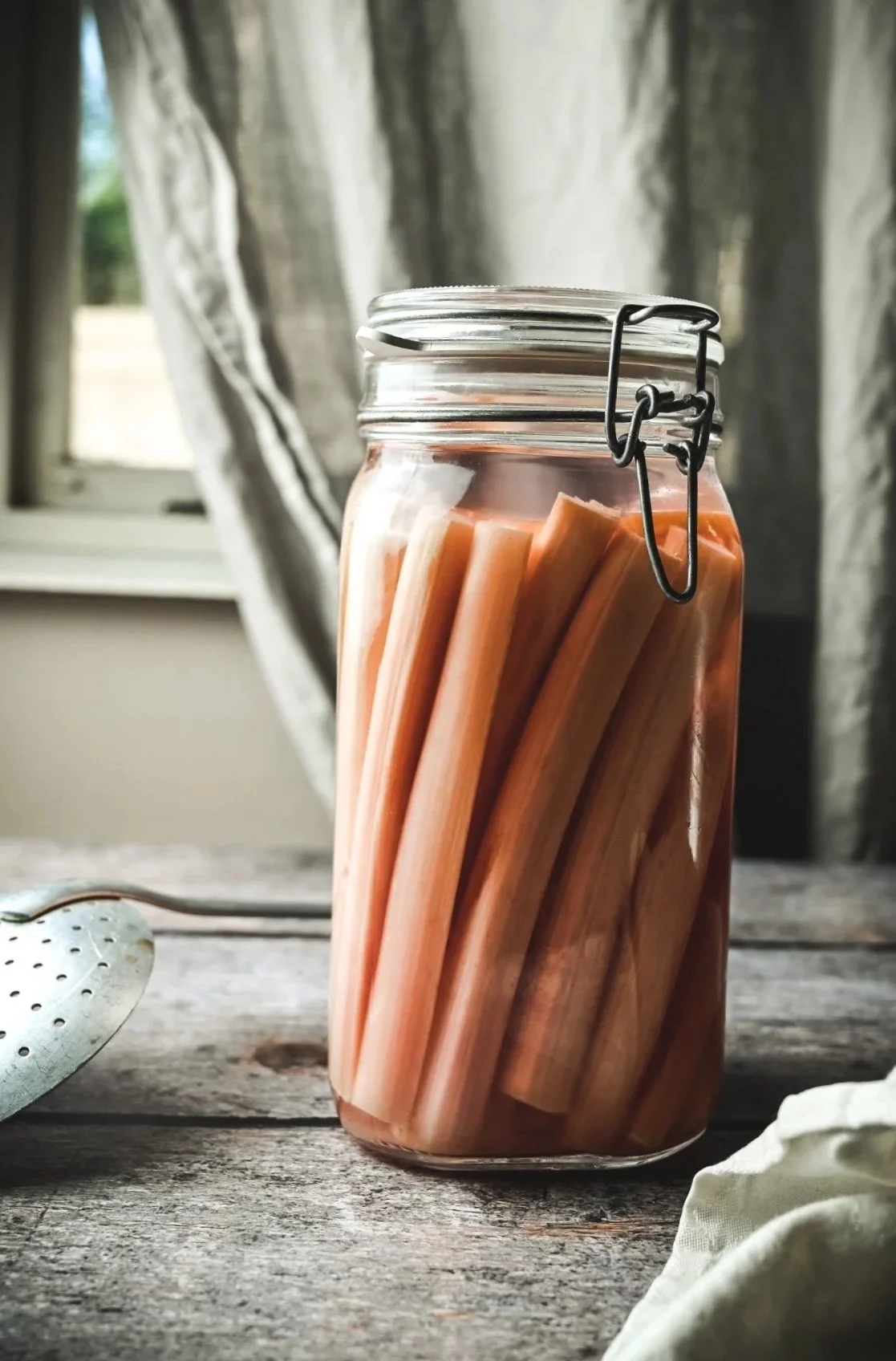
Forced rhubarb is one of the most striking ingredients of late winter. That vivid pink, that sharp tartness, that fleeting availability. Most recipes reach straight for the sugar and the oven, but there is another way. This fermented rhubarb is a small-batch savoury ferment made with a simple salt brine, designed to be used within a couple of weeks while it is at its best. Think of it less as a long-life preserve and more as a seasonal condiment. It finds its home alongside roasted game, slow-cooked pork, rich terrines, and pan sauces rather than a crumble. The process takes twenty minutes of actual work, then ten days of patience, and what you end up with is something genuinely useful in a cook's larder.

Fermented Rhubarb
A simple small-batch fermented rhubarb made with forced rhubarb and a salt brine. Savoury, seasonal, and ready in ten days. Best served alongside game, pork, and rich sauces.
Ingredients
- 400g forced rhubarb, the slimmer the better
- Non-iodised sea salt (Maldon works well)
- Caster sugar
- 2 slices of unwaxed lemon
- Filtered or still water
Instructions
- Sterilise the jar. Wash it in hot soapy water, rinse well, and place upright in an oven at 160C for 10 minutes. Allow to cool completely before use.
- Trim the rhubarb and cut the stalks to the height of your jar. Pack them in snugly, standing upright.
- Place the packed jar on your digital scales and press tare to zero. Pour filtered or still water in until the rhubarb is just covered. Tip the water back into a jug and note the weight. Calculate 3% of that weight. Measure out that amount in both salt and sugar. For example, if your water weighs 400g, you need 12g of salt and 12g of sugar. Stir until both are fully dissolved.
- Pour the brine back over the rhubarb. Tuck the lemon slices in at the top. The rhubarb must stay submerged beneath the brine at all times. If it floats, weigh it down with a small piece of crumpled baking paper or a clean zip-lock bag filled with a little water.
- If using a clip-top jar, remove the rubber seal before closing. If using a screw-top, leave the lid slightly loose. Gases need to be able to escape during fermentation.
- Leave in a cool, dark place for 7 to 10 days. You should see small bubbles forming within the first few days. Taste from day 5 onwards. The rhubarb should be pleasantly sour, lightly tangy, and still hold a little texture.
- Once it reaches the flavour you are happy with, seal the jar properly and transfer to the fridge.
Nutrition Facts
Calories
12Fat
0 gSugar
1 gProtein
1 gCarbs
3 gApproximate values per serving
Nutritional values are per approximate serving of 50g drained rhubarb.


Ingredients and Sourcing Tips
Rhubarb
Use forced rhubarb for this recipe. It is the slim, bright pink variety grown in the dark in Yorkshire forcing sheds, available from late January through to March. The slender stalks are more tender and less fibrous than outdoor garden rhubarb, which makes them better suited to a ferment where texture matters. Choose the thinnest stalks you can find — the recipe specifies the slimmer the better for good reason.
Salt
Use a non-iodised sea salt. Maldon is ideal and widely available in the UK. Avoid standard table salt, which contains added iodine and anti-caking agents that can interfere with fermentation. The trace amounts of naturally occurring iodine in sea salt like Maldon are not a concern.
Sugar
A small amount of caster sugar feeds the fermentation and helps balance rhubarb's sharp natural acidity. The sugars are partially consumed during the fermentation process, so the end result is less sweet than the raw brine suggests. This is what makes it versatile in savoury cooking rather than tasting like a dessert ingredient.
Water
Use filtered water or still bottled water if possible. Tap water contains chlorine which can slow or inhibit fermentation. If you only have tap water, leave it in a jug uncovered for an hour before using to allow some of the chlorine to dissipate.
Lemon
Two slices of unwaxed lemon sit at the top of the jar. They add a gentle citrus note and help keep the rhubarb weighted below the brine. Use unwaxed only — the wax coating on regular lemons is not something you want in a ferment.
Variations and Serving Suggestions
With game and red meat
Drain a few stalks and slice thinly alongside roasted venison, grouse, wood pigeon, or slow-cooked short rib. The lactic sourness cuts through rich, dark meat in the same way a sharp fruit jelly would, but with more complexity and without the sweetness.
As a sauce base
Blend drained rhubarb with a little of its brine, roasted shallots, and a splash of red wine vinegar for a quick savoury sauce. Works particularly well with duck, pheasant, or pork belly.
With pate and charcuterie
Serve as you would a quince paste alongside chicken liver pate, game terrine, or a board of cured meats. The tartness lifts fatty, rich flavours and adds something unexpected to a board.
With fish
A few thin slices alongside grilled mackerel, smoked trout, or cured salmon works surprisingly well. The acidity and salinity echo the curing notes in the fish.
The brine
Do not throw the leftover fermentation liquid away. It is tart, mildly salty, and deeply flavoured. Stir it through a vinaigrette, use it as a base for a shrub cocktail, add a splash to sparkling water, or use it to deglaze a pan after cooking duck or pork.
Kitchen Notes
Jar and sterilisation
Use a glass jar with either a clip-top lid or a screw-top lid. A 500ml jar is the right size for this recipe. Do not use plastic containers as they can absorb odours and are harder to sterilise properly. To sterilise, wash the jar in hot soapy water, rinse thoroughly, and place upright in an oven at 160C for 10 minutes. Allow to cool completely before filling. For a clip-top jar, remove the rubber seal before closing during fermentation. For a screw-top, leave the lid slightly loose. Gases produced during fermentation need to be able to escape, otherwise pressure can build up in the jar.
A note on the photograph
The jar in the photographs is larger than the recipe quantity — I made a bigger batch for shooting. The recipe is sized for a 500ml jar, which is the right amount to make and use within a couple of weeks.
Keeping the rhubarb submerged
This is the most important thing to get right. Any rhubarb exposed to air above the brine can develop kahm yeast or mould. It will not harm the ferment below the brine line, but it is easier to prevent than deal with. If you ferment regularly, it is worth investing in proper glass fermentation weights, which sit inside the jar and keep everything submerged without taking up much space. For a one-off or if you don't have weights, a small piece of crumpled baking paper pressed down over the stalks, or a clean zip-lock bag filled with brine sealed and pressed in on top, both work well as alternatives.
Signs that fermentation is working
Within the first two to three days you should see small bubbles rising through the brine. The brine may become slightly cloudy. Both are completely normal and good signs that lactic acid bacteria are active. If you see no activity after five days, check the temperature and make sure your salt did not contain added iodine.
Why this is a small batch recipe
Rhubarb is a soft, high water content ingredient. Unlike firmer ferments such as sauerkraut, it will continue to soften in the fridge over time. Making a small batch means you use it while it is still at its best. If you have a glut of forced rhubarb, make two jars a week apart so you always have some at peak texture.
Temperature
Ferment at room temperature between 18C and 22C. Cooler temperatures will slow fermentation significantly and the rhubarb may take longer than 10 days. Warmer temperatures speed it up but can compromise texture. A kitchen or larder away from direct heat is ideal.
Storage
Store the sealed jar in the fridge with the rhubarb submerged in its brine. Use within two to three weeks for best texture and flavour. Unlike firmer fermented vegetables, this is a fresh seasonal condiment rather than a long-life preserve — it is designed to be made and used while forced rhubarb is at its best. Trust your senses: the rhubarb should smell pleasantly sour and tangy. Any unpleasant smell or visible mould means it should be discarded.
Serving Suggestions
With game and red meat
Drain a few stalks and slice thinly alongside roasted venison, grouse, wood pigeon, or slow-cooked short rib. The lactic sourness cuts through rich, dark meat in the same way a sharp fruit jelly would, but with more complexity and without the sweetness.
As a sauce base
Blend drained rhubarb with a little of its brine, roasted shallots, and a splash of red wine vinegar for a quick savoury sauce. Works particularly well with duck, pheasant, or pork belly.
With pate and charcuterie
Serve alongside chicken liver pate, game terrine, or a board of cured meats as you would a quince paste. The tartness lifts fatty, rich flavours and adds something unexpected to a board.
With fish
A few thin slices alongside grilled mackerel, smoked trout, or cured salmon works surprisingly well. The acidity and salinity echo the curing notes in the fish.
The brine
Do not throw the leftover fermentation liquid away. It is tart, mildly salty, and deeply flavoured. Stir it through a vinaigrette, use it as a base for a shrub cocktail, add a splash to sparkling water, or use it to deglaze a pan after cooking duck or pork.
How to serve
Drain the rhubarb from its brine and slice thinly or leave in whole stalks depending on the dish. Serve at room temperature for the best flavour — straight from the fridge dulls the complexity. A small spoonful of brine drizzled over the plate adds a final hit of acidity and ties everything together.
Portion sizes
Treat this as a condiment rather than a side dish. Two or three stalks per person alongside a main course, or a small handful of thin slices on a charcuterie board is plenty. A little goes a long way.
Storage and keeping
Keep the rhubarb submerged in its brine in a sealed jar in the fridge. It will continue to develop in flavour over time, becoming more complex and deeply sour the longer it sits. It will keep for several weeks.