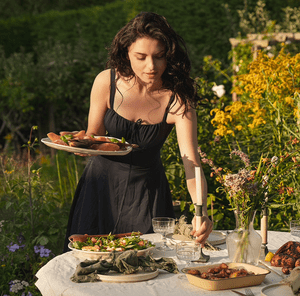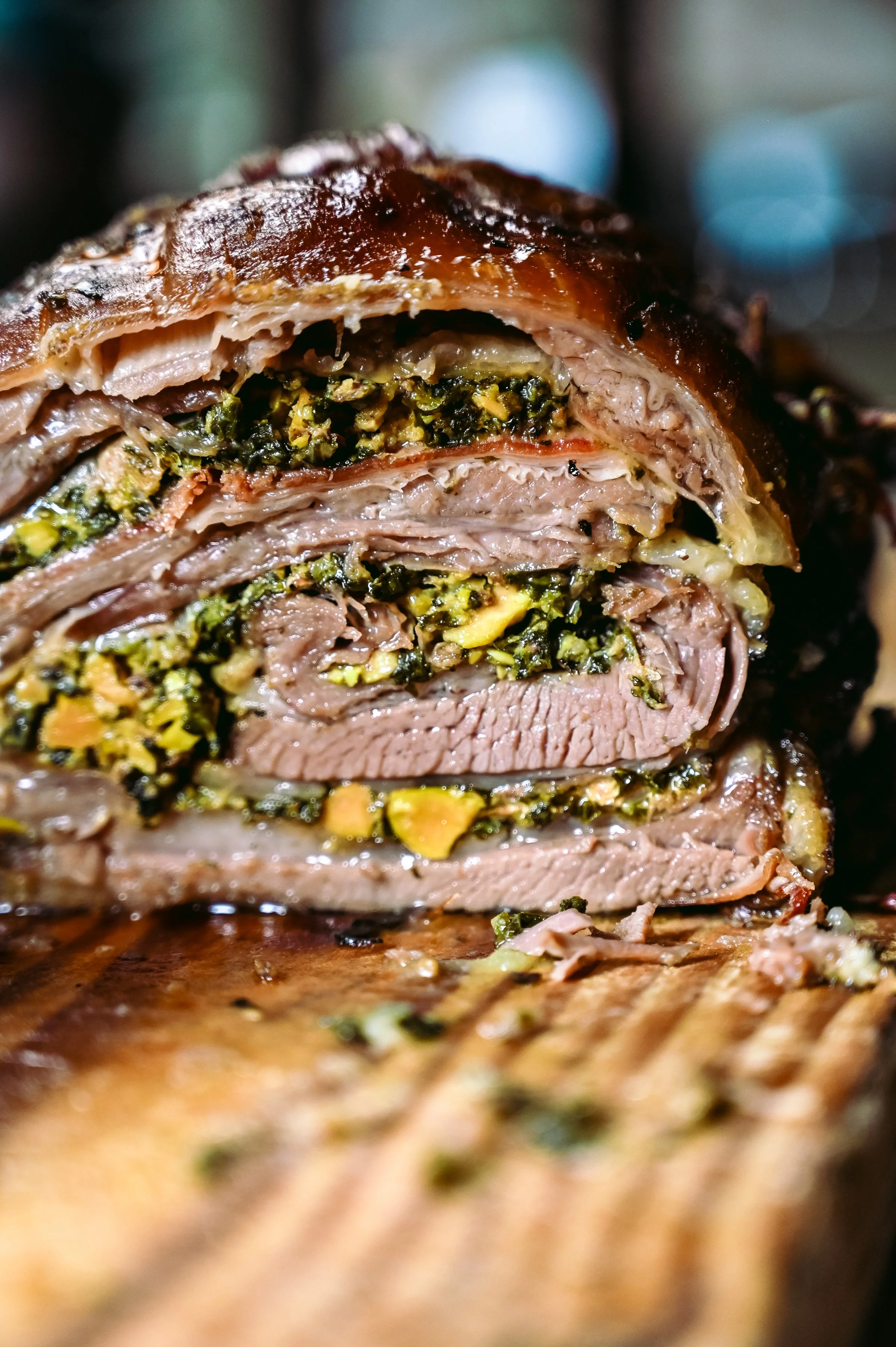
Lamb breast is one of the most overlooked cuts in the butcher's counter, and one of the most rewarding. Two breasts - one lamb's worth - cost around £15 and will feed six to eight people generously. What makes it extraordinary is understanding what it needs: time, a low oven, and enough patience to let the collagen do its work.
This is a recipe built around that process. The lamb is boned, filled with a vivid, punchy stuffing of wild garlic, toasted pistachios, anchovy and soft goat's cheese, then rolled, tied and braised at 140°C for four hours until completely, yielding tender. The collagen begins to break down at around 70–75°C and converts slowly into silky gelatin between 80–90°C — the long, steady heat is what makes the difference between tough and extraordinary.

Wild Garlic, Pistachio and Anchovy Stuffed Rolled Lamb Breast
Two lamb breasts, one extraordinary centrepiece. Boned, filled with wild garlic, toasted pistachios, anchovy and goat's cheese, then rolled, tied and braised low and slow for four hours until the collagen has fully broken down and the meat is deeply tender and melting. A recipe that rewards patience entirely.
Ingredients
- 2 lamb breasts, boned and cut in half widthways (approx. 1.6–1.8kg boned weight)
- 250g wild garlic leaves
- 50–70g breadcrumbs, plus more as needed
- 80g pistachios, toasted briefly in a dry pan
- 8 anchovy fillets
- 2–4 tbsp leftover mint sauce and/or mint jelly (optional)
- Zest of 2 lemons
- 75g soft goat's cheese
- Salt and pepper
- Rapeseed oil, for browning
- 2 medium onions, roughly chopped
- 3 carrots, roughly chopped
- 3 celery sticks, roughly chopped
- The 2 zested lemons from the filling, halved
- 300ml white wine
- 300ml lamb or chicken stock (see notes for homemade lamb stock from the bones)
- 200ml white wine
- 2–3 tbsp plain flour
- 700ml lamb or chicken stock (see notes for homemade lamb stock from the bones)
- Sprouting broccoli or green beans
- Minted new potatoes
Instructions
- Wilt the wild garlic in a pan of simmering water for 30–60 seconds, then immediately transfer to a bowl of ice-cold water to stop the cooking and preserve the colour. Once cool, squeeze out as thoroughly as possible through a clean tea towel or muslin, twisting to extract as much water as you can.
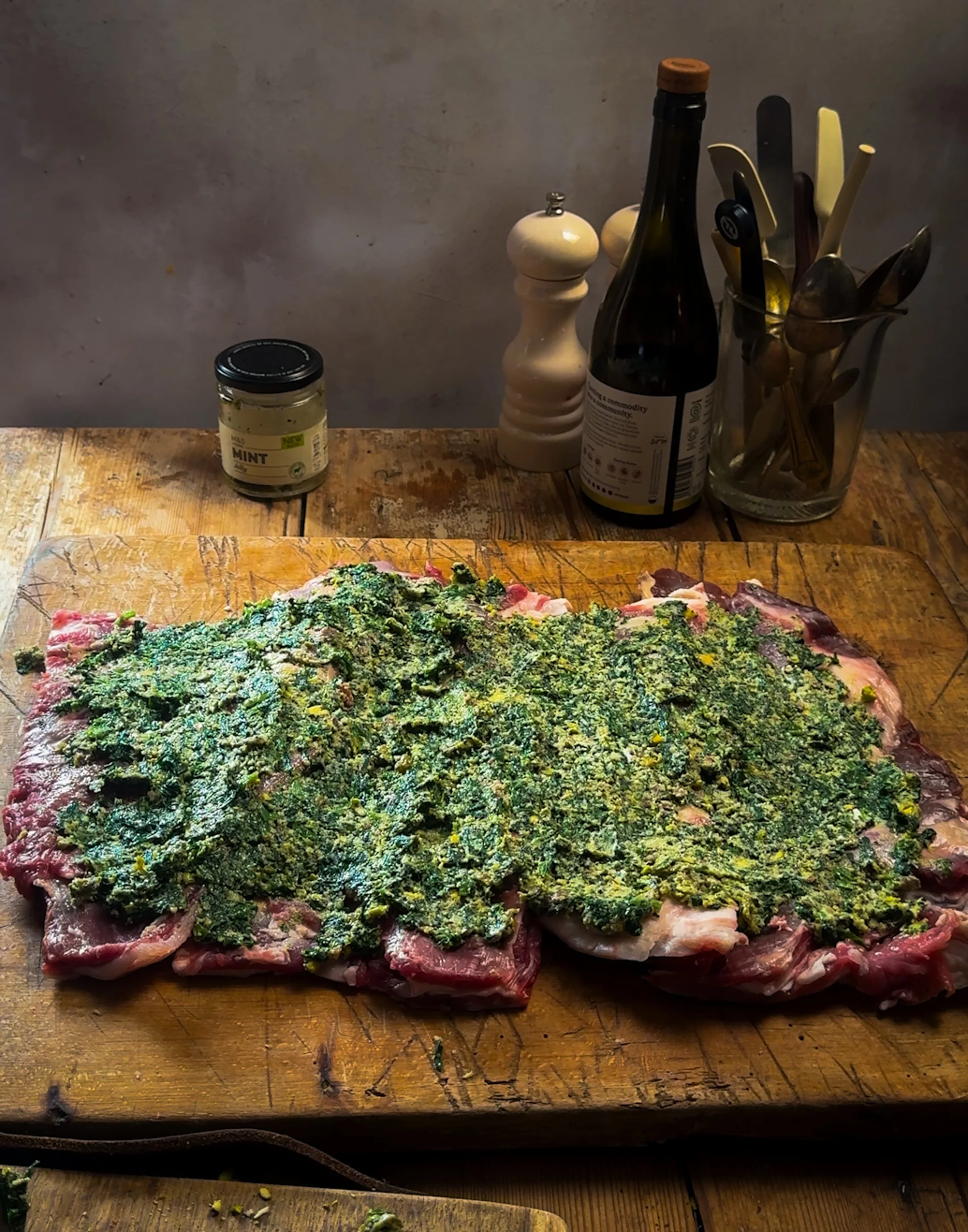
- Finely chop the pistachios, then the anchovy fillets, then the wild garlic, and combine (use a food processor if you prefer). Add the goat's cheese, mint sauce and/or jelly if using, lemon zest and enough breadcrumbs to make a mixture that holds together — wet but not runny. If using mint sauce or jelly, you will likely need more breadcrumbs. Taste before seasoning, as the anchovies bring a good deal of salt.
- Lay the four pieces of lamb breast out on a clean surface, overlapping them to form one large sheet roughly 50cm long by 30cm wide, with the shortest edge closest to you. Spread the filling evenly across the surface, leaving a 2cm border around the edges. Roll tightly from the edge closest to you.
- Tie two strings lengthways first to hold the roll closed, then tie at 4–5cm intervals around the circumference, around 6–8 ties in total. Tuck in the ends to keep the filling inside. It does not need to look perfect, just firm and snug.
- Preheat the oven to 140°C fan. Heat a little rapeseed oil in a large, heavy-based pan over a high heat. Brown the roll thoroughly all over, this takes around 8–10 minutes and is worth doing properly for flavour and colour.
- Scatter the chopped vegetables, halved lemons and herbs across a deep roasting tray. Pour over the 300ml white wine and 300ml stock. Place the browned lamb roll on top. Cover tightly with foil. Braise at 140°C fan for 4 hours until completely tender. The meat should yield easily when pressed.
- Remove from the oven, lift the lamb onto a board and rest under foil for at least 20 minutes before carving. Use this time to make the gravy.
- Put the roasting tray directly on the hob over a low-medium heat. Deglaze with the 200ml white wine, scraping up all the golden bits from the base of the tray. Once the wine has reduced by half, sprinkle in the flour and stir well into the vegetables. Cook for 3 minutes to lose the raw flour taste.
- Gradually add the 700ml stock, a little at a time, stirring continuously until you reach your desired consistency. Strain through a fine sieve into a clean saucepan, pressing the vegetables to extract every bit of flavour. Taste carefully before seasoning - the braising liquid is already well seasoned from the lamb and filling. Keep warm.
- Trim the string from one end of the lamb. Carve gently with a very sharp knife in long, sweeping strokes, removing the string as you go. Take your time and hold the roll steady as you slice. Serve with the gravy, sprouting broccoli or green beans, and minted new potatoes.
Notes
This recipe also includes instructions for making a homemade lamb stock from the bones the day before, if your butcher keeps them for you. It is optional, but highly recommended, see the notes below for the make-ahead stock method.
Nutrition Facts
Calories
620Fat
38 gCarbs
14 gSugar
3 gProtein
48 gApproximate values per serving


What is Lamb Breast?
Lamb breast is the cut taken from the belly of the animal, running along the lower ribcage. It is well-marbled with fat and rich in connective tissue, which makes it one of the worst candidates for fast cooking and one of the best for low and slow. Done properly, it produces meat that is silky, deeply savoury and utterly tender. Done in a hurry, it is chewy and fatty in all the wrong ways.
Because it is unfashionable and relatively unknown, it is almost always the most affordable cut on the counter. Ask your butcher to bone the breasts and keep the bones - they make an exceptional stock, and instructions for that are included below.
Make Ahead: Lamb Stock from the Bones
If your butcher has kept the bones for you, making a stock the day before is well worth the effort. Roast the bones at 200°C fan for 45 minutes until well browned, then transfer to a large saucepan with a roughly chopped onion, carrot, celery stick, bay leaf and a few peppercorns. Cover with cold water, bring slowly to the boil, skim off any foam, then reduce to a very gentle simmer and cook for at least 3 hours, ideally overnight.
Strain through a fine sieve and set aside to cool. Once cool, skim the fat from the surface and reserve it in a sealed jar in the fridge- it keeps for up to 3 months and is exceptional for roasting potatoes. The stock will keep refrigerated for up to 5 days, or frozen for up to 3 months.
If you cannot get the bones, a good shop-bought lamb or chicken stock works perfectly well.
Ingredient Notes
Wild garlic
It has a fairly short season, roughly March to May, and grows in damp woodland across the UK. It is milder than bulb garlic, slightly peppery and deeply green.
Anchovies
They pair perfectly with lamb and dissolve into the filling and provide depth and salt rather than any fishiness. They are the kind of ingredient that works behind the scenes. Taste the filling before adding any extra salt; the anchovies will likely have it covered.
Goat's cheese
Use a soft, spreadable variety rather than a firm log. It binds the filling and adds a gentle, creamy tang that works well against the richness of the lamb.
Pistachios
They add texture and a pleasant nuttiness. Toast them briefly in a hot dry pan to bring out the flavour - just a couple of minutes.
Mint sauce or jelly
Entirely optional, but using up a jar that has been sitting in the fridge is satisfying and the lamb-and-mint combination is a classic for good reason. If you use it, add extra breadcrumbs to compensate for the additional moisture.
Kitchen Notes
On rolling and tying
You will need butcher's string. Tie two strings lengthways first before tying around the circumference - this helps the roll stay closed as you work. It does not need to look perfect. What matters is that the filling stays inside and the roll holds its shape during the braise.
On browning
This step is worth doing properly. Eight to ten minutes over a high heat, turning the roll to colour it evenly all over, including the ends. The browning builds flavour and gives the finished dish its colour. Do not skip it.
On the gravy
The braising liquid reduces significantly during the four-hour cook and concentrates considerably. The gravy will be lighter in body than a traditional roast gravy - more of an aromatic, citrus-forward jus from the lemons and white wine. Taste it carefully before adding any salt; it will already be well seasoned from the lamb and the filling.
On the lamb fat
Any fat rendered during braising or skimmed from the stock is worth saving. Strain it to remove any meat particles, pour into a sealed jar and refrigerate. It will keep for up to 3 months.
Variations
No wild garlic
Outside the season, substitute the same weight of wilted, thoroughly squeezed spinach with 8 grated garlic cloves and a good handful of finely chopped fresh mint mixed through.
A different green
Watercress or a mixture of watercress and spinach works well in place of wild garlic, with a slightly more peppery result.
No goat's cheese
Ricotta makes a good substitute for a milder, creamier filling. Feta, crumbled finely, works too but will add more salt - adjust accordingly and taste carefully.
No anchovies
The filling will be less complex but still very good. Add a small extra pinch of salt and consider a teaspoon of Worcestershire sauce in its place.
Serving Suggestions
This is a proper centrepiece dish and needs very little alongside it. Minted new potatoes are the natural companion - they soak up the gravy well and echo the mint in the filling. Sprouting broccoli or green beans keep things green and fresh without competing.
For a more generous spread, a simple dressed green salad and some good bread to mop up the gravy round things out beautifully. This is also an excellent dish for Easter lunch - it serves six to eight comfortably from one tray, it can be braised entirely ahead and reheated gently, and the wild garlic season makes it a natural choice for spring.