Parmesan Chicken Schnitzel with Fennel & Tarragon Beans
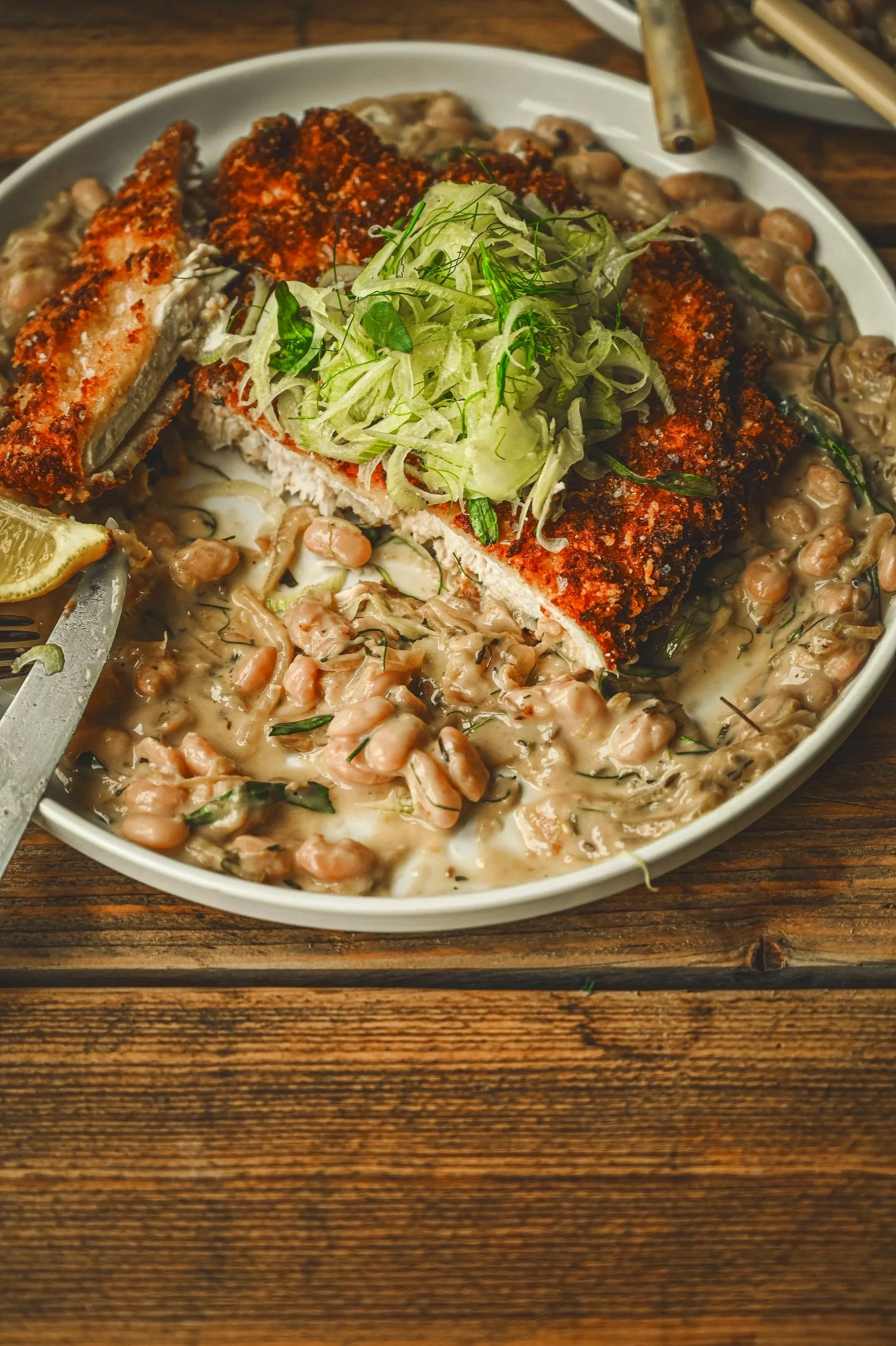
This parmesan chicken schnitzel sits on a bed of velvety fennel and tarragon white beans, topped with a shaved fennel salad that brings crisp, bright acidity to balance the rich fried chicken and creamy beans.
Slowly sweating thin half-moons of onion alongside sliced fennel for 30 minutes creates a caramelised, sweet base that melts into the giant white beans as they simmer in stock and crème fraîche. Deglazing the pan with a splash of vodka draws out the fat-soluble flavours of the fennel and herbs without adding extra sweetness, though white wine or a simple splash of water works just as well. Double-crusting the butterflied chicken breasts in a blend of fine breadcrumbs and freshly grated parmesan creates a shatteringly crisp seal that stays crunchy on top of the beans, while using every part of the fennel and tarragon ensures practically zero waste.

Parmesan Chicken Schnitzel with Fennel & Tarragon Beans
Crispy parmesan-crusted chicken schnitzel served over creamy fennel and tarragon white beans, topped with a fresh shaved fennel salad.
Ingredients
- 1.5 tbsp butter
- 1 tbsp rapeseed oil
- 1 medium fennel bulb, finely sliced (fronds reserved for salad)
- 2 medium brown onions (or 1 large), finely sliced into half-moons
- 3 garlic cloves, finely sliced
- 1 tsp fennel seeds
- 50ml vodka (or dry white wine)
- A few sprigs fresh thyme, leaves picked
- Small bunch fresh tarragon, leaves picked and stems finely chopped
- 400ml vegetable or chicken stock
- 570g jar giant white beans (such as Bold Bean Co), with their liquid
- 120g full-fat crème fraîche
- Zest of 1 lemon
- 2 chicken breasts, butterflied and pounded flat (see notes)
- 150g plain flour
- 3 large eggs, beaten
- 200g fine breadcrumbs
- 100g parmesan, finely grated
- Vegetable or sunflower oil, for shallow frying (about 1cm depth)
- Flaky sea salt, to finish
- 1 small fennel bulb (or half a large bulb)
- Juice of 1 lemon
- Reserved tarragon leaves and fennel fronds
Instructions
- Heat the butter and rapeseed oil in a wide, deep pan over a low heat. Add the sliced fennel and brown onions with a pinch of salt. Sweat gently for 30 minutes, stirring occasionally, until completely soft, sweet, and golden. Add a tiny splash of water if the vegetables start to catch on the bottom of the pan.
- Increase the heat to medium. Add the sliced garlic and fennel seeds, cooking for 2 minutes until fragrant.
- Pour in the vodka (or white wine), scraping up any caramelised bits from the bottom of the pan, and simmer until reduced by half.
- Stir in the thyme leaves, finely chopped tarragon stems, chicken stock, and the jar of white beans along with all their liquid. Simmer gently on low for 20 minutes, stirring occasionally, until the sauce reduces to a thick, creamy consistency.
- While the beans simmer, set up three wide dishes or trays for breadcrumbing (or "pané-ing"). Place the flour in the first dish, the beaten eggs in the second, and mix the breadcrumbs and finely grated parmesan together in the third.
- Pass each chicken breast through the flour, shaking off any excess, then dip into the egg, and press firmly into the parmesan breadcrumbs. Dip the chicken back into the egg for a second time, then press into the parmesan breadcrumbs once more to create a double coating.
- Pour vegetable oil into a wide frying pan to a depth of roughly 1cm and set over a medium-high heat. Once hot, carefully lay the chicken schnitzels into the pan lowering them away from you so any hot oil splashes towards the back of the cooker rather than onto your skin. Fry for 2 to 3 minutes on each side until deeply golden and crisp. Lift onto a wire rack and sprinkle immediately with flaky sea salt.
- Finish the beans by removing the pan from the heat. Stir through the lemon zest, full-fat crème fraîche, and half of the reserved fresh tarragon leaves and fennel fronds. Taste and adjust seasoning.
- Just before serving, carefully paper-thinly slice the remaining fennel on a mandoline directly into a bowl. Immediately toss with the fresh lemon juice, remaining tarragon leaves, and fennel fronds.
- Spoon the creamy white beans onto warm plates. Slice or lay the crispy chicken schnitzels over the beans, and top with the bright, shaved fennel salad.
Nutrition Facts
Calories
850Fat
42 gCarbs
58 gSugar
9 gProtein
58 gHigh quality protein and calcium are provided by the chicken breasts, parmesan, and butter beans. Carbohydrates come from the breadcrumb crust and giant white beans, while healthy fats are supplied by the crème fraîche, rapeseed oil, and parmesan.


Ingredient Notes
Chicken Breasts and Breadcrumbs
Butterflying and beating the chicken breasts to an even thickness ensures they cook through rapidly in the pan before the cheese in the crust burns. Mixing finely grated parmesan directly into fine breadcrumbs creates a savoury, salty crust. Double-coating the chicken (flour, egg, crumbs, egg, crumbs) creates a sturdy barrier that seals in the moisture and holds its crunch when laid over the hot beans. Chefs often call this breadcrumbing process "pané", but it simply means building a crisp outer coating using flour, egg, and crumbs.
Fennel and Onions
Sweating two brown onions with the fennel bulb for 30 minutes converts their harsh bite into a sweet, caramelised base. Slicing the onions into thin half-moons lets them break down into the exact same texture as the sliced fennel, melting seamlessly into the white beans.
White Beans and Stock
Using jarred or tinned white beans along with their starchy liquid is the secret to a velvety sauce, as the natural starches combine with the stock and crème fraîche to build a rich emulsion without needing flour. If you cannot get a 570g jar of Bold Beans, use two standard 400g tins of butter beans or cannellini beans instead. Tip both tins straight into the pan with their liquid, but add an extra 100ml of stock as well. Because two tins contain more actual beans than a single jar, that extra splash of stock stops the pan from drying out as it simmers.
The Alcohol Element
Deglazing the pan with a splash of vodka extracts the alcohol-soluble flavour compounds from the fennel seeds and herbs without adding extra sweetness or acid. Vodka is particularly handy if you have an open bottle in the cupboard and do not want to uncork a fresh bottle of wine just for 50ml. If you prefer using white wine, it brings a bright, fruity acidity to the base. Alternatively, you can drop the alcohol entirely and use a splash of extra stock mixed with a squeeze of lemon juice to deglaze.
Kitchen Notes
How to Butterfly and Flatten Chicken Breasts
Place a chicken breast flat on a board, holding it steady with your non-dominant hand flat on top. Using a sharp chef's knife, slice horizontally through the thickest side of the breast, stopping about 1cm before the opposite edge so the two halves remain attached. Open the breast up like a book. Place it between two sheets of baking paper and use a rolling pin or the flat side of a meat mallet to gently pound it from the centre outwards until it is an even 1cm thickness throughout. This ensures the schnitzel cooks quickly and evenly in the pan without drying out or burning the cheese crust.
The "Wet Hand, Dry Hand" Technique
When pané-ing the chicken, aim to dedicate one hand strictly to the dry ingredients and the other to the wet. Use your left hand to drop the chicken into the flour, then switch to your right hand to move it through the beaten egg. Use your left hand again to coat and press it into the parmesan breadcrumbs. Maintaining this dry/wet hand separation keeps your fingers cleaner and stops thick clumps of dough from building up on your hands.
Low and Slow Base
Do not rush sweating the onions and fennel. Giving them 30 minutes on low heat softens their tough fibres and draws out their natural sugars without scorching. If the pan looks dry or starts to catch at any point, splash in a tablespoon of water to drop the temperature and keep them cooking evenly.
The Double-Pané Seal
Double-crusting the schnitzel is essential here. The second dip in egg and breadcrumbs builds a thicker crust that insulates the chicken breast, keeping the meat soft while giving you an exceptionally crispy exterior that stands up against the creamy beans.
Laying Food into Hot Oil Safely
When placing schnitzels into 1cm of hot oil, always lower the end closest to you into the pan first, then gently drop the rest of the chicken away from your body towards the back of the cooker. If the oil splatters, any spitting oil flies away from you rather than onto your hands or clothes.
Wire Rack
Always transfer fried schnitzels straight onto a wire cooling rack rather than paper towels. Resting hot fried food on paper towels traps escaping steam underneath, turning the bottom crust soft and soggy.
Mandolined Fennel and Oxidation
Always hold off on mandolining the fennel for the salad until right before you plate up. Raw fennel oxidises quickly once sliced, losing its vibrant white colour and turning soft if left exposed to the air. Toss it with the fresh lemon juice immediately after slicing, as the citric acid prevents browning while keeping the vegetable razor-sharp and crunchy against the rich fried chicken. Please be careful when using a mandolin, I consider it about the most dangerous tool in the kitchen.
Variations
Bean Swaps
Jarred butter beans, cannellini beans, or haricot beans all work brilliant in this base.
Smoked Bacon Lardons
For an even richer, smoky depth, fry 150g of smoked bacon lardons in the pan first until crisp and golden. Remove the lardons with a slotted spoon, set them aside, and cook the fennel and onions directly in the rendered bacon fat alongside the butter and rapeseed oil. Stir the crispy lardons back through the beans at the end with the crème fraîche and lemon zest.
Gluten-Free Version
Swap the plain flour for a gluten-free flour blend and use gluten-free fine breadcrumbs for the pané coating.
Serving Suggestions
Plating Up
Spoon a generous pool of hot, creamy white beans onto the base of a wide bowl or plate. Rest the schnitzel on top, making sure it sits partially proud of the sauce, then pile the dressed shaved fennel salad straight onto the crispy chicken.
Drinks Pairings
A crisp, high-acid white wine like an Italian Gavi or a Vermentino cuts through the rich crème fraîche and fried schnitzel brilliantly. If you prefer beer, a light Belgian witbier or cold pilsner balances the aniseed notes of the fennel and tarragon.
Zero Waste
Tarragon Stems
Never throw away tarragon stems. While too woody to eat raw in a salad, finely chopping them and letting them simmer in the bean base releases all their aromatic essential oils into the sauce.
Fennel Fronds and Offcuts
Feathered green fennel fronds make a beautiful, fragrant garnish for the top salad and final bean stir-in. Save any hard outer core offcuts from the fennel bulb in a freezer bag to build your next batch of homemade vegetable or chicken stock.
Frequently Asked Questions
What does pané mean?
Pané is simply the traditional kitchen term for coating food in breadcrumbs using flour, egg, and crumbs before frying.
Can I make the beans in advance?
Yes, the beans taste even better the next day as the flavours settle. Reheat them gently in a pan with a splash of water or stock to loosen the sauce before stirring through the fresh herbs and crème fraîche. Cook the chicken fresh so the crust stays completely crisp.
Why use the liquid from the bean jar?
The liquid inside jars of high-quality beans is full of rich, natural starches released during the cooking process. Adding it straight into the pan helps thicken the sauce into a smooth emulsion without needing extra flour.