Wild Garlic and Feta Flatbreads
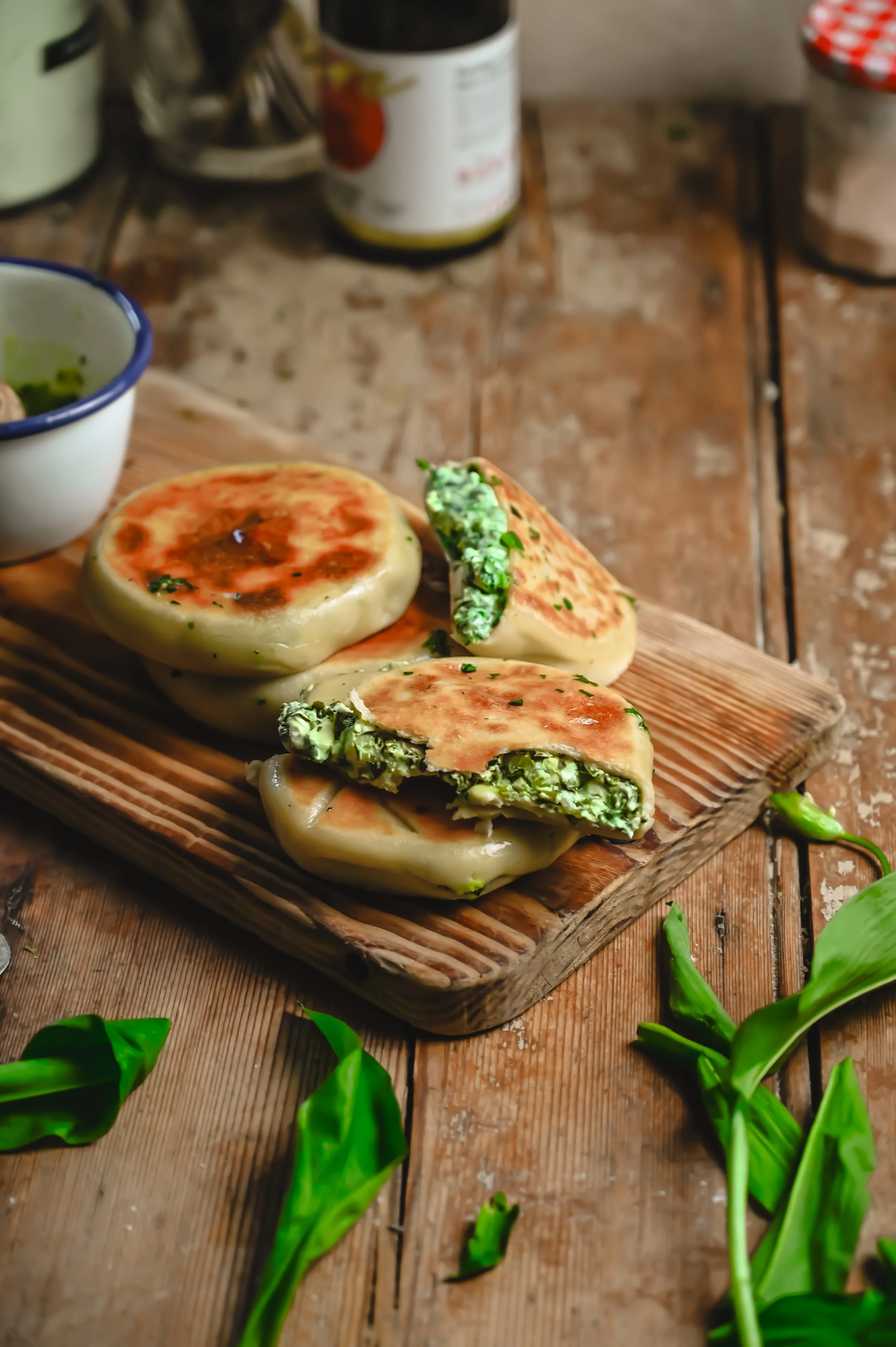
Wild garlic is one of the great pleasures of a British spring. From around late February through to May, the woodland floor turns bright green and the air carries that distinctive soft, garlicky scent. These flatbreads are built around it. The dough is made with kefir, which keeps it tender and gives a gentle tang, and the filling is a simple combination of cream cheese and feta, creamy, salty and generously packed with finely chopped wild garlic leaves. Each flatbread is filled, pleated shut and cooked in a ceramic pan until deeply golden and blistered, then brushed immediately with a wild garlic butter that melts into the surface while everything is still hot. They are the kind of thing you make repeatedly through the season and then miss when it's gone.

Wild Garlic and Feta Flatbreads
Soft, pillowy flatbreads stuffed with a creamy wild garlic and feta filling and finished with a glossy wild garlic butter. A recipe that rewards a little patience — worth every minute while the wild garlic season lasts.
Ingredients
- 375g plain flour, plus extra for dusting
- 1 tsp baking powder
- 300g kefir (or 0% Greek yoghurt with juice of ½ lemon)
- 2 tbsp olive oil
- ½ tsp salt
- 250g low-fat cream cheese
- 200g low-fat feta, crumbled
- 150g wild garlic leaves, finely chopped
- Black pepper, to taste
- 100g unsalted butter, melted
- Small handful of wild garlic leaves, finely chopped
- Pinch of flaky salt
Instructions
- Combine the flour, baking powder and salt in a large bowl and make a well in the centre. Add the olive oil and kefir and bring together with your hands into a soft, pliable dough. It should be smooth and slightly tacky but not sticky — add a little more flour if it's clinging to your hands. Knead until smooth, then cover with a damp tea towel and rest for 20 minutes. This rest relaxes the gluten and makes the dough much easier to roll out.
- Beat the cream cheese lightly to loosen it, then fold in the crumbled feta and finely chopped wild garlic. Season generously with black pepper — the feta provides the salt, so taste before adding any. The filling should be well combined but still have visible pieces of feta throughout rather than being completely smooth.
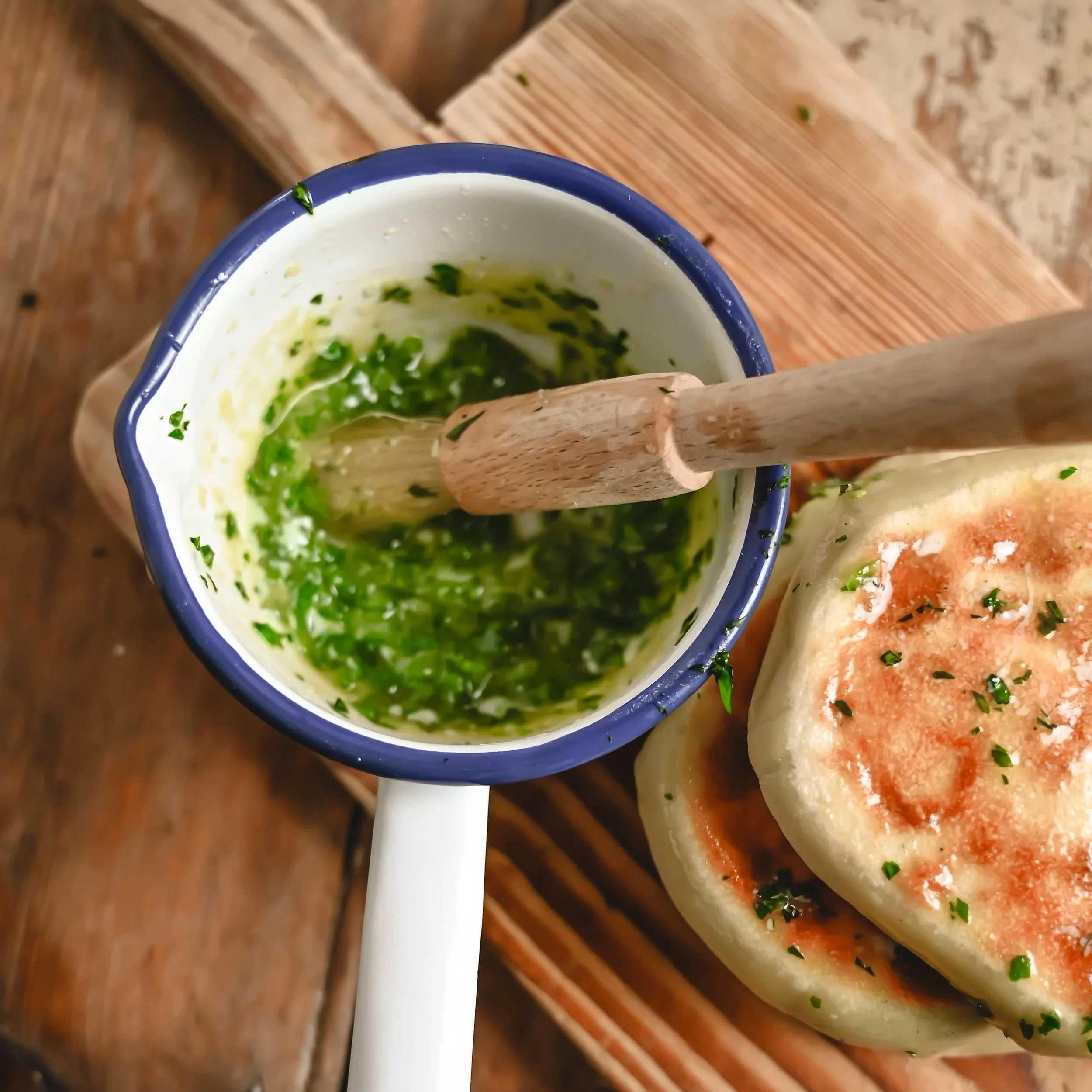
- Combine the melted butter with the finely chopped wild garlic and a pinch of flaky salt. Set aside at room temperature so it stays spreadable.
- Divide the dough into 6–8 equal pieces. On a lightly floured surface, roll each piece into a round roughly 20cm wide. Place a generous spoonful of filling into the centre, leaving a 4–5cm border around the edge. Gather the edges up around the filling, pleating and pinching firmly to create a tight seal at the top with no gaps. Place seam side down and gently flatten with your palm, using light, even pressure from the centre outwards.
- Heat a large heavy-based frying pan (I use a ceramic crepe pan) over a medium-high heat. Lightly spray with oil. Cook each flatbread for 3-5 minutes per side until deep golden with dark blistered spots. Don't overcrowd the pan; keep cooked flatbreads warm in a low oven.
- Brush generously with the wild garlic butter while still hot, so it melts into the surface. Serve straight away.
Nutrition Facts
Calories
385Fat
18 gSugar
3 gProtein
14 gCarbs
42 gApproximate values per serving


Ingredient Notes
Wild Garlic
Look for leaves that are bright, fresh and unblemished. They should smell noticeably garlicky when you crush a leaf between your fingers. If you are buying rather than foraging, good greengrocers and farmers' markets will stock it through the season. Wash the leaves well and dry them before chopping — excess water in the filling can make it watery. Chop finely so the flavour distributes evenly through the cream cheese and feta rather than sitting in clumps.
Kefir
Kefir is a fermented milk drink, thinner and more pourable than yoghurt, with a gentle tang that works well in flatbread doughs. Its consistency makes it easy to incorporate without the dough becoming overworked, and it gives a slight sourness that adds depth to what is otherwise a simple dough. Brands vary considerably in thickness, so add it gradually and trust the feel of the dough rather than the exact quantity. If you don't have kefir, 0% Greek yoghurt loosened with the juice of half a lemon is a good substitute — the lemon juice thins it slightly and mimics the tang.
Feta
Low-fat feta works well here and keeps things from becoming too rich alongside the cream cheese. Do not add extra salt to the filling until you have tasted it, feta varies considerably in saltiness and you may not need any at all.
Cream Cheese
Full-fat or low-fat cream cheese both work well here, unlike something like a cheesecake where the fat content affects the set and texture significantly. In this filling it makes very little difference to the result, so low-fat is a straightforward way to keep the calories down without compromising on flavour. Beat it briefly before mixing in the feta so it loosens slightly and incorporates more easily
Butter
Use unsalted butter so you can control the seasoning yourself. If you want to make a larger batch to freeze, make it with softened rather than melted butter, roll into a log in cling film and freeze. Melt a round from frozen when you need it.
Kitchen Notes
The rest matters
Twenty minutes is the minimum but if you have longer, leave it. The difference in the dough before and after resting is significant. Before resting, the dough springs back when you try to roll it. After resting, it becomes cooperative, stretchy and easy to work with. Don't skip this step or rush it, it makes rolling out and sealing the flatbreads considerably easier.
Rolling to the right thickness
Roll each piece of dough out to around 20-30cm before filling as this gives you enough dough to gather up around the filling and still end up with a finished flatbread of 10-15cm. You're aiming for around 3mm thick. Too thin and the filling will push through; too thick and the centre won't cook through before the outside colours. Use light, even pressure and work gradually from the centre outwards rather than pushing hard from one side. If you feel resistance, stop and ease from the other direction.
The seal is the most important step
Take your time pleating and pinching the edges together firmly. Once sealed, press gently on the centre to make sure it is secure. A poorly sealed flatbread will burst in the pan and the filling will leak out.
Getting the pan temperature right
The pan needs to be properly hot before the flatbreads go in. Medium-high heat on most hobs is about right, but adjust for your stove. A ceramic pan is ideal as it conducts heat evenly and gives you the control you need. A heavy-based non-stick frying pan is a good alternative for most people at home.
Don't rush the flip
After five minutes, lift one edge gently to check the colour underneath before flipping. You want deep gold with dark patches — not pale, not burnt. If it needs another minute, give it one. Once flipped, the second side usually cooks slightly faster.
Keeping them warm
If you are cooking in batches, keep finished flatbreads on a baking tray in a low oven (around 100°C) while you cook the rest. Don't stack them directly on top of each other or they will steam and lose their crust.
Variations
No wild garlic? Use chives, spinach and garlic
Outside of the wild garlic season, a combination of finely chopped chives, wilted and well-squeezed spinach and a small amount of grated or finely minced regular garlic works well in the filling. Wilt the spinach briefly, squeeze out as much water as possible and chop it finely before mixing in. The garlic flavour will be sharper and more robust than wild garlic but still very good.
Add a little heat
A pinch of dried chilli flakes folded into the filling alongside the black pepper adds a gentle warmth that works very well against the cool creaminess of the cheese. Don't overdo it, you want the wild garlic flavour to come through, not be overwhelmed.
Make them smaller for sharing
Divide the dough into 10–12 pieces instead of 6–8 for smaller flatbreads that are good as part of a spread or alongside a bowl of soup. The cooking time stays roughly the same, watch the colour rather than the clock.
Serving Suggestions
How to serve
These are at their very best straight from the pan, brushed with the wild garlic butter while still hot. Serve them whole on a board and let people tear into them, the ooze of filling as they break open is part of the experience. A small bowl of extra wild garlic butter on the side for dipping is never a bad idea.
What to serve alongside
A simple dressed salad of leaves and cucumber is all you need alongside if you are serving these as a light lunch. For something more substantial, they work brilliantly next to a bowl of roasted tomato soup or alongside a mezze spread; hummus, olives, a sharp pickled vegetable. They are also good with slow-cooked lamb or roasted aubergine if you are building them into a larger meal.
When to make them
These are best made when you have a relaxed stretch of time, a weekend lunch or a lazy afternoon when wild garlic is at its peak. They are also excellent as part of a spring gathering where you want something that feels seasonal and considered. They do take a little time and attention but the result is well worth it.