Wild Garlic Malfatti
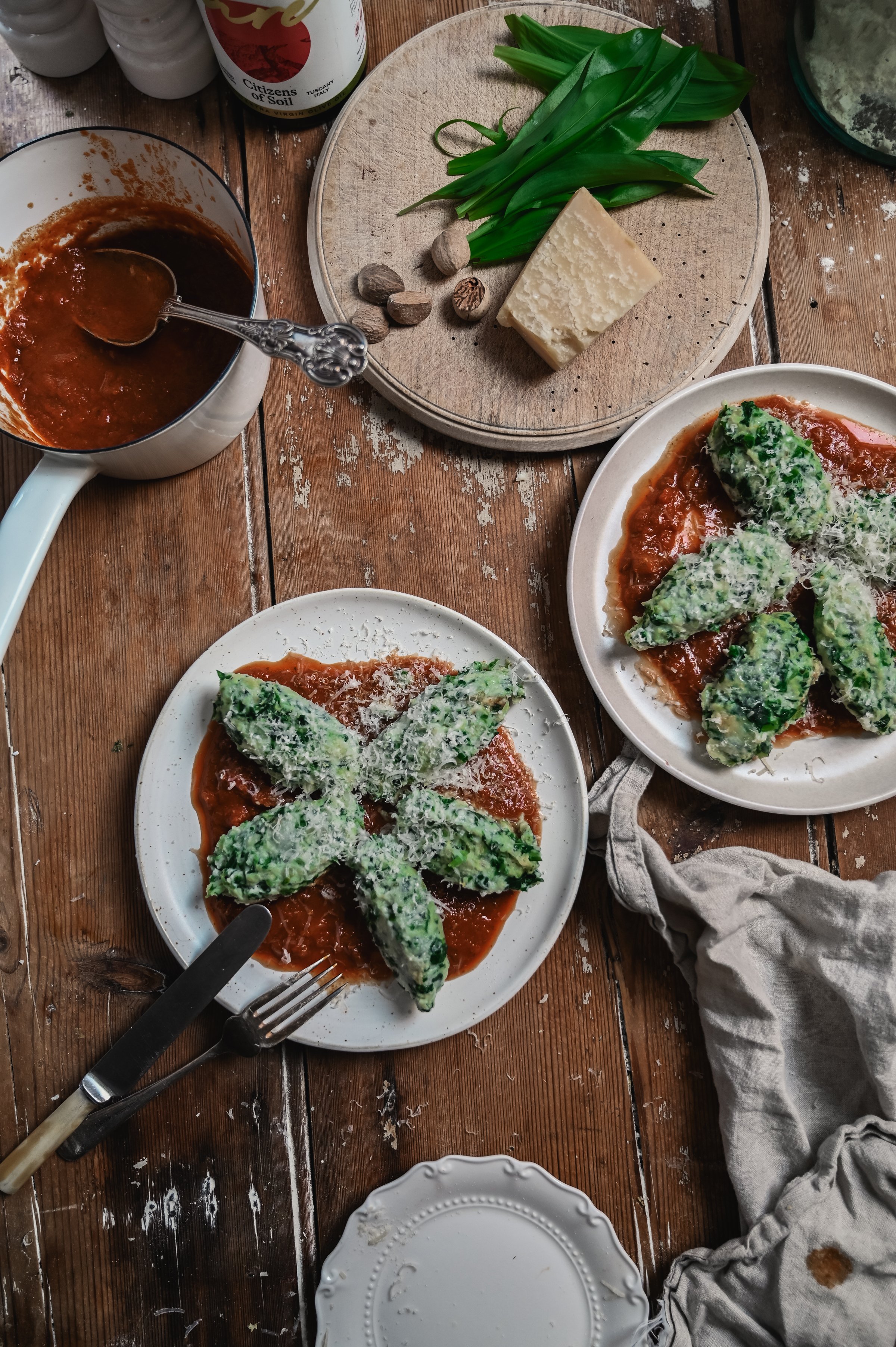
Malfatti means "made badly" in Italian, and that is genuinely the spirit of the thing. These are soft, pillowy ricotta dumplings — irregular, rustic, and entirely forgiving. Traditionally made with spinach, this version uses wild garlic instead, which gives them a vivid green colour and a gentle, garlicky depth that spinach simply cannot match.
The mixture comes together in one bowl. The shaping takes minutes. They cook in under five. This is a recipe for the height of wild garlic season, which runs roughly from March to May, and it is worth making repeatedly while it lasts.

Wild Garlic Malfatti
Soft, pillowy ricotta dumplings packed with wild garlic, parmesan and lemon, shaped rusticly and served in a warm tomato sauce. Malfatti means "made badly" in Italian — irregular by nature, and all the better for it. A simple, seasonal recipe that makes the most of wild garlic at its brief spring best.
Ingredients
- 250g ricotta
- 250g wild garlic leaves
- 2 small eggs
- 50g plain flour, plus extra for shaping
- 70g semolina flour
- 70g parmesan, finely grated
- Zest of 1 lemon
- Good grating of nutmeg
- Homemade or shop-bought tomato sauce, warmed
- Wild garlic flowers
- Good olive oil
- Extra parmesan, finely grated
Instructions
- Bring a large pan of salted water to the boil. Blanch the wild garlic in batches for 30–60 seconds, then immediately transfer to a bowl of ice-cold water to stop the cooking and preserve the colour. Once cool, squeeze out as much liquid as you possibly can using a clean cloth or muslin. You want it as dry as possible. Finely chop and set aside.
- Combine the ricotta, wild garlic, eggs, plain flour, semolina flour, parmesan, lemon zest and nutmeg in a large bowl. Season with salt and pepper and mix until everything is evenly incorporated. The mixture should be soft but holdable. If it feels very sticky, add a little more plain flour a tablespoon at a time.
- Dust a clean tray or board generously with plain flour and semolina. Taking a tablespoon of mixture at a time, shape each one into a quenelle between two spoons and place on the floured tray as you go. They do not need to be perfectly neat — irregularity is part of their character.
- Bring a large pan of well-salted water to the boil. Warm the tomato sauce gently in a separate pan. Cook the malfatti in two or three batches so as not to overcrowd the pan. They will sink initially, then rise to the surface after 3–4 minutes when cooked through. Once they rise, give them another 30 seconds, then remove with a slotted spoon and drain briefly.
- Spoon the warm tomato sauce into warmed shallow bowls. Arrange the malfatti on top and finish with a drizzle of good olive oil, a grating of extra parmesan and a little more lemon zest.
Nutrition Facts
Calories
645Fat
29 gSugar
2 gProtein
39 gCarbs
51 gApproximate values based on 2 servings


Ingredient Notes
Wild garlic
It has a short season, roughly March to May, and grows in damp woodland across the UK. It is milder than bulb garlic, grassy and gently oniony. Look for bright, glossy leaves with no yellowing. If you cannot find it or are outside the season, substitute the same weight of wilted, thoroughly squeezed spinach with a large grated garlic clove mixed through.
Ricotta
Drier ricotta holds together better in the water. If your ricotta is very wet, turn it out onto a few layers of kitchen paper or a clean cloth and leave it to drain for 20–30 minutes before using. Supermarket ricotta varies considerably. Italian deli ricotta tends to be firmer and better suited to this recipe.
Semolina flour
Used alongside plain flour, semolina gives the malfatti a little more structure and a pleasantly subtle bite. It is also used to dust the tray, which helps prevent them sticking as you shape.
Parmesan
Grate it finely so it incorporates evenly into the mixture rather than sitting in clumps.
Lemon zest
Lemon in the mixture lifts everything and stops the dish feeling heavy.
Kitchen Notes
On drying the wild garlic
Squeeze it harder than you think you need to. Any residual moisture will make the mixture wet and difficult to shape, and the malfatti are more likely to fall apart in the water. Twist the cloth and keep going until you feel real resistance.
On shaping
Two tablespoons and a light touch. The quenelle shape is traditional but a rough oval is perfectly fine if you are more comfortable rolling then within your hands. Dust the tray generously and work quickly; the mixture softens as it sits at room temperature.
On cooking in batches
If your pan is large enough to hold them all without touching, you can cook them in one go. If not, work in two or three batches. Overcrowding drops the water temperature and makes them more likely to stick together. They will sink, then rise -- the rise is your signal, but give them another 30 seconds once they surface before lifting them out. Have the sauce already warm in the bowl, as malfatti lose heat fast.
On eating immediately
These do not sit well once cooked. Have everything ready; the sauce warm, the bowls warmed and the parmesan grated.
Variations
Made with spinach
The traditional version. Use the same weight of wilted, thoroughly squeezed spinach in place of the wild garlic, and add grated garlic to the mixture.
Brown butter instead of tomato sauce
Melt butter in a pan over a medium heat until it turns golden and smells nutty. Add a few sage leaves and let them crisp, then spoon over the malfatti in place of tomato sauce. A classic pairing and well worth trying.
Added lemon
A squeeze of lemon juice over the finished bowl alongside the zest gives a brighter, sharper result that works particularly well in warmer weather.
Serving Suggestions
As a starter
Four or five malfatti per person in a smaller bowl makes a very good starter for four, particularly for a spring dinner party where you want something seasonal and a little unexpected.
As a main
Eight malfatti per person is generous as a main course for two. A simple green salad alongside is all it needs.
The tomato sauce
A good, plain tomato sauce is all you want here, nothing complicated. If you are making it from scratch, a tin of good-quality plum tomatoes cooked down with a little olive oil, garlic, basil or oregano and salt for 20 minutes is plenty. The malfatti are the thing; the sauce is the backdrop.