Pea, Mint and Asparagus Lángos with Lemony Sour Cream and Pecorino
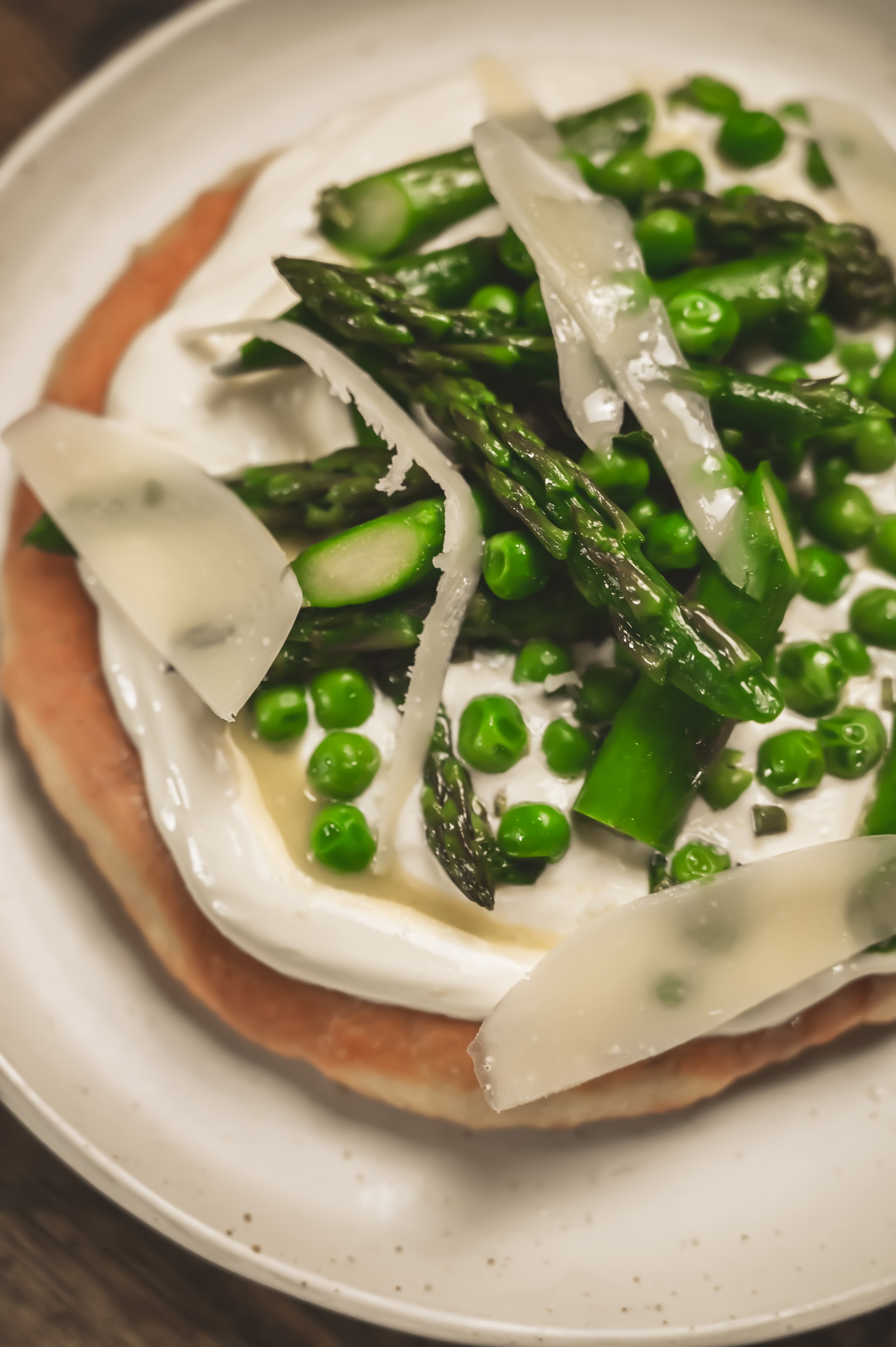
Lángos is Hungarian street food at its most unapologetic: deep-fried dough, usually topped with sour cream and cheese and eaten as quickly as possible while still hot. It is not a delicate thing. This version keeps the spirit of it, the crisp, puffed dough and the sharp cream, but pulls it somewhere a little lighter and more seasonal. Peas and asparagus, barely cooked and glazed in butter and mint, go on top with a blizzard of shaved pecorino. It tastes like the first properly warm week of spring.
The dough needs time, so plan for a lazy afternoon or make it on a day when you are pottering around the house. Everything else comes together in minutes once it is ready to fry.

Pea, Mint and Asparagus Lángos
Crisp fried dough topped with lemony sour cream, sweet peas and asparagus glazed in butter and mint, and shaved pecorino. A lighter, spring-led take on the Hungarian street food classic.
Ingredients
- 250g plain flour
- 7g dried yeast
- 1 tbsp sugar
- 1 tsp salt
- 150ml warm milk
- 300ml sour cream
- 100g 2% Greek yoghurt
- 1 lemon, zested and juiced
- 350g asparagus spears, cut diagonally into 2–3cm pieces
- 100g peas (fresh or frozen, defrosted)
- 30g butter
- Small handful of mint, finely chopped
- 30g pecorino, shaved
- Salt and black pepper
- 50ml neutral oil, for shallow frying
Instructions
- Mix the flour, sugar and salt together in a large bowl. Add the yeast separately, stirring it in so it does not make direct contact with the salt. Add the warm milk and bring together into a shaggy dough.
- Tip onto the work surface and knead for 8 to 10 minutes until smooth and slightly springy. Transfer to a lightly oiled bowl, cover with a damp tea towel or cling film and leave to rise for 1 to 2 hours until doubled in size.
- While the dough proves, combine the sour cream and Greek yoghurt with the lemon zest, a small squeeze of lemon juice and a pinch of salt. Stir well and taste. It should be gently sharp but not aggressively acidic. Set aside.
- Divide the risen dough into two equal pieces. Stretch each into a rough round of around 20cm. Lay on a lightly oiled board, cover loosely with oiled cling film and leave to rise for a further hour.
- Heat the oil in a 20cm frying pan over a medium-high heat and fry each lángos until puffed and deeply golden on both sides, around 3 to 5 minutes per side. Transfer to a tray lined with kitchen paper and keep warm in a low oven.
- While they are frying, heat a separate frying pan over a medium-high heat, add the asparagus and peas along with 50ml of water. Cover with a lid or plate and cook for 3 minutes, then uncover and cook for a further 2 minutes until the water has almost fully evaporated and the asparagus is just tender but still with a little bite.
- Add the chopped mint and butter. Toss the pan so the butter and the remaining water emulsify into a light, glossy glaze. Season with salt and remove from the heat.
- Spread each lángos generously with the lemony sour cream. Spoon over the peas and asparagus along with the glaze from the pan. Shave over the pecorino and serve immediately.
Nutrition Facts
Calories
650Fat
28 gSugar
10 gProtein
22 gCarbs
72 gApproximate values per serving


Ingredient Notes
Asparagus
British asparagus season runs roughly from late April through to June. Use spears that are firm and bright, not limp or fibrous at the base. Cutting them diagonally into short pieces means more surface area and a better chance of even cooking in the pan. If your spears are particularly thick, give them a little longer with the lid on.
Peas
Fresh garden peas are wonderful if you can get them, but frozen peas, fully defrosted, work just as well here and are available all year. Do not use tinned.
Sour cream and Greek yoghurt
The combination gives you a topping that is rich but with a little more lightness than straight sour cream. The 2% yoghurt keeps it from tipping too heavy. Make sure you taste and adjust the lemon before setting it aside.
Lemon
You need both the zest and a small squeeze of juice. The zest does the aromatic work; the juice sharpens things. Do not overdo the juice or it will thin the cream and overwhelm the dish.
Pecorino
Shaved rather than grated, so it sits on top in proper curls. Parmesan works well if you prefer something milder and more accessible.
Yeast
This recipe uses dried active yeast. Make sure it is not past its use-by date, an old packet is the most common reason a dough fails to rise.
Kitchen Notes
Rising time
The timing given is a guide, not a rule. In a warm kitchen the dough may double in an hour; in a cold one it could take closer to two. You are looking for it to look visibly puffy and feel airy when you press it gently. The second prove, once shaped, matters too. Do not skip it.
Frying the lángos
The oil needs to be properly hot before the dough goes in. Test with a small scrap of dough first: it should sizzle immediately. If the oil is not hot enough the dough will absorb it and turn greasy rather than crisping up. Shallow frying is a great home alternative to deep frying. You still get proper colour and a crisp edge, and the dough puffs beautifully around the sides. The only difference is a slightly flatter profile, which honestly does not matter once it is topped.
The asparagus and peas
The water method is the key to this. You are essentially cooking the vegetables in a covered pan, then letting the liquid almost fully evaporate before adding the butter. This gives you tender vegetables and the beginning of an emulsified glaze, not a wet, watery mess. Keep an eye on the pan: once the lid comes off the water reduces quickly. If the asparagus needs more time and the water is gone, add a splash more and cover briefly again.
Trimming
To find the natural breaking point, hold each spear at both ends and bend it gently. It will snap where the woody, fibrous base meets the tender stalk. This gives you a cleaner result than cutting and wastes nothing you would have wanted to eat anyway.
Zero waste
Don't throw the woody ends away. They are too tough to eat but still full of flavour. Bundle them into a quick pickle with white wine vinegar, a pinch of salt and sugar, and a few peppercorns, and they will be ready within a day or two. Alternatively, add them to a vegetable stock along with any other trimmings. They give a good grassy depth
Variations
Parmesan instead of pecorino
Parmesan is milder and less salty than pecorino. Both work well. Use whichever you have.
Courgette and mint
In high summer when asparagus is over, thin ribbons of courgette cooked the same way with mint and lemon make an excellent seasonal swap.
Add chilli
A pinch of dried chilli flakes stirred into the pea and asparagus mixture just before serving adds a little heat that works well against the cool cream.
Without dairy
A thick, good quality vegan sour cream and a plant-based butter both work here. The flavour will be slightly different but the method holds. Use a vegan feta or hard cheese alternative.
Serving Suggestions
How to serve
Eat these with your hands or a knife and fork, whichever feels right. They are a meal in themselves for two people and do not need anything alongside. Lángos softens fast once it is topped. Have everything ready before the dough goes into the oil and get it on the table as soon as it is assembled. A glass of something cold and lightly sparkling would not go amiss.
Portion sizes
The recipe makes two lángos of around 20cm each. They are generous and filling. If you are feeding more people, the dough scales up easily or you could make smaller ones, around 5cm, to serve with other dishes.