Asparagus with Wild Garlic Emulsion, Crispy Rye, Pickled Radish and Feta
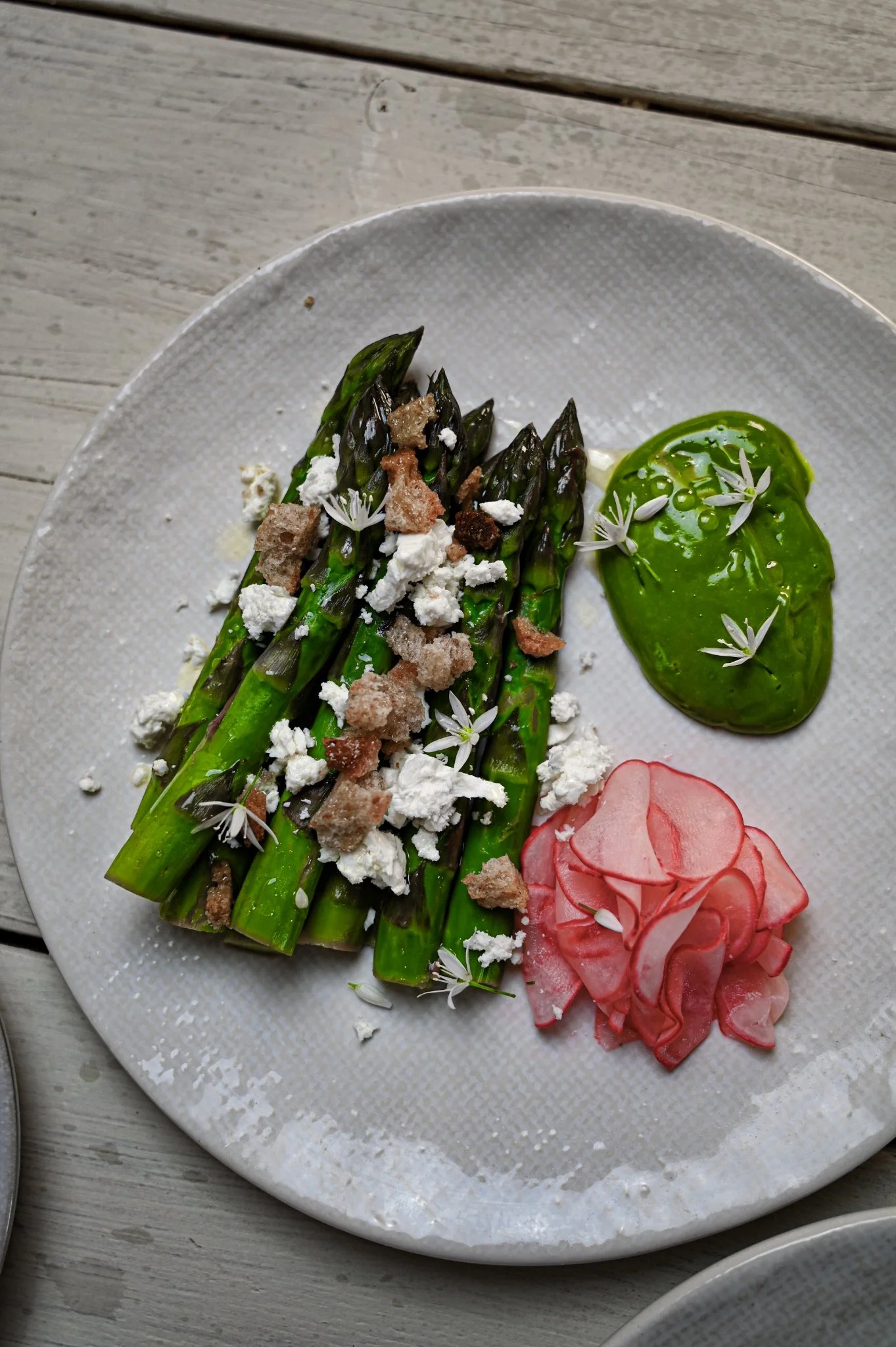
British asparagus season is short - roughly eight weeks from late April through to the end of June and this is one of the best ways to make the most of it. The asparagus is blanched simply in well-salted water to keep it vivid green and just tender, then plated with a wild garlic emulsion that is essentially a mayonnaise made with homemade wild garlic oil. The quick pickled radish takes fifteen minutes and turns a startling shade of pink. The crispy rye adds crunch and uses up the end of a loaf. The whole thing looks far more considered than the effort involved, and the colours on the plate are genuinely beautiful. If you are looking for more ways to cook with wild garlic this season, the Wild Garlic Malfatti [link] and Wild Garlic and Feta Flatbreads [link] are both worth making while it lasts.

Asparagus with Wild Garlic Emulsion, Crispy Rye, Pickled Radish and Feta
Blanched British asparagus with a vibrant wild garlic emulsion, quick pickled radish, crumbled feta and crispy rye croutons. A stunning spring starter that is as beautiful on the plate as it is straightforward to make.
Ingredients
- 100g radish, thinly sliced
- 75ml white wine vinegar
- 75ml water
- 25g caster sugar
- 1 tsp salt
- 2 large egg yolks
- A squeeze of lemon juice
- Pinch of salt
- 300ml wild garlic oil (see ingredient notes)
- 12 thick asparagus spears
- Salt
- Juice of half a lemon
- 1 slice sourdough rye bread, broken into small rough chunks
- 50g feta, crumbled
- Wild garlic flowers
- Good quality olive oil, to drizzle
Instructions
- Start with the pickled radish. Combine the vinegar, water, sugar and salt in a bowl and stir until the sugar and salt have dissolved. Add the sliced radish and toss to coat. Set aside for at least 15 minutes - the radish will soften slightly, take on the vinegar and turn a vivid pink.
- Preheat the oven to 140°C fan/160°C conventional. Spread the rye bread chunks on a baking tray and bake for 8 to 10 minutes until crisp and pale golden. Remove and leave to cool completely.
- For the wild garlic emulsion, whisk the egg yolks with the lemon juice and a pinch of salt in a bowl. Very slowly drizzle in the wild garlic oil while whisking constantly, starting with just a thread until it begins to emulsify, then adding it slightly faster. Continue until the emulsion is thick and glossy. Taste and adjust the seasoning.
- Trim the asparagus spears to the same length. Bring a wide pan of well-salted water to a simmer and blanch the spears for 2 to 3 minutes depending on thickness, you want them just tender with a little resistance. Lift out and drain briefly. Work quickly once they are out of the water as they will loose their colour fairly quickly.
- Lift the pickled radish onto a folded piece of kitchen paper to drain briefly.
- To plate, arrange the asparagus spears on each plate. Spoon a generous dollop of wild garlic emulsion to one side and arrange the pickled radish alongside. Scatter over the crumbled feta and crispy rye, finish with wild garlic flowers and a drizzle of good quality olive oil. Serve immediately.
Nutrition Facts
Calories
520Fat
44 gCarbs
18 gSugar
8 gProtein
12 gApproximate values per serving


Ingredient Notes:
Asparagus
Buy the thickest spears you can find for this recipe. Thin spears will overcook before they have any presence on the plate and won't give you the al dente bite you want. British asparagus is available from late April through to the end of June, after that, use imported asparagus if you like but the flavour won't be the same. If your spears have gone slightly limp before you get to cook them, trim the bottoms and stand them in a glass of cold water for half an hour and they will spring back up.
Wild garlic oil
You will need to make this ahead. Wash and thoroughly dry a large bunch of wild garlic leaves, any water in the oil will cause it to spoil quickly and can affect the emulsification. Blitz with a light olive oil (there is no need to use your best bottle here) until very smooth, then strain through a piece of muslin or a fine sieve lined with a clean cloth. The resulting oil will be an extraordinary deep vivid green. This is also a brilliant zero waste technique for any soft herbs that are on their way out; basil, parsley, tarragon and chervil all work well. Wild garlic season runs from March through to May, so if you are outside that window, a good herb oil made with whatever you have will give a similar result with a different flavour.
Radish
Slice the radish as thinly as you can- a mandoline is ideal if you have one. The thinner the slices, the faster they pickle and soften. If you don't have radish or want to try something different, fennel or kohlrabi both work well here, sliced very thinly. Fennel adds a gentle anise note; kohlrabi stays very clean and crisp.
Sourdough rye bread
One slice is plenty. Break it into small, rough chunks rather than cutting it; you want uneven pieces that crisp up at different rates and give varied texture. This is a good way to use up the end of a loaf that is past its best for eating.
Feta
Use a good quality Greek feta if you can rather than a supermarket own-brand salad cheese. Real feta has a more complex, mineral flavour and a better crumble. The saltiness of the feta is doing a lot of seasoning work here so it matters more than usual.
Kitchen Notes
The emulsion
This is essentially a wild garlic mayonnaise - the same technique as a classic mayo but with lemon juice instead of vinegar and no mustard, which keeps the flavour clean and the colour vivid green. The key is patience at the start. Add the oil in the thinnest possible thread at first, whisking constantly. Once the emulsion has taken and begun to thicken, you can add the oil a little faster. If it splits, whisk a fresh egg yolk in a clean bowl and slowly whisk the split mixture back in. This recipe makes considerably more than you need for two portions, which is intentional, it keeps in the fridge for up to a week and is excellent alongside roasted vegetables, as a dip with crudités, or with chips.
Work quickly with the asparagus
Once the asparagus is out of the water and drained, plate it immediately. It will start to lose its vivid green colour as it cools and sits, and the colour is one of the best things about this dish. Have everything else ready to go before the asparagus goes into the water.
Blanching time
Two to three minutes is a guide, not a rule. It depends entirely on the thickness of your spears. Check them at two minutes - you want them to yield to a knife but still push back slightly. They should not be soft all the way through.
The pickle
Fifteen minutes is the minimum. The longer you leave the radish in the pickling liquor, the deeper the colour and the more pronounced the vinegar flavour. Drain them briefly on kitchen paper before plating so the pickling liquid doesn't bleed pink across the plate.
Zero Waste
Save the asparagus ends after trimming, sliced very thinly, they are excellent in a quick ferment or pickle using the same liquor as the radish. The rye croutons are a good way to use up the end of a loaf, and the wild garlic oil technique works with any soft herbs that are close to turning: wash them, dry them thoroughly, blitz with a light olive oil and strain through muslin. It is one of the most useful things you can do with a fridge full of wilting herbs.
Variations
Without wild garlic
Outside of wild garlic season, make the emulsion with a herb oil using whatever soft herbs you have. Chervil or tarragon both work particularly well. The technique is identical and the result is a different but equally good sauce.
Without the rye
If you want to keep this carb-free, replace the rye croutons with a handful of toasted seeds, pumpkin and sunflower both work well and add a similar crunch without the bread.
Serving Suggestions
This works best as a starter or a light lunch. This is not a dish that sits well so if you are cooking for more than two, scale everything up and have your plates ready before the asparagus goes into the water so you can plate quickly and serve immediately.